

More news on this day
A nationwide air traffic control strike in Italy on April 10 has triggered 464 flight cancellations across Europe, disrupting travel plans for tens of thousands of passengers as airlines and airports scramble to contain knock-on delays across the continent.
Get the latest news straight to your inbox!
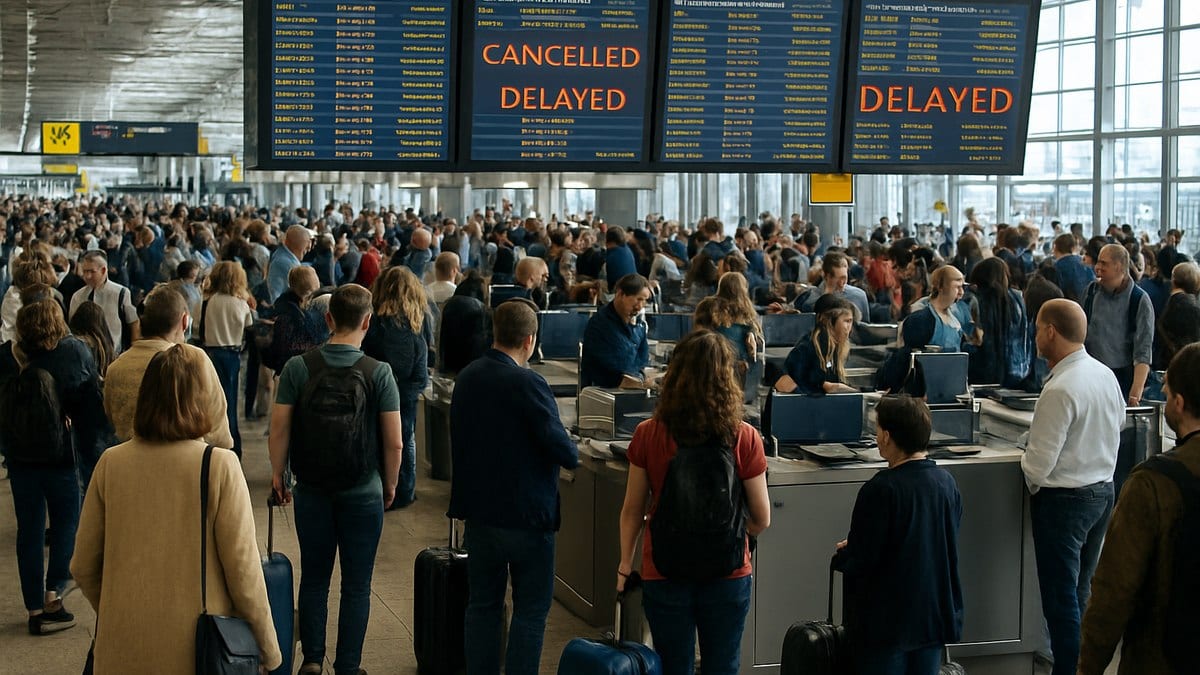
Four Hour Walkout Hits Italy’s Skies
The latest disruption stems from a four hour strike by air traffic controllers at ENAV, Italy’s state run navigation service provider, scheduled from 13:00 to 17:00 local time. Publicly available advisories from carriers and airport operators describe a concentrated period of disruption, with flight plans compressed around the protected time slots and the strike window itself thinned out by cancellations.
Operational notices from several European airlines indicate that at least 464 flights have been cancelled across the network, with a large share involving Italian airports or overflights routed through Italian airspace. The figure includes domestic segments within Italy as well as international services linking the country with hubs in Spain, Germany, the United Kingdom and other European states.
Traffic management updates show that while departures and arrivals are formally halted only for part of the afternoon, the impact is spread across much of the day. Airlines have adjusted timetables, retimed rotations and reduced frequencies to keep aircraft and crew sequences workable, leading to cancellations outside the actual strike hours.
Industry data suggests that further irregularities are possible into the evening as traffic flows resume and controllers work through accumulated delays. Travellers connecting through Italy or relying on aircraft that pass through Italian airspace earlier in the day are particularly exposed to knock on effects.
Rome and Milan Become Epicentres of Disruption
Italy’s primary gateways at Rome Fiumicino and Milan Malpensa have become focal points of the disruption. Reports from aviation tracking services show clusters of cancellations on short haul routes from these airports to major European cities, where carriers typically operate multiple daily frequencies and therefore have scope to trim schedules.
Operations at Rome and Milan were already under strain in the run up to the walkout, with delays recorded on April 9 as airlines pre emptively thinned schedules and local issues, including fuel management constraints at Milan Linate, tightened capacity. Those pre strike difficulties reduced the buffer that usually absorbs minor irregularities, meaning that even routine technical or weather related delays now ripple further through the system.
Regional airports such as Venice, Naples and Cagliari are also seeing cancellations and retimings, though at a smaller absolute scale. Low cost carriers with dense networks across Italy and southern Europe appear particularly affected, as a single grounded aircraft can cascade into missed rotations across several countries.
While some long haul services are being prioritized and kept on the board, analysts note that any delay on departure from Italy can jeopardize onward connections at major hubs, leaving passengers stranded even if their original long haul leg technically operates.
Ripple Effects Across the European Aviation Network
Flight monitoring platforms suggest that the bulk of the 464 cancellations are clustered around routes touching Italy, but the shock is radiating outward into neighboring markets. Aircraft scheduled to operate morning sectors into Italy before continuing elsewhere are arriving late or not at all, forcing airlines to cancel or consolidate subsequent flights in countries as far away as the United Kingdom and Scandinavia.
Operational briefings circulated by European carriers in the days before the strike warned that even travelers not flying to or from Italy might face disruption if their aircraft needed to overfly Italian airspace. Rerouting around restricted sectors adds flight time and fuel burn, sometimes making certain rotations unviable within crew duty limits.
The timing of the action is particularly sensitive, falling during a busy spring travel period as leisure and business traffic both trend higher. Capacity planners have raised concerns that repeated localized disruptions, including the Italian walkout and separate labor disputes at carriers elsewhere in Europe, are testing the resilience of an aviation system that remains finely balanced after the pandemic recovery.
Industry observers note that the Italian strike also comes against a backdrop of rising en route air traffic control delays across Europe, as highlighted in recent reports from regional aviation bodies. Those structural pressures mean that any strike, even one limited to a four hour window, can have outsized consequences.
What Passengers Need to Know About Rights and Options
Passengers affected by cancellations linked to the Italian strike face a patchwork of rebooking options and compensation rules. Under the European Union’s air passenger rights framework, travelers on eligible flights are generally entitled to care such as meals and accommodation when stranded, as well as rerouting or refunds. Whether they receive additional financial compensation depends on how each disruption is classified and on the exact circumstances of the cancellation or long delay.
Airlines across the region have activated flexible policies, with several offering fee free changes for customers booked on Italian routes around April 10. Public information from carriers urges travelers to check flight status online or via mobile apps before heading to the airport, and to keep boarding passes, booking confirmations and delay notifications in case they later need to submit claims.
Consumer advocates recommend that passengers stranded away from home document their expenses, including hotel stays and meals, and keep receipts. In previous waves of disruption within Europe, such documentation has been important when travelers seek reimbursements or challenge initial decisions from airlines.
Travelers with connections are being advised to pay particular attention to minimum connection times and to consider proactively rebooking longer layovers where possible. Even if a first leg departs on time, rolling delays elsewhere in the network can still cause missed onward flights.
Airlines and Airports Look Ahead to a Busy Summer
The Italian walkout adds to a growing list of operational stresses in Europe’s aviation sector as the region heads toward the peak summer season. Recent weeks have already brought localized technical incidents, staff shortages at certain airports and strike notices in other parts of the industry, from ground handling to cabin crew.
Airports and carriers are signaling that they are reviewing staffing, schedule resilience and contingency plans in light of the latest disruption. Publicly available planning documents from European aviation bodies have repeatedly underscored the need for stronger coordination between air navigation service providers, airlines and airport operators to manage capacity constraints.
For travelers, the events surrounding the Italian strike are a reminder that even short, pre announced walkouts can have system wide repercussions. Travel planners suggest building more buffer time into itineraries, favoring early day departures where possible and monitoring airline communications closely in the days before departure.
With demand across Europe expected to remain strong through summer, the way airlines and infrastructure providers absorb the shock from the current Italian action may provide an early indication of how robust the continent’s aviation network will be in the months ahead.