


More news on this day
Europe’s latest jet fuel and energy shock is rippling through airline networks, as carriers serving Poland, Sweden, Romania, Germany, Hungary, France and Italy trim flight schedules, raise fares and roll out new surcharges ahead of the peak 2026 travel season.
Get the latest news straight to your inbox!
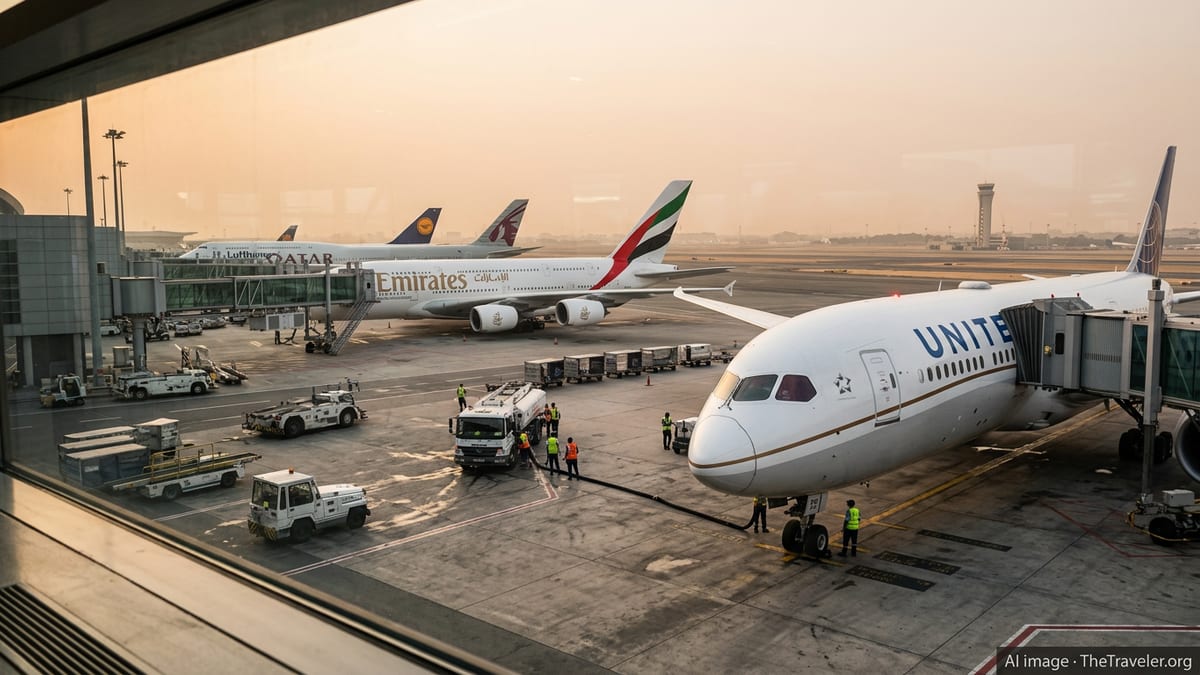
Fuel Spike and Energy Strains Hit European Hubs
Jet fuel prices have climbed sharply since early March 2026, following renewed tensions affecting oil flows through the Middle East, according to industry monitoring. Benchmark data cited in recent aviation analyses indicate jet fuel costs in key European markets have risen by around 60 percent in a matter of weeks, pushing operating expenses higher just as demand for summer travel builds.
At the same time, Europe continues to wrestle with elevated gas and power prices after a tight 2025 to 2026 winter left storage levels low and wholesale energy benchmarks volatile. Publicly available assessments of the region’s energy balance suggest that airlines now face a dual squeeze from both fuel and broader energy-related costs, including airport and navigation charges that are indexed to power prices.
This combination is particularly acute in major aviation markets such as Germany, France and Italy, where large network carriers anchor long-haul connections for much of Central and Eastern Europe. Travelers originating in Poland, Sweden, Romania and Hungary rely heavily on these hubs, so decisions taken in Frankfurt, Paris or Rome are increasingly shaping the availability and price of flights across the continent.
Industry commentary notes that fuel typically accounts for about 30 to 40 percent of an airline’s cost base in normal conditions. With jet prices now spiking, analysts warn that carriers have limited room to absorb the shock without either trimming capacity or passing more of the burden to passengers.
Lufthansa, Air France and ITA Add Surcharges and Lift Fares
Major European groups have already begun to hardwire higher energy costs into ticket prices. Lufthansa Group announced in 2024 that it would introduce an environmental cost surcharge on tickets issued in the European Union, the United Kingdom, Norway and Switzerland for travel from January 2025, citing the rising expense of sustainable aviation fuel and emissions regulations. Subsequent coverage indicates that in practice these levies can reach several dozen euros per ticket, depending on route and cabin.
Recent fare-tracking reports show that airlines such as Air France-KLM, Lufthansa and other full-service competitors have layered additional fuel-related supplements or higher base fares onto long-haul tickets for travel in 2026. In some published examples, round-trip economy journeys between Europe and intercontinental destinations now carry extra charges in the range of 40 to 60 euros compared with earlier this year, framed explicitly as fuel or environmental cost recoveries.
In Italy, ITA Airways maintains a published fuel surcharge structure that automatically adjusts in line with international kerosene benchmarks, with updated tables for tickets issued from April 2026. The carrier links specific surcharge amounts in Japanese yen on routes between Italy and Asia, illustrating how surcharges can step up quickly when crude and jet prices move through predefined thresholds.
While the labels vary from “fuel surcharge” to “environmental cost” or “energy adjustment,” consumer groups across Europe note that the effect for travelers is broadly the same. Total ticket prices are rising, and a growing share of the increase is presented as a separate line item rather than a higher base fare, making it difficult to compare offers across airlines.
Capacity Cuts and Route Adjustments Across the Continent
Alongside higher charges, airlines are starting to adjust their schedules to reflect the new cost environment. Aviation intelligence platforms tracking summer 2026 capacity indicate that several European carriers have trimmed planned frequencies on long-haul and secondary leisure routes, particularly those with thinner margins or heavy seasonal swings.
Reports focusing on Lufthansa’s long-haul program highlight selective capacity reductions on routes such as Frankfurt to Tokyo and other intercontinental city pairs, with modest percentage cuts that still leave core connections in place but reduce overall seat supply. Similar patterns are emerging at other European network airlines, which are consolidating lightly used flights into fewer, fuller departures in an effort to spread fuel costs across more passengers.
Finnair, which has already been contending with longer flight times to Asia due to ongoing Russian airspace restrictions, is cited in recent financial and strategic updates as carefully optimizing its network in response to cost volatility. Analysts point out that fuel price swings, higher environmental compliance costs and altered routings all contribute to higher unit costs, encouraging the airline to concentrate capacity on routes with the strongest demand and revenue potential.
For travelers in countries such as Poland, Sweden, Romania and Hungary, these adjustments often show up less as outright route cancellations and more as reduced frequency. Flights to major hubs like Frankfurt, Munich, Paris, Amsterdam or Rome may operate slightly less often than originally planned, narrowing connection options and increasing the likelihood of crowded peak departures.
Eastern and Central European Travelers Bear Knock-On Effects
Although most of the headline announcements come from airlines headquartered in Germany, France, Italy and the Nordic region, the repercussions are being felt throughout Central and Eastern Europe. Many passengers in Poland, Romania and Hungary rely on one-stop itineraries via Western European hubs to reach North America, Asia and parts of Africa, leaving them particularly exposed to capacity cuts and surcharges applied at those gateways.
Published booking data and travel agency commentary point to rising average fares on itineraries starting in Warsaw, Krakow, Bucharest and Budapest for travel after May 2026, especially on routes that connect through big hubs served by Lufthansa, Air France-KLM and ITA. In Sweden and Finland, route adjustments tied to environmental regulations and fuel use are prompting travelers to see greater price differentiation between nonstops and one-stop options.
At the same time, local and regional carriers are facing their own cost pressures. Several have introduced or increased ancillary fees for services such as checked baggage, advance seat assignments and itinerary changes. While these moves are not always labeled as fuel-related, industry analysts frequently link the timing to the recent surge in jet fuel and the broader energy backdrop, noting that ancillary revenues have become a key buffer against fluctuating operating expenses.
For leisure travelers and small businesses across the region, the result is a more complicated decision set. Trip planners must balance higher upfront ticket prices, additional surcharges and fewer direct or conveniently timed flights against a still-strong appetite for international travel after years of disruption.
What Summer 2026 Travelers Can Expect
Industry forecasts issued in March and April 2026 suggest that travelers across Poland, Sweden, Romania, Germany, Hungary, France and Italy should prepare for a summer marked by higher average fares, greater use of dynamic fuel or environmental surcharges and pockets of constrained capacity on popular routes. Analysts widely expect that airlines will continue to adjust schedules month by month as fuel markets evolve.
Some carriers have hedging strategies that protect a portion of their fuel needs at fixed prices, which can delay the full impact of price spikes. However, recent company filings and presentations underscore that hedging only partially shields airlines and can even raise average fuel costs when spot prices fall. When prices jump quickly, as they have in early 2026, the pressure to recover costs through fares and fees typically intensifies.
Travel experts advise that passengers monitor fare trends closely, book earlier than in previous years for peak-season trips and pay attention to the fine print on any fuel or environmental charges. Given that surcharges are often adjusted more frequently than base fares, travelers may see price changes right up to the point of purchase, particularly on long-haul itineraries involving multiple European hubs.
For now, publicly available projections indicate that a broad normalization of jet fuel markets is unlikely before the end of 2026. That means the mix of higher fares, schedule fine-tuning and extra charges introduced this year may be the template for European air travel for at least another peak season, affecting millions of passengers across both Western and Eastern member states.