


More news on this day
American Airlines is set to deepen its Caribbean footprint in 2026, restoring long‑dormant links to Venezuela while reinforcing high‑demand routes from Miami to Nassau, San Juan, Aruba and other major island gateways.
Get the latest news straight to your inbox!
Miami to Caracas: A Strategic Return to Venezuela
Publicly available information shows that American Airlines plans to restart nonstop flights between Miami and Caracas as soon as April 30, 2026, subject to final government and security approvals. The move would restore a direct air bridge between the United States and Venezuela for the first time since 2019, when U.S. carriers halted operations amid political and security concerns.
Reports indicate the service is scheduled to operate daily using 76‑seat Embraer 175 aircraft under the American Eagle brand. The use of a regional jet allows the carrier to reenter the market with measured capacity while monitoring demand and operational conditions out of Caracas’ Simón Bolívar International Airport.
Travel industry coverage notes that the planned restart comes in the wake of a partial easing of U.S. restrictions and a recent downgrade of the Venezuela travel advisory to a still‑cautious “reconsider travel” level. While the broader security environment remains complex, aviation analysts view the route as a test case for a gradual reopening of commercial links between the two countries.
For the sizable Venezuelan diaspora in South Florida, the Miami–Caracas nonstop is expected to offer a faster, more predictable option than multi‑stop routings via Caribbean or Central American hubs. Tourism observers also point to potential pent‑up demand from business travelers and family visitors who have relied on circuitous connections for years.
Caribbean Mainstays: Nassau, San Juan and Regional Connectivity
Alongside the high‑profile Venezuela restart, American is reinforcing what airport data describe as one of the most extensive Caribbean networks from any U.S. hub. Schedules filed for Miami International Airport in early 2026 list Nassau in the Bahamas and San Juan in Puerto Rico among 46 Caribbean destinations reachable nonstop from Miami, underlining the city’s role as American’s primary Caribbean gateway.
In Nassau, American’s Miami service complements flights by regional partners and local carriers, supporting a tourism economy heavily oriented toward U.S. visitors. Industry reports highlight strong leisure demand into Lynden Pindling International Airport, particularly during winter and spring peak periods, prompting airlines to adjust capacity and frequencies in response.
San Juan, long a cornerstone of American’s Caribbean strategy, has also seen renewed focus. Trade press coverage in 2026 notes that the airline has used larger widebody aircraft on select Miami–San Juan services during busy periods, adding thousands of extra seats on a route that supports both point‑to‑point traffic and onward connections throughout the northeastern Caribbean.
By strengthening these core links from Miami, American is positioned to funnel more travelers into an expanding network of regional connections, including inter‑island services operated by its American Eagle partners and other regional airlines. This structure allows itineraries that combine major hubs like San Juan with smaller islands that lack direct U.S. mainland flights.
Aruba, Jamaica, Barbados and Dominican Republic Benefit From Added Focus
Miami schedule documents for February 2026 show Aruba, Jamaica, Barbados and several gateways in the Dominican Republic among the key Caribbean destinations served nonstop by American. These routes, historically strong performers for the airline, are expected to benefit from additional feed created by new and restored Miami services elsewhere in the region.
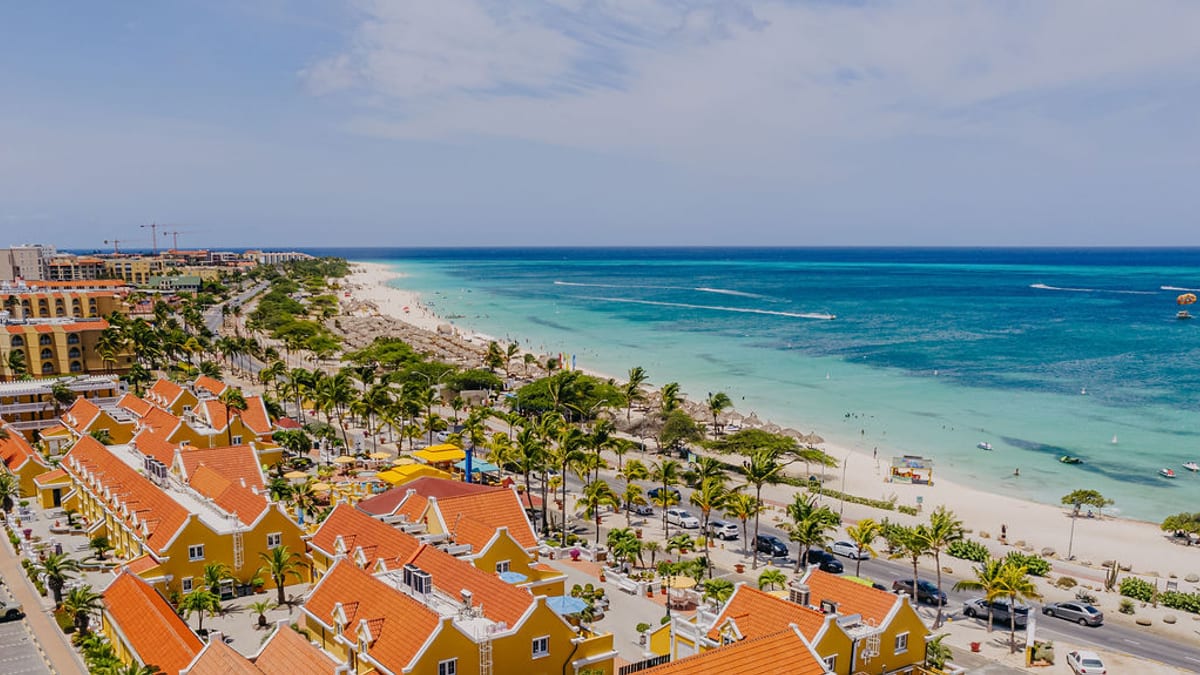
Oranjestad in Aruba continues to feature prominently in Caribbean planning for both airlines and cruise lines, and American’s Miami flights provide a primary air bridge for sun‑seeking travelers from across the United States. Tourism officials in Aruba have previously emphasized the importance of reliable airlift from Florida in sustaining year‑round visitor numbers and higher‑spending segments such as resort and casino guests.
In Jamaica, Miami service into Montego Bay and Kingston underpins large volumes of visiting‑friends‑and‑relatives traffic alongside traditional beach tourism. Similarly, Barbados and Dominican Republic hot spots such as Punta Cana and Santo Domingo rely on U.S. connectivity via Miami to maintain occupancy levels at large resort complexes and all‑inclusive properties.
As American tunes its Miami network for 2026, these islands stand to gain from stronger one‑stop access across the carrier’s domestic system. Additional connectivity through Miami can make secondary U.S. cities more competitive as origin points for Caribbean holidays, potentially widening the customer base beyond traditional East Coast strongholds.
Operational Headwinds and Security Considerations in the Region
The renewed focus on the Caribbean comes against a backdrop of operational challenges that have tested airline resilience in recent months. In early January 2026, a U.S. military operation in Venezuela triggered temporary airspace restrictions across parts of the Caribbean, leading to widespread flight cancellations and diversions on multiple carriers.
News reports from that period describe hundreds of disrupted flights and knock‑on delays as airlines rerouted around closed corridors and airports implemented heightened security protocols. San Juan’s main airport publicly cited the regional security situation in communications about restrictions that affected both north‑south and east‑west traffic flows.
For American and its competitors, those events underlined the importance of flexible scheduling, additional recovery capacity and close coordination with aviation authorities. The decision to resume Miami–Caracas flights in this environment suggests a carefully calibrated approach that balances commercial opportunity with an evolving risk landscape.
Industry analysts note that travelers booking Venezuela and nearby markets are likely to pay close attention to travel advisories and airline waiver policies. Carriers operating in the region have been tightening contingency planning, including spare aircraft positioning and additional crew resources, to manage irregular operations tied to weather, military activity and airspace constraints.
What Expanded Miami–Caribbean Links Mean for Travelers
For U.S. travelers planning 2026 vacations or family visits, the enhanced Miami–Caribbean network translates into more nonstop choices and potentially more competitive fares on key leisure routes. Miami’s role as a super‑hub for American means that new and restored links, such as the planned Miami–Caracas service, often generate ripple effects in scheduling and pricing for destinations like Nassau, San Juan, Aruba, Jamaica, Barbados and the Dominican Republic.
Travel advisers quoted in trade coverage suggest that increased capacity typically broadens options for connecting itineraries from Midwest and West Coast cities, where nonstop Caribbean service may be limited. Routing through Miami can offer daytime travel patterns, shorter overall journey times and a wider range of flight times compared with itineraries that require multiple connections.
However, experts also caution that travelers heading to Venezuela in particular should review the latest security information and entry requirements when planning trips for late 2026 and beyond. While American’s proposed restart marks a symbolic step in reconnecting the country with the U.S. air network, conditions on the ground and regulatory frameworks may continue to shift.
Across the wider Caribbean, the network adjustments underscore how central Miami has become to American’s strategy as it approaches its centennial year in 2026. With a mix of restored routes like Miami–Caracas and reinforced staples to Nassau, San Juan and resort islands, the airline is positioning itself to capture a growing share of sun‑seeker and visiting‑friends‑and‑relatives traffic in the next peak travel seasons.