

More news on this day
A deepening jet fuel shortage triggered by the Iran war and disruptions in the Strait of Hormuz is beginning to filter through to airlines in the Philippines, Vietnam and other parts of Southeast Asia, raising the risk of higher fares, schedule changes and short-notice cancellations for travelers in the coming months.
Get the latest news straight to your inbox!
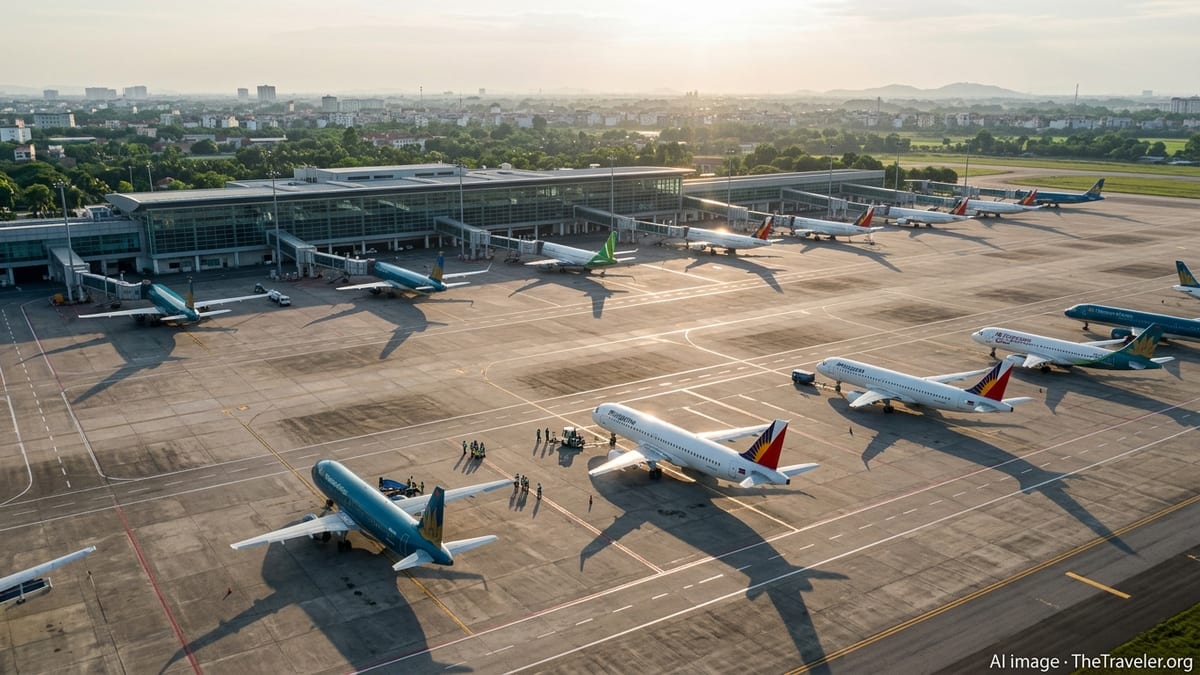
How the Middle East crisis is choking jet fuel supplies
The conflict involving Iran and regional powers has pushed the global energy system into one of its most fragile moments in decades. Attacks on major oil and gas infrastructure in the Gulf, combined with the partial shutdown of tanker traffic through the Strait of Hormuz, have sharply reduced the flow of crude and refined products that underpin the aviation industry. Industry analysis from bodies such as the International Air Transport Association highlights how jet fuel, which cannot easily be substituted, sits at the center of this shock.
Published coverage of the Iran war describes a rapid sequence of strikes on energy facilities, from gas fields and refineries in Iran to export hubs across the Gulf. This has been followed by disrupted shipping routes and higher war risk premiums for tankers. With roughly a fifth of the world’s oil and a large share of jet fuel and related products normally moving through this corridor, any prolonged disruption quickly tightens supply in distant markets, especially in import-dependent Asia.
Reports on the broader economic impact indicate that aviation is particularly exposed. Airlines are being forced to reroute long haul services around closed airspace, which increases fuel burn at the same time as supply is constrained. For Southeast Asia, which relies heavily on imported fuel and is deeply integrated into global air networks, that combination is now feeding into a regional jet fuel crunch.
Vietnam warns of possible flight cuts from April
Vietnam has emerged as one of the first Southeast Asian countries to publicly flag specific risks to its aviation fuel supply. According to a March report from Reuters, shared widely in regional media, the Civil Aviation Authority of Vietnam has warned that airlines should prepare for potential flight reductions from the beginning of April after China and Thailand halted jet fuel exports to safeguard their own stocks.
Publicly available information indicates that the warning was delivered in a document sent to Vietnam’s transport ministry on 9 March, outlining the likelihood of shortages in the coming months. Local commentary points out that Vietnam relies on a mix of domestic refining and imported product, so a sudden loss of supply from key neighbors narrows options quickly, particularly during the busy April to June travel window.
Travel forums and industry watchers have already begun to flag the risk of schedule thinning on some routes, especially longer domestic sectors and international services that are less profitable. While there is no blanket cancellation program in place, the guidance to “prepare for reductions” suggests airlines may trim frequencies, consolidate flights or temporarily suspend marginal routes if fuel allocations tighten further.
The Philippines faces price pressure and supply uncertainty
In the Philippines, the jet fuel squeeze is unfolding against the backdrop of a broader national energy emergency. Recent Associated Press coverage describes how the government in Manila has declared a state of national energy emergency to respond to the impact of the Middle East war on fuel and electricity supplies. The move is intended to coordinate the distribution of key commodities, including transport fuels.
For air travelers, the first visible effect has been rising costs. Local reports and passenger accounts indicate that regulators have allowed airlines to raise fuel surcharges for flights booked in early to mid April, adding several thousand pesos to some domestic and international tickets. These surcharges reflect both higher global jet fuel prices and concerns about securing future deliveries.
At this stage, airlines serving the Philippines are generally maintaining their schedules, especially on core domestic trunk routes and major international links. However, analysts note that if the regional fuel market continues to tighten, carriers may have to balance higher operating costs against demand, which could mean selective frequency cuts, upgauging to larger aircraft on popular routes, or time shifting services to match airport fuel availability.
Travelers should also expect less last minute fare flexibility during peak periods, as airlines seek to protect yields and manage limited fuel more carefully. While a widespread wave of cancellations is not yet evident, the risk profile for late schedule changes is clearly rising.
A wider Southeast Asian squeeze on aviation fuel
Beyond Vietnam and the Philippines, the jet fuel shortage is becoming a wider Southeast Asian story. Countries across the region depend heavily on imported fuel, much of it refined in or shipped through the Middle East. As Gulf exports tighten and some Asian suppliers prioritize their own markets, regional refiners and trading houses have less flexibility to meet spot demand.
Economic briefings from banks and research institutes in Indonesia, Malaysia and Singapore highlight that governments are closely monitoring fuel reserves and international price movements. Some energy ministries have signaled that strategic stocks are sufficient for several weeks, but they also acknowledge that a prolonged disruption in the Gulf would require more aggressive conservation measures, particularly for discretionary sectors like aviation.
Industry risk assessments emphasize that Southeast Asia’s role as a major tourism and transit hub adds another layer of vulnerability. Major airports in Bangkok, Singapore and Kuala Lumpur handle large numbers of connecting passengers whose journeys rely on smooth refueling and tight schedules. Any need to ration jet fuel, even temporarily, could force airports and airlines to prioritize certain flights, potentially affecting secondary routes across the Philippines, Vietnam, Indonesia and beyond.
For now, the most likely scenario in the near term is a combination of higher ticket prices, tighter capacity on selected routes and a reduction in spare aircraft and crew that can be deployed when disruptions occur. If the Middle East crisis drags on or energy infrastructure suffers further damage, more significant cuts to regional air connectivity cannot be ruled out.
What travelers should expect and how to prepare
Travelers planning trips to or within Southeast Asia over the next few months should be prepared for a less predictable flight environment. Even if outright cancellations remain limited, airlines may adjust departure times, consolidate lightly booked services or swap aircraft types to manage fuel use more efficiently. Longer haul itineraries that rely on multiple connections through regional hubs are particularly exposed to knock on delays.
Given this backdrop, travel specialists recommend building more buffer time into itineraries. Booking slightly longer layovers rather than very tight connections can reduce the risk of missed onward flights if an earlier sector is rescheduled or delayed. For complex multi country trips, purchasing all flights on a single ticket through one airline group or alliance can also make it easier to be rebooked if plans change at short notice.
From a budgeting perspective, travelers should anticipate higher airfares and surcharges, especially around major holidays such as Easter and local summer peaks. Locking in key flights early may help avoid further price increases, although fully flexible or refundable tickets will command a premium. It can also be prudent to monitor airline and airport announcements in the weeks before departure, as fuel related measures are often communicated on relatively short notice.
Comprehensive travel insurance that clearly covers schedule disruptions, missed connections and airline insolvency risk remains a useful tool, but travelers should read terms carefully. Some policies treat fuel shortages and geopolitical crises differently from routine operational delays. Keeping accommodation and ground transport plans as flexible as possible, particularly for the first and last nights of a trip, will give additional room to maneuver if flights are moved or canceled.
For those already in the region, staying informed through airline apps, airport notifications and reputable news outlets will be important in the weeks ahead. While Southeast Asia’s aviation sector has shown resilience through past crises, the combination of a global energy shock and regional fuel shortages means travelers should approach upcoming journeys with both heightened awareness and a willingness to adapt.