


More news on this day
Italy’s jet fuel crunch has widened from a regional warning to a national headache, with Milan Linate now listed alongside Bologna, Venice, Treviso, Brindisi, Pescara and Reggio Calabria among airports facing rationed or disrupted supplies as Europe’s broader energy shock collides with the peak travel season build-up.
Get the latest news straight to your inbox!
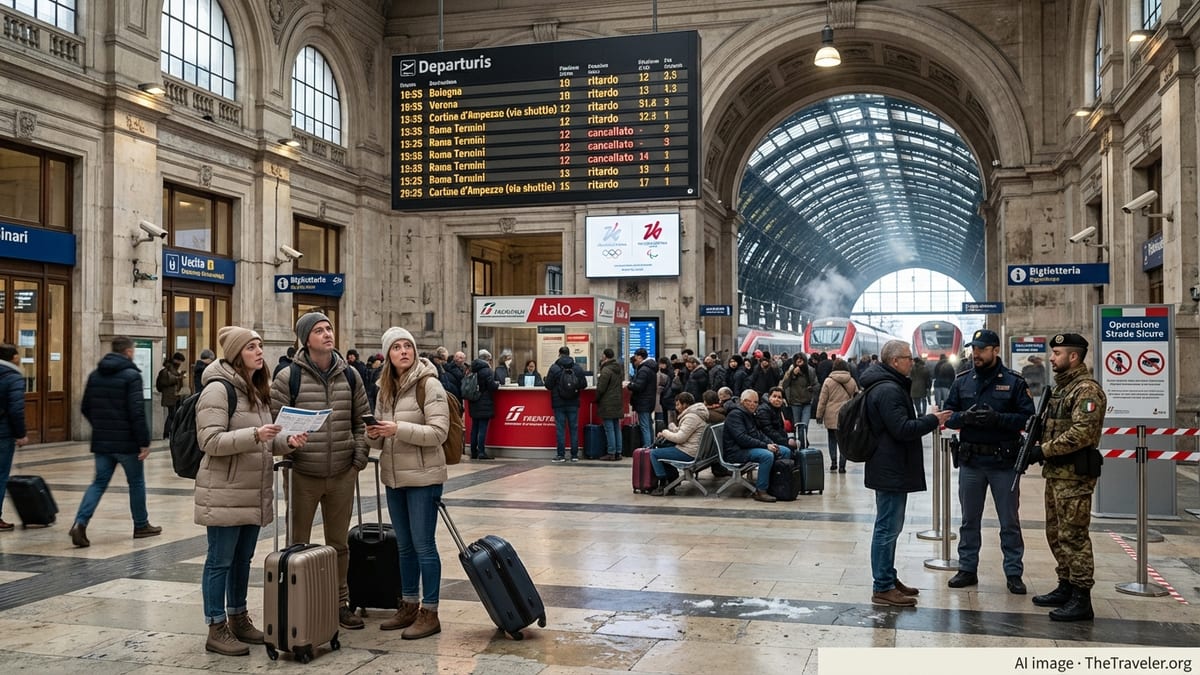
From Local Shortage to Nationwide Alert
The current disruption began in early April 2026, when notices to air missions signalled temporary limits on jet fuel at four northern hubs: Bologna, Milan Linate, Venice Marco Polo and Treviso. Publicly available bulletins and airline advisories indicated that one major supplier had restricted Jet A1 uplifts between 2 April and 9 April, prompting airports to ration fuel and prioritise long-haul, emergency and state flights.
Reports from Italian and international outlets described caps of around 2,000 litres per aircraft for many short-haul services, an amount that typically covers less than an hour of flying time for common single-aisle jets. Airlines were advised to tanker additional fuel into northern Italy from previous legs, turning routine rotations into more complex operational puzzles.
While operators in Venice and Treviso later stated that local suppliers had stepped in to stabilise deliveries, the knock-on effects were already spreading. The early restrictions served as a warning sign that Italy’s aviation system, heavily dependent on imported refined products, was vulnerable to any prolonged disruption in regional fuel markets.
Within days, the list of affected airports expanded beyond the north. Brindisi in Puglia briefly reported no jet fuel on site, with aircraft instructed to arrive already tanked for onward sectors. National coverage also highlighted limited quantities at Pescara on the Adriatic coast and at Reggio Calabria in the south, turning a technical supply problem into a countrywide travel concern.
Milan Linate Joins a Growing List of Strained Hubs
Milan Linate, one of Italy’s key business gateways, has emerged as a focal point of the crisis. The airport sits at the heart of dense domestic and intra European networks, making any fuel constraint immediately visible in the form of weight restrictions, revised routings and, in some cases, cancellations.
Travel and aviation trackers note that Linate, together with Bologna, Venice and Treviso, introduced rationing measures that effectively forced airlines to reconsider how much fuel could be safely uplifted on departure. Shorter routes, especially those under two or three hours, have been most exposed, as operators balance regulatory fuel reserves with reduced local availability.
According to published situation reports on European jet fuel supply, the four northern Italian airports collectively saw several hundred flight disruptions in the first weeks of April, ranging from minor delays to full cancellations. Although most scheduled services continued to operate, the margin of resilience narrowed, with tighter turnaround windows and limited flexibility to absorb further shocks.
The addition of Brindisi, Pescara and Reggio Calabria to the list of airports with constrained fuel has raised particular concern among carriers planning summer leisure capacity. These airports are important gateways to coastal and island destinations, and any lingering supply uncertainty could complicate efforts to restore pre crisis levels of connectivity.
Geopolitical Shock Behind the Jet Fuel Crunch
The Italian jet fuel crisis is part of a wider pattern across Europe and parts of Asia, where refinery and shipping disruptions linked to the war involving Iran and the United States have unsettled supply chains. Energy market commentary points to the partial blockage and insecurity around key maritime chokepoints as a major factor throttling flows of refined products, including Jet A1.
Industry analyses describe a sharp rise in jet fuel prices since the start of the conflict, with supply contracts strained by both physical shortages and financial volatility. Some European airports have warned that stocks have fallen to historically low cover levels, measured in weeks rather than months, prompting them to issue early rationing notices to airlines.
In Italy, the result has been a patchwork of local responses. At certain airports, alternative suppliers have been able to supplement or replace the affected vendor, easing immediate pressure. At others, particularly Brindisi during its zero fuel window, published advisories have made clear that refuelling was simply not possible, forcing airlines either to bypass the airport or to treat it as a technical stop without uplift.
Aviation groups and travel risk consultancies caution that without a sustained improvement in regional energy flows, more European airports may be forced to impose similar measures over the coming weeks. The Italian experience is being closely watched as an early test of how airport fuel logistics cope with a prolonged geopolitical crisis.
Passenger Impact: Delays, Diversions and Higher Costs
For travellers using Milan Linate, Bologna, Venice, Treviso, Brindisi, Pescara and Reggio Calabria, the most immediate effects have been schedule changes and added uncertainty rather than wholesale shutdowns. Airline notices and travel management briefings highlight isolated cancellations, departure delays linked to refuelling limitations and occasional diversions for technical fuel stops.
On some routes, aircraft are operating with adjusted payloads or routings to accommodate fuel tankering, where extra fuel is uplifted at airports with more plentiful supplies. This can translate into tighter baggage allowances or substituted aircraft types, especially on shorter sectors serving Italy’s business and leisure markets.
Travel risk advisories recommend that passengers build additional time into connections, particularly when changing planes within Italy or between Italian and other European airports. There is also growing emphasis on monitoring booking emails and airline apps closely in the 24 to 48 hours before departure, as operational plans may shift quickly in response to day by day fuel availability.
Economic pressure is another concern. With jet fuel already accounting for a significant share of airline operating costs, the combination of higher prices and logistical inefficiencies is expected to feed into fares. Analysts warn that peak summer travel to and from Italy may become more expensive and less predictable if the current pattern of rationing and local outages persists.
What the Crisis Means for Summer Travel Planning
Looking ahead, publicly available forecasts from aviation consultancies suggest that Europe’s jet fuel balance will remain tight into the heart of the 2026 summer season. For Italy, the experience at Milan Linate and the six other affected airports is shaping how airlines structure their schedules and contingency plans.
Carriers are already scrutinising marginal routes, especially thinner intra European links that rely on smaller aircraft and tight turnaround times. Where fuel risk is considered high, some of these services may see reduced frequencies, upgauging to larger aircraft that make more efficient use of scarce fuel, or substitution by rail and coach partnerships on short cross border corridors.
For travellers, the practical takeaway is that itineraries touching Bologna, Milan Linate, Venice, Treviso, Brindisi, Pescara or Reggio Calabria may require more flexibility this year. Experts advising corporate travel programmes urge companies to maintain up to date traveller tracking, consider alternative gateways such as Milan Malpensa or Rome Fiumicino when feasible, and remain alert to schedule updates as the situation evolves.
Despite the challenges, Italian authorities and airport operators are working within the European framework to secure alternative supplies and stabilise stocks. The coming weeks will be critical in determining whether the current turbulence in jet fuel markets eases in time for the main holiday wave, or whether Italy’s springtime fuel scare proves to be a preview of a more turbulent summer in the skies.