


For travelers who fly private several times a year but do not want the responsibility of owning an aircraft, Jet Linx sits in an interesting middle ground. The Omaha based operator sells access to a national fleet through local private terminals, with pricing built around membership fees and jet card style fixed hourly rates. Understanding how those costs actually add up in the real world is essential before you sign a contract or wire a six figure deposit.
Get the latest updates straight to your inbox!
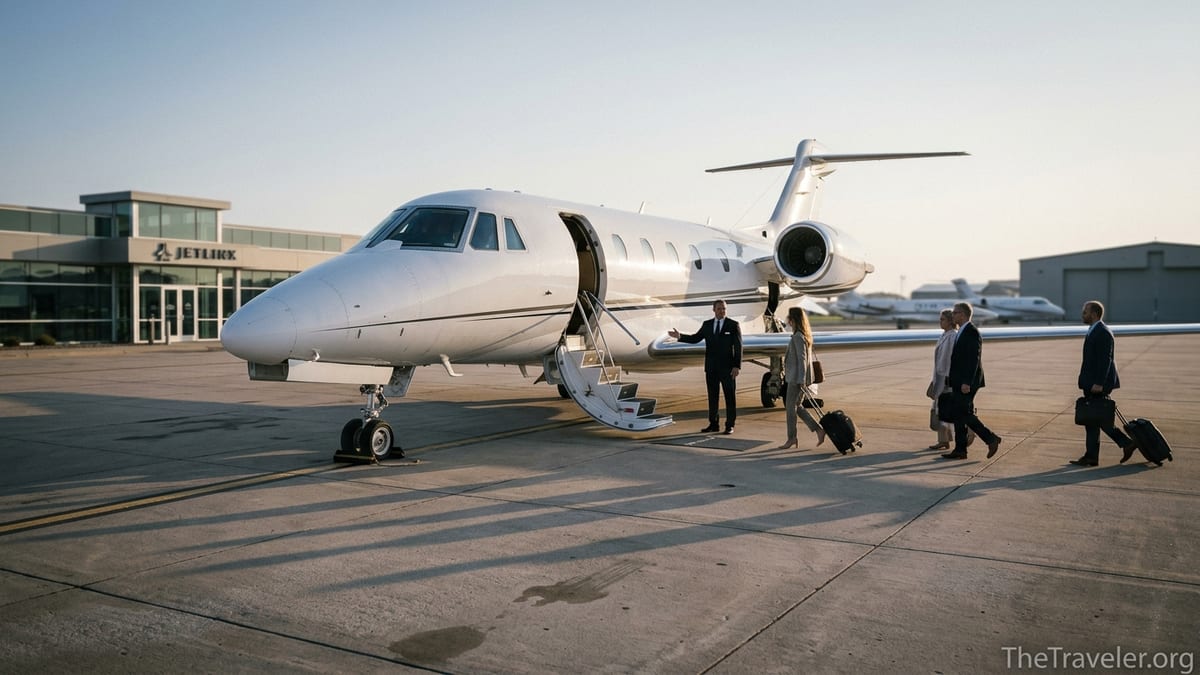
How Jet Linx Structures Its Membership and Pricing
Jet Linx is a private jet operator with more than 20 private terminals nationwide and a fleet of over 100 aircraft under management. Instead of selling seats or one off flights to the general public, the company focuses on a membership model. You join through a one time fee, then either fund a Jet Card for fixed hourly rates or book on demand charter at market pricing. The result is less of an on demand app and more of a relationship driven aviation service tailored around your home base.
Jet Linx highlights three pillars for its Jet Card program: guaranteed aircraft availability, fixed hourly rates, and service through local private terminals. Its fleet spans light jets, midsize, super midsize and heavy jets, with guaranteed access 24 hours a day, 365 days a year for cardholders. Members typically lock their hourly rate for 12 months at a time, and are not charged repositioning fees when they depart from one of the company’s home base airports.
Instead of publishing a public rate card, Jet Linx prices are quoted to prospective members based on aircraft size, expected usage, and home market. However, the building blocks are similar to other major jet card programs. Industry surveys of jet cards in early 2026 show average all in hourly rates around 11,000 dollars, with light jets typically in the mid to high 8,000s per hour and super midsize aircraft averaging in the low to mid 12,000s per hour before taxes. Jet Linx positions itself near those market averages, sometimes slightly below on round trip flying out of its bases.
To understand the economics, it helps to think of Jet Linx membership and flying in layers: a one time membership fee to join, then hourly rates for Jet Card flights or trip specific quotes for charter. On top of that sit variable charges such as fuel surcharges, catering, ground transportation, and the 7.5 percent U.S. federal excise tax that applies to most domestic private jet flights.
One Time Membership Fees: Club, Executive and Access Options
Jet Linx has historically offered two primary membership levels for its Jet Card program, often described as Club Card and Executive Card. Public documents released by the company in recent years have cited a one time membership fee in the low five figures to join as a Club Card member, and a higher fee for Executive Card membership with expanded benefits. Earlier materials referenced examples such as a 12,500 dollar one time fee for Club Card, with the Executive level carrying a premium. While these figures can change and are not guaranteed, they give a sense of the order of magnitude a new member can expect.
The one time membership fee is paid up front and is not applied to flight hours. It functions more like an initiation fee to access Jet Linx’s private terminals, concierge services, and Jet Card pricing. In practice that means a traveler based in Dallas, Scottsdale or Atlanta might pay a mid five figure amount to join at an elevated tier, then separately fund a jet card to start flying. There is usually no requirement to pay the membership fee again each year as long as you remain in good standing, though there may be annual program or account fees depending on the structure offered at the time you enroll.
In late 2024 Jet Linx also introduced a limited duration Access Card aimed at travelers who want to test the service without committing to a full membership right away. The Access Card runs for 90 days and provides entry level access to the fleet and Jet Card style benefits during that period, designed as a trial or seasonal solution. While specific pricing for this product is not widely public, positioning it as a short term option suggests a lower up front commitment than a traditional full membership, but with higher effective hourly costs or restricted availability compared with long term cardholders.
When comparing Jet Linx with other providers such as NetJets or Flexjet, it is important to account for these initiation style fees. A traveler who pays 15,000 dollars to join and then loads 250,000 dollars on a card has effectively committed 265,000 dollars on day one, even though only the card balance is available for flying. Spread over several years and a hundred or more flight hours, this membership fee becomes a relatively small per hour surcharge, but if you only fly 20 to 30 hours before moving on, the fee will significantly increase your effective hourly rate.
Jet Linx Jet Card Pricing: Hourly Rates and Real Trip Examples
The core product most travelers associate with Jet Linx is the Jet Card: a program that offers guaranteed access to aircraft in exchange for a funded account and fixed hourly rates. While the company does not publicly list its exact rates, they generally track with broader jet card market averages. Recent industry data for 2026 indicates that all inclusive jet card rates across providers average about 11,400 dollars per hour, with light jets in the 8,000 to 9,500 dollar range, midsize jets just above 10,000 dollars per hour, and super midsize aircraft in the 12,000 to 13,000 dollar range.
In practice a Jet Linx quote might look like this for a light jet such as a Cessna Citation CJ3. A Dallas based member loads 200,000 dollars onto a Jet Card. Jet Linx sets a fixed hourly rate for light jets that, once you include standard fuel and surcharges, works out to approximately 8,500 to 9,000 dollars per flight hour from a home base. If that member books a same day round trip from Dallas to Houston for a business meeting, covering about 50 minutes of air time each way, Jet Linx charges only the occupied flight hours. That trip might invoice as 2.0 hours of flight time at around 8,750 dollars per hour, or roughly 17,500 dollars plus 7.5 percent federal excise tax.
Consider a more typical leisure itinerary on a super midsize jet, such as a Challenger 300, from Omaha to Scottsdale for a long weekend. The flight takes about 2.5 hours each way. On a Jet Linx super midsize Jet Card, an all in rate could reasonably sit around 12,500 dollars per hour given current market averages. Booking a round trip would therefore consume about 5.0 hours at 12,500 dollars, equaling 62,500 dollars plus taxes and any special catering or deicing fees. Because Jet Linx prices round trips on occupied time only and does not charge repositioning from its base, the member avoids the extra ferry legs that are often built into on demand charter quotes.
For heavy jets, useful for transcontinental U.S. routes or larger groups heading to Europe or Hawaii, cardholders can expect hourly rates that start in the mid to high teens. A New York to Los Angeles round trip on a Gulfstream G450, roughly 5.5 to 6.0 hours each way, could easily total more than 200,000 dollars all in for a Jet Linx heavy jet cardholder once hourly charges, airport fees and taxes are applied. These examples illustrate the scale: jet card flying is a six figure per year proposition for anyone regularly using midsize or larger aircraft, even at competitive rates.
Charter Pricing vs Jet Card: When Each Makes Financial Sense
In addition to Jet Cards, Jet Linx will arrange on demand charter for clients who do not want to commit to a prepaid program, or whose flying needs fall outside the company’s core service areas. Charter pricing, whether through Jet Linx or another broker, is essentially spot market: each trip is quoted individually based on aircraft availability, routing, repositioning, peak demand, and special requirements like international overflight permits or deicing.
On demand charter rates often look lower on paper than jet card rates. It is possible, for instance, to charter a light jet from Miami to the Bahamas at 5,000 to 6,000 dollars per flight hour in a favorable market. However, that quote will usually include both occupied and repositioning time. A seemingly simple 1.0 hour flight may bill 2.5 or 3.0 hours once the aircraft’s location before and after your trip is factored in. In contrast, a Jet Linx cardholder flying from a company base typically pays only for occupied flight hours, which can make total trip costs quite competitive for out and back or multi leg itineraries.
A Jet Card will generally make financial sense once you fly more than 25 to 50 hours per year, value guaranteed access on short notice, and regularly depart from one of Jet Linx’s local bases. For example, a family in Denver who flies privately to Vail several times each winter, plus a handful of trips to coastal destinations, might easily log 40 to 60 hours annually. If they relied solely on on demand charter, their per hour costs would vary constantly and peak holiday flights could be hard to secure. By purchasing a Jet Linx card and paying a premium relative to the lowest spot quotes, they gain price stability, superior availability, and a consistent service team.
Conversely, if you only expect to charter a jet once or twice a year for special occasions, tying up hundreds of thousands of dollars in a Jet Card is rarely justified. In that scenario, taking the time to shop multiple charter quotes through brokers or online marketplaces will keep your fixed costs low. Many infrequent flyers start with charter, then migrate to a Jet Card once they recognize a recurring pattern of trips from the same airports and begin to prioritize reliability over squeezing every last dollar out of each itinerary.
Understanding the Fine Print: Daily Minimums, Peak Days and Extra Fees
Headline hourly rates only tell part of the story with any jet card, and Jet Linx is no exception. Industry analysis for 2026 points out that while published hourly prices have only increased modestly in the last year, many providers have quietly raised daily minimums and added peak day restrictions. A daily minimum is the least amount of flight time you will be billed for in a calendar day, regardless of how short your actual trip is. Common minimums today are 1.5 to 2.0 flight hours.
Imagine you are a Jet Linx member in Atlanta who wants to fly to Savannah for lunch, a route that might be only 40 minutes each way in a light jet. Even if your total air time is 1.3 hours, program rules may specify a 2.0 hour daily minimum, meaning you will pay two hours at your contracted rate. If your light jet rate is 9,000 dollars per hour, that turns a quick regional jaunt into an 18,000 dollar line item, plus taxes and fees. For members who often take very short hops, daily minimums can significantly raise the effective hourly cost of their flying.
Peak days are another lever. Around major holidays, popular events or heavy winter weekends in ski markets, providers like Jet Linx may enforce longer advance booking requirements, blackouts on certain aircraft types, or surcharges. While Jet Linx markets no peak day surcharges on its core Jet Card program, real world flying during high demand periods can still be affected by aircraft availability and operational constraints. Prospective members should request a written list of peak dates and any special conditions that apply, then overlay that calendar with their own typical travel patterns.
Finally, there are ancillary costs that sit outside the hourly rate. These may include deicing in winter, overnight crew expenses for multi day layovers, international handling and overflight fees, and specific catering or ground transportation arranged through Jet Linx. Aviation industry sources estimate that these extras can add 10 to 25 percent to the base hourly charges over the course of a year, depending on how often you fly in winter climates or to smaller international airports. When comparing Jet Linx with other jet card or charter options, ask each provider to show historical examples of total invoice amounts for sample trips, not just the nominal hourly rate.
How Jet Linx Compares to Other Jet Card Providers
Travelers evaluating Jet Linx will naturally compare it to other well known jet card and membership players such as NetJets, Flexjet, Wheels Up, VistaJet and a range of boutique operators. Across the market, light jet card rates often fall from the high 7,000s to around 10,000 dollars per hour, while heavy jets can exceed 18,000 dollars per hour on premium programs. Some providers charge substantial annual dues on top of deposit requirements; others, like certain brokers, skip initiation fees but offer less robust guarantees on aircraft type or availability.
Jet Linx’s main differentiator is its “local base” model. Instead of servicing the entire country from a handful of hub airports, the company operates private terminals in cities like Omaha, Dallas, Houston, Scottsdale, Denver, St. Louis and several others. Members are assigned a local team that handles trip planning, catering, and even favorite beverages or reading material on board. For someone who flies mostly from one of these cities, that structure can be more convenient and personal than dealing with a large national call center.
In pricing terms, Jet Linx aims to compete by charging only for occupied flight time at round trip rates and eliminating repositioning fees from its bases. That means a member flying from a Jet Linx home airport often sees total trip invoices that compare favorably to national fractional or card programs, which may layer ferry legs or higher minimums into their pricing. Public statements from the company have claimed that many members see effective hourly rates roughly half those of some national fractional programs when flying round trips from base locations, although this will vary widely by itinerary and aircraft type.
On the other hand, if your home airport is not near a Jet Linx base, the advantages narrow. The company can still arrange charter and leverage its fleet, but you may not benefit from the same no repositioning structure, and service will look more like that of any other national broker. Travelers on the coasts or in secondary markets should weigh whether a more geographically agnostic provider makes sense, or whether relocating part of their flying to a nearby Jet Linx city is practical.
The Takeaway
Jet Linx has built a loyal following among private flyers who value personalized service, dedicated local terminals, and predictable pricing more than the flashiest brand name. Its pricing architecture is straightforward once you break it down: pay a one time membership fee to join, fund a Jet Card to secure fixed hourly rates on a fleet of light through heavy jets, and then fly on occupied time only from company bases, with a 12 month rate lock and guaranteed availability baked in.
For a family or business flying 25 to 75 hours per year from a Jet Linx city, that model can make both financial and practical sense. A traveler who takes two to three hour regional legs on light or midsize aircraft may see total trip invoices in the high teens to low thirties in thousands of dollars, while super midsize and heavy jet flights for coast to coast or Caribbean trips will routinely cross into the mid five and low six figure range. These are large numbers, but in line with the realities of private aviation in 2026.
The key is to look beyond headline hourly rates. Ask Jet Linx to walk you through specific sample itineraries you are likely to fly over the next 12 to 24 months, including all fees and taxes. Compare those side by side with quotes from at least one or two competing jet card providers and a reputable charter broker. Pay close attention to details such as daily minimums, peak day rules, cancellation policies, and how unused funds are handled if you decide to leave the program.
If, after that analysis, you see a recurring pattern of trips that lines up well with Jet Linx base locations and program rules, then the company’s membership and Jet Card pricing can provide a stable, transparent foundation for your private flying. If your travel is more sporadic or heavily international, on demand charter or more globally focused programs may offer better value. As with most things in private aviation, the right answer is less about which provider is “cheapest” on paper and more about which structure best matches the way you actually travel.
FAQ
Q1. How much does it cost to join Jet Linx as a new member?
Jet Linx charges a one time membership or initiation fee that is separate from your flight funds. Public information from recent years indicates that entry level membership has typically required a low five figure payment, with higher tiers costing more. Exact fees are quoted individually and can change over time, so prospective members should request current written pricing during the sales process.
Q2. What are typical Jet Linx Jet Card hourly rates?
Jet Linx does not publish a public rate sheet, but its Jet Card pricing generally tracks broader market averages for guaranteed, all inclusive programs. Light jets often work out in the high 8,000 to roughly 9,500 dollars per flight hour, midsize jets in the low 10,000s, super midsize aircraft in the 12,000 to 13,000 dollar range, and heavy jets significantly higher. These figures are indicative, and your contracted rates will depend on aircraft category, base location and program details.
Q3. How big of a Jet Card deposit do I need with Jet Linx?
Most jet card programs require at least enough funding to cover 25 hours of flying in your chosen aircraft category, and Jet Linx is broadly similar. In practice, many members fund cards with 200,000 to 500,000 dollars or more, depending on how many hours they expect to fly in a year and whether they use light, midsize or larger aircraft. The higher your average aircraft category, the larger the deposit you will need for the same number of flight hours.
Q4. Does Jet Linx charge repositioning fees?
When you depart from one of Jet Linx’s private base airports and fly a qualifying round trip, you typically pay only for occupied flight hours at your contracted rate. The company markets no repositioning fees in those scenarios, which can materially lower the total cost of many trips compared with on demand charter. If you start or end travel away from a Jet Linx base, or book complex routings, additional costs may apply, so it is important to ask how a specific itinerary will be billed.
Q5. Are Jet Linx Jet Card rates guaranteed, and for how long?
Yes, one of the core features of the Jet Linx Jet Card is fixed hourly pricing. Members receive a written schedule of hourly rates by aircraft category, generally locked in for a 12 month period. During that time the company may adjust surcharges in response to significant changes in fuel or operating costs, but the underlying hourly rate remains constant, which helps regular flyers budget more predictably for their travel.
Q6. How does Jet Linx pricing compare with NetJets and other big players?
Across the market, large fractional and jet card providers often charge similar or slightly higher effective hourly rates than Jet Linx, particularly on smaller aircraft and short legs. Jet Linx aims to be competitive by charging only for occupied time from its bases and avoiding repositioning fees, which can make its all in cost per trip attractive for round trip flying. However, some national providers offer broader international coverage and more extensive fleets, so the best value depends heavily on your specific routes and aircraft preferences.
Q7. When is a Jet Linx Jet Card better than just chartering trips?
A Jet Linx Jet Card usually makes sense when you fly at least 25 to 50 hours per year, depart frequently from a Jet Linx base city, and place a high value on guaranteed availability and a consistent service team. If you only charter once or twice a year, on demand brokers can often secure similar aircraft at lower effective prices, albeit with more variability in both quality and availability. Once your usage crosses the threshold where you are booking flights almost every month, the stability and service of a card program often outweigh the potential savings of shopping the spot market for each trip.
Q8. What hidden costs should I watch for in Jet Linx pricing?
The most important items to examine are daily minimum flight times, peak day rules, and ancillary fees such as deicing, overnight crew charges, international handling, and premium catering. All of these can increase your effective cost per hour compared with the headline rate. Ask Jet Linx to spell out current daily and segment minimums and to provide example invoices for trips similar to those you expect to fly so you can see the full picture.
Q9. Can I use Jet Linx for international flights, and how is that priced?
Yes, Jet Linx members can arrange international flights to destinations such as Mexico, the Caribbean, Canada and farther abroad on suitable aircraft. Pricing for these trips generally follows your contracted hourly rates, but additional costs apply for international handling, overflight permits, customs arrangements and potential crew overnights. Because these extras can be substantial, it is wise to request itemized, written quotes for any international itinerary before confirming.
Q10. What questions should I ask before signing a Jet Linx contract?
Before joining, ask Jet Linx to clarify the exact one time membership fee, any recurring program charges, your hourly rates by aircraft size, daily and segment minimums, peak day policies, cancellation rules, and how unused funds are treated if you leave the program. Then request sample invoices for at least three realistic trips you would likely fly. Comparing those totals with quotes from one or two alternative providers will give you a grounded, real world view of how Jet Linx pricing fits your travel pattern.