


More news on this day
Passengers across several major US hubs, including Atlanta, San Diego and Miami, encountered another difficult travel day on September 12, with scattered delays, cancellations and lingering disruption from weather and infrastructure constraints combining to slow operations.
Get the latest news straight to your inbox!
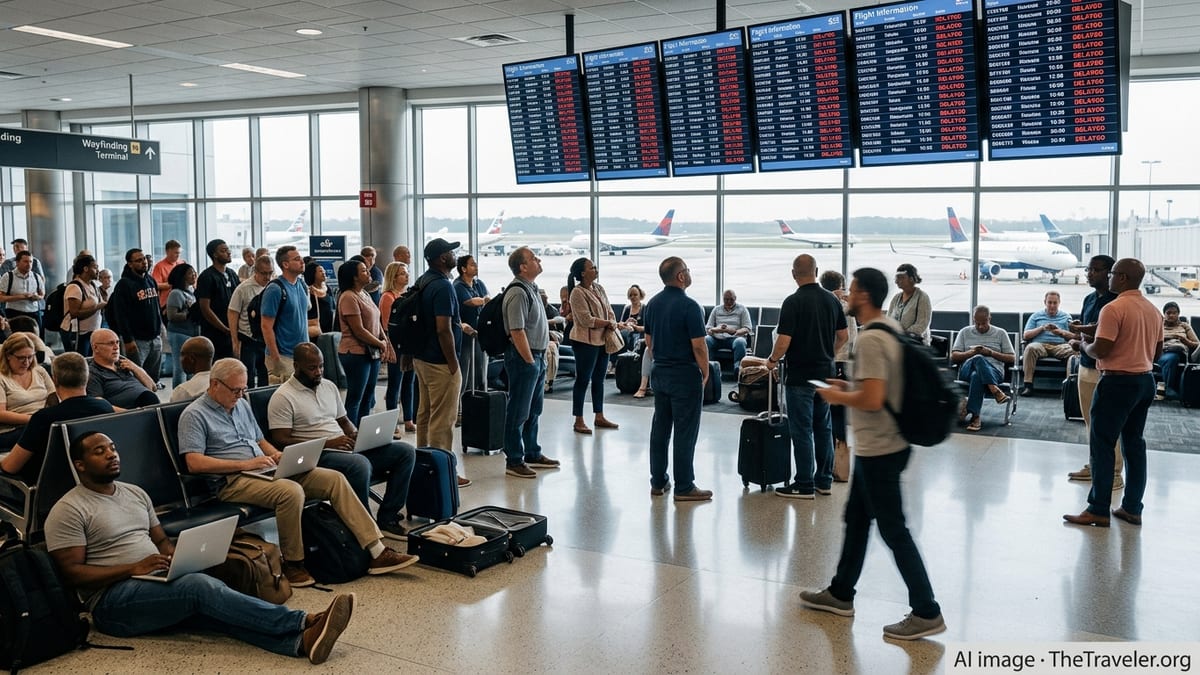
Storms and Power Issues Add Strain in the Atlanta Hub
Atlanta’s Hartsfield-Jackson, one of the country’s busiest hubs, experienced a challenging operating environment on September 12 as unsettled late-summer weather and pockets of power outages in the wider region added pressure to an already congested airspace. Public outage trackers for Georgia Power showed several thousand customers without electricity across Fulton County during the afternoon, indicating local grid instability that can complicate airport-area ground operations and access routes for passengers and staff.
Flight-tracking data pointed to a mix of minor delays and isolated cancellations across the major carriers that use Atlanta as a connecting hub. Departures to nearby Southeastern cities were particularly vulnerable to passing thunderstorms along flight paths, prompting crews to wait out cells or accept longer routings. While no broad nationwide ground stop was in place specifically targeting Atlanta, routine flow-control measures and holding patterns contributed to extended taxi and airborne times for some services.
Operational notices for pilots highlighted ongoing navigation and procedure advisories that limited flexibility on certain approach paths during peak periods. These restrictions, combined with convective weather and heavy Saturday traffic, created the kind of rolling, hard-to-predict disruption that leaves travelers facing missed connections and longer-than-expected layovers, even when individual delays appear modest on paper.
For passengers, the result was a familiar pattern: relatively normal early-morning operations gradually giving way to mid-afternoon congestion as inbound delays stacked up. Travelers connecting through Atlanta on September 12 reported longer lines at customer-service desks and tighter connection windows, particularly on popular routes into the Midwest and Gulf Coast.
San Diego Sees Knock-On Delays Amid West Coast Congestion
At San Diego International, September 12 brought a more localized version of the turbulence seen across the national system. Published coverage and flight-board data showed an uptick in departure delays during the late morning and afternoon, with several carriers citing air-traffic flow programs affecting Southern California as a whole. Typical bottlenecks in the Los Angeles basin and along coastal corridors contributed to slower arrival rates into San Diego’s single-runway airport.
San Diego’s position within the Federal Aviation Administration’s list of high-impact airports means that even modest constraints elsewhere on the West Coast can quickly reverberate through its schedule. When large hubs such as Los Angeles and San Francisco adjust arrival spacing or implement minor ground-delay programs, downline airports like San Diego often see their own departures held to maintain spacing and prevent airborne congestion.
While there were no indications of a major infrastructure failure or prolonged outage at San Diego on September 12, the combination of busy weekend traffic, constrained runway capacity and weather-influenced routing along the coast translated into a day of frequent, shorter delays. For leisure travelers heading to and from the city, particularly those connecting onward through western hubs, even these incremental setbacks created missed connections and the need for rebooking.
Carriers with dense point-to-point networks on the West Coast appeared somewhat better positioned to absorb the disruption, rerouting passengers onto later same-day services. However, those reliant on tightly timed connections through a single western hub had less room to maneuver, leaving some travelers facing overnight stays or significant schedule changes.
Miami Operations Squeezed by Tropical Weather and Tight Turnarounds
Miami International Airport, another key high-impact hub, faced its own weather-linked complications on September 12. Tropical moisture in the region and active systems monitored by the National Hurricane Center led to periods of convective activity in South Florida, a pattern that often forces temporary pauses in ramp operations and reduces arrival and departure rates.
Flight-tracking services for September 12 showed Miami-bound services generally arriving close to schedule in the early morning, with minor slippage appearing as the day progressed. Several domestic flights recorded small but compounding delays on arrival or departure, reflecting the effect of weather holds and saturated airspace in the busy Florida corridor. Even a few minutes added to multiple turnarounds can push afternoon and evening operations behind schedule.
Despite the unsettled weather pattern, publicly available data on individual flights into and out of Miami indicated that many services still arrived within minutes of their planned times, suggesting that airlines were able to operate around the storms for much of the day. However, for passengers with tight connections, particularly those linking from Caribbean or Latin American routes onto domestic legs, the margin for error was slim.
Miami’s role as both an international gateway and a domestic connector meant that any delay on inbound long-haul services risked cascading through evening departure banks. Travelers heading to northeastern and Midwestern destinations reported gate changes and compressed boarding timelines as airlines worked to keep aircraft and crews in position ahead of the overnight and early-morning schedules.
National System Under Pressure From Seasonal Patterns
The disruption in Atlanta, San Diego and Miami on September 12 reflected broader seasonal pressures on the US aviation network. Late-summer and early-autumn travel demand remains strong, while weather patterns in both the Southeast and the West often become more volatile, creating a difficult operating environment for airlines and air-traffic managers.
Data published by the Federal Aviation Administration in recent air-traffic reports shows that the use of tools such as ground stops and flow-control programs has increased in recent years at large hubs, including Atlanta, Miami and San Diego. These measures are designed to manage safety and capacity when storms, congestion or technical constraints reduce the number of flights an airport can handle, but they also contribute to the sense of unpredictability passengers experience on busy travel days.
On September 12, there were no signs of an extraordinary computer outage or nationwide technical failure, according to publicly accessible system notices. Instead, the day’s problems appear to have stemmed from the more routine combination of localized storms, high traffic volumes and infrastructure constraints in several key regions. For travelers, the practical impact was similar to that of larger, headline-grabbing events: longer waits, missed connections and, in some cases, overnight disruptions.
Industry observers note that as schedules remain tight and aircraft utilization high, even small, localized interruptions at major hubs can quickly spill across the country. The experience of passengers moving through Atlanta, San Diego and Miami on September 12 underscores how intertwined the US air network has become, and how quickly pressure in one region can translate into delays thousands of miles away.