


More news on this day
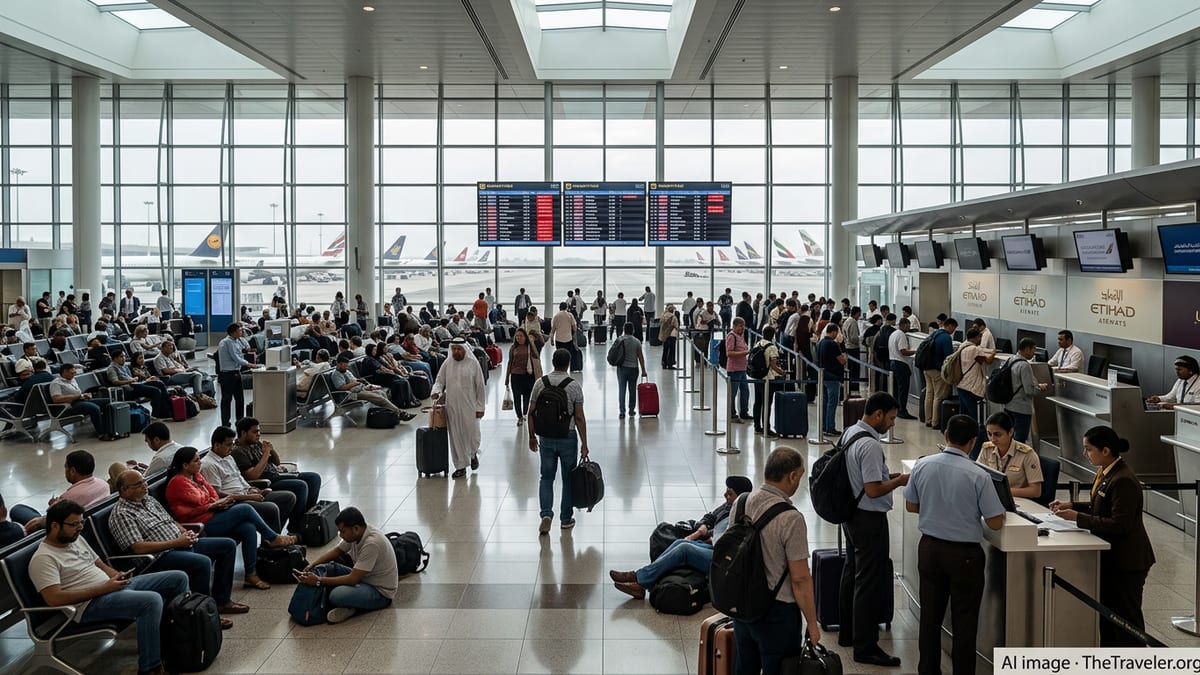
More than 170 flights were delayed across Dubai International Airport and Abu Dhabi’s Zayed International Airport on Sunday, as a combination of regional tensions, weather monitoring and ongoing operational adjustments disrupted schedules for thousands of travellers.
Get the latest news straight to your inbox!
Widespread Disruptions Across Two Major Gulf Hubs
Preliminary tallies from publicly available tracking data and aviation analytics for Sunday, September 13, indicate that well over 170 flights experienced delays of more than 15 minutes at the two largest airports in the United Arab Emirates. Delay figures include both arrivals and departures, affecting services operated by Emirates, Etihad Airways, flydubai, Air Arabia and a range of international carriers using the hubs as transit points.
The disruptions follow a week of uneven operations in the country’s airspace, during which multiple reports highlighted a pattern of mixed on-time performance, isolated cancellations and rolling schedule changes at both Dubai and Abu Dhabi. Recent coverage from regional business media has described UAE air travel as “mixed,” with airports fully operational but airlines frequently retiming flights in response to shifting conditions in surrounding regions.
While most flights continued to operate, the cumulative impact of short delays across dozens of services quickly translated into crowded departure halls, longer waits at gates and missed onward connections for some passengers. Data from live airport dashboards and flight-tracking platforms showed delays spread throughout the day, rather than concentrated in a single peak period.
Despite the scale of the disruption, both airports remained open and core operations, including runway availability and air traffic control services, continued without major interruption, according to information posted on official aviation and meteorological platforms.
Regional Tensions and Airspace Constraints Add Pressure
The latest wave of delays comes against a backdrop of heightened regional tensions and intermittent airspace constraints that have affected flight paths around the Gulf in recent weeks. Published coverage in UAE-based outlets over the past several days has repeatedly linked schedule changes and extended flight times to evolving security conditions along some long-haul corridors, as well as to disruption on routes to and from parts of Europe and Asia.
Several international airlines have temporarily adjusted or suspended services to Dubai during this period, citing risk assessments and wider network challenges. Reports indicate that some European carriers have extended previously announced suspensions into mid September, reshaping the supply of seats into and out of Dubai and placing additional pressure on regional airlines that continue to operate.
For Gulf-based carriers, reroutings around sensitive airspace and the need to build extra buffers into flight plans can contribute to knock-on delays, especially when fleets are already tightly scheduled. Aviation observers say that even small schedule changes at congested hubs can ripple through the network, resulting in rolling delays across short and medium haul sectors later in the day.
On Sunday, a number of affected flights involved connections to destinations where air traffic control, volcanic ash advisories or security-related reroutings have been reported in recent days. This added a further layer of complexity to the task of maintaining punctuality across interconnected networks.
Operational and Weather Factors at Dubai and Abu Dhabi
Meteorological data for Sunday from aviation weather services covering Dubai International Airport and Abu Dhabi’s Zayed International Airport pointed to generally stable conditions, with high temperatures, moderate winds and good visibility for most of the day. Forecast products showed no widespread sandstorms or convective weather events directly over the airports during key operational windows.
However, aviation planners often respond not only to current weather over the airport but also to forecasts along critical en route corridors and at diversion fields. Industry analysts note that elevated temperatures, humidity and wind shifts can also slow ground operations, particularly at the height of the day when ramp conditions are most challenging, contributing to incremental delays in aircraft turnaround times.
Operational information referenced in recent local business reports points to a blend of technical, crew and rotation-related issues on individual flights over the past week, in addition to regional airspace challenges. Delays on aircraft arriving late from previously disrupted routes can cascade into late departures from Dubai and Abu Dhabi, particularly where aircraft are scheduled for multiple legs within a 24 hour period.
Airport weather portals and exception-report summaries for recent months show that while significant weather events are periodically recorded, a substantial share of delays tends to be linked to operational rather than purely meteorological causes, reinforcing the multifactor nature of current disruptions.
Impact on Travellers and Airline Responses
For passengers, Sunday’s delays translated into longer than expected travel days, rebooked connections and, in some instances, extended time in transit lounges while waiting for updated departure times. Regional media coverage has recently highlighted instances of travellers missing onward flights after modest initial delays compounded during tight transfer windows.
Public guidance issued by several UAE-based airlines in recent days has consistently urged passengers to allow extra time at the airport, complete online check in where possible and monitor their flight status before leaving for the terminal. These advisories have been framed as precautionary steps amid a fluid operating environment, rather than signs of systemic closure or shutdown.
Travel industry experts say that flexibility has become an important asset for anyone flying through major Gulf hubs this month. Recommendations include building larger buffers between connecting flights, considering earlier departures where options exist and being prepared for gate changes or minor retimings even after arrival at the airport.
Consumer advocates also note that travellers affected by substantial delays or cancellations may be eligible for assistance such as meals, hotel stays or rebooking, depending on the length of disruption, the cause and the airline’s policies. Passengers are being encouraged to retain documentation of delays and to review carrier terms and conditions when seeking remedies.
Outlook for the Coming Days
Aviation forecasts for the early part of the week suggest that operations at Dubai and Abu Dhabi will remain broadly stable but potentially uneven, with a continued risk of localized delays as airlines balance demand, aircraft availability and regional airspace constraints. Airport weather outlooks for Monday indicate no major adverse systems directly over the UAE, though standard late summer heat and humidity will persist.
Published reporting from the past week indicates that some airlines are cautiously restoring services to the UAE, while others are extending suspensions or keeping contingency measures in place. This creates a patchwork pattern for travellers, with certain routes operating normally and others subject to late changes or reduced frequency.
Industry watchers will be tracking whether Sunday’s tally of more than 170 delays represents a short term peak associated with weekend demand or part of a longer pattern of volatility in regional air travel. Much will depend on how quickly security assessments stabilize on key long haul corridors and whether further disruptions emerge in other parts of the global network that feed traffic into the Gulf.
For now, passengers planning to travel through Dubai or Abu Dhabi over the coming days are being advised to treat published timetables as subject to change and to monitor airline and airport channels closely in the hours leading up to departure.