

More news on this day
A new codeshare agreement between JetBlue and Kenya Airways is set to redraw the transatlantic map in 2026, connecting Nairobi to dozens of American cities through New York and turning a once-niche East Africa–U.S. corridor into one of the year’s most compelling long-haul travel stories.
Get the latest news straight to your inbox!
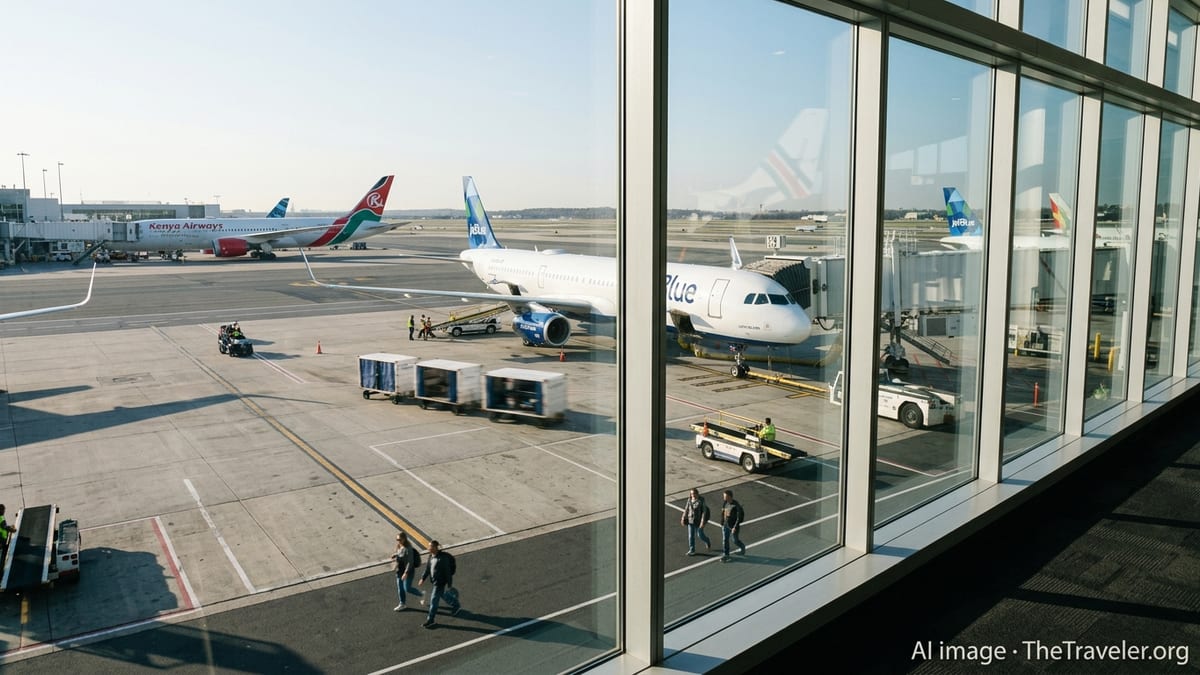
A 2026 Partnership That Repositions East Africa on the Transatlantic Map
Publicly available information released in early March 2026 indicates that Kenya Airways has entered a unilateral codeshare agreement with JetBlue, centered on New York’s John F. Kennedy International Airport. Under the arrangement, Kenya Airways is able to place its KQ flight code on a suite of JetBlue-operated services radiating out from JFK to key U.S. destinations.
The move builds directly on Kenya Airways’ existing non-stop Nairobi–New York service, which has grown in prominence since its launch in 2018 as the only direct link between East Africa and the United States. By pairing that long-haul trunk route with JetBlue’s dense domestic network, the partnership effectively transforms Nairobi’s Jomo Kenyatta International Airport into a much more powerful gateway for two-way traffic between Africa and North America.
While previous codeshare and alliance deals have improved connectivity between Africa and the U.S., the latest tie-up stands out for its focus on one-stop, customer-facing simplicity. Travelers can now book a single itinerary that marries an intercontinental Kenya Airways flight with JetBlue’s familiar domestic product, creating a new kind of transatlantic journey that feels less like a complex international connection and more like an extended through-trip.
New 2026 Routings: From Nairobi to the U.S. Sunbelt and Beyond
According to recent coverage of the agreement, Kenya Airways will be able to sell through-tickets from Nairobi and other East African origins via New York JFK to major JetBlue destinations such as Los Angeles, San Francisco, Chicago, Orlando, Atlanta, Fort Lauderdale, Phoenix, Raleigh-Durham, West Palm Beach and San Juan. For many of these cities, this will be the first time Nairobi appears in booking engines as a relatively straightforward one-stop option.
This effectively converts a single Africa–U.S. transatlantic trunk into a web of new 2026 routings in consumer terms. A traveler in Nairobi heading to Southern California can now select a Kenya Airways flight to New York and connect directly onto a JetBlue-operated service to Los Angeles or San Diego area gateways, without needing to manually string together tickets across multiple carriers or alliance blocs.
For passengers in secondary American markets, the impact may be even more striking. Residents of cities like Raleigh-Durham or West Palm Beach who once had to route through multiple hubs and carriers to reach East Africa will see Nairobi appear as a one-connection option via New York. The codeshare effectively upgrades JFK into a specialized transfer bridge between East Africa and some of the fastest-growing metropolitan regions in the United States.
Industry analysts note that, while the physical flights themselves are not entirely new, the way they are packaged and marketed in 2026 represents a substantial shift. For many consumers and corporate travel planners, the difference between a theoretical connection and a branded, bookable one-stop itinerary is what defines whether a route is truly viable.
Why This Codeshare Feels Like a Game-Changer for Travelers
From the traveler perspective, the biggest change brought by the JetBlue–Kenya Airways partnership is the reduction of friction at every stage of the journey. Public information on the deal highlights combined ticketing, integrated baggage handling and coordinated schedules designed to keep minimum connection times within practical limits for transatlantic flyers.
That means a passenger departing Nairobi in the evening can check in once, tag baggage through to a final JetBlue destination and navigate a single connection at JFK, rather than juggling separate reservations and re-checking luggage. For long itineraries that can easily stretch beyond 18 hours of total travel time, each removed pain point has an outsized effect on perceived comfort and reliability.
Frequent travelers also point to JetBlue’s product on domestic routes as a differentiator. Wider seats, free high-speed Wi-Fi and in-seat entertainment on many aircraft position the airline as a more comfortable way to complete the final leg after a long overnight transatlantic sector. Combined with Kenya Airways’ full-service long-haul product, the result is a journey that more closely resembles a single curated experience than a patchwork of carriers.
For corporate buyers and tour operators, the ability to wrap these routings into contracted fares and group packages can reshape how East Africa is marketed. Safari itineraries, conference travel and diaspora visits can now be constructed around a Nairobi–New York link that flows naturally into JetBlue-served destinations, potentially shifting demand away from more circuitous routings via European or Gulf hubs.
Competitive Ripples Across the Atlantic and Through Global Alliances
The timing and structure of the 2026 tie-up also carry competitive implications. Kenya Airways already maintains codeshare partnerships with major transatlantic and global carriers, and JetBlue has its own web of collaborations with European and Middle Eastern airlines. Layering a Kenya–U.S. arrangement on top of these existing links further knots together a marketplace that is increasingly defined by flexible partnerships rather than rigid alliance lines.
For rival hubs in Europe and the Middle East, the shift is subtle but important. Each passenger who chooses to connect in New York rather than in London, Amsterdam or Doha slightly erodes the traditional dominance of those transfer points for Africa–U.S. traffic. As more East African and U.S. cities appear on booking systems as one-stop pairs via JFK, the New York gateway could capture a larger share of high-yield leisure and business demand.
The arrangement also reinforces JetBlue’s ongoing strategy of using selective international partnerships to extend its reach without operating its own long-haul network at scale. By tapping into Kenya Airways’ Nairobi hub, JetBlue gains indirect relevance in East Africa while remaining focused on the domestic and short-haul routes it already serves, a pattern seen in its relationships with other foreign carriers.
For Kenya Airways, the new 2026 routings deepen its role as a connector between Africa and a wider global network at a moment when competition from Gulf and European carriers remains intense. By leveraging JetBlue’s domestic footprint instead of adding its own U.S. points, the airline sidesteps the cost and complexity of launching new long-haul destinations while still presenting passengers with a dramatically expanded map.
What 2026 Travelers Can Expect Next
As the 2026 travel season unfolds, the full impact of the JetBlue–Kenya Airways codeshare will depend on schedule execution, punctuality at the crucial New York gateway and how aggressively the new routings are promoted in both markets. Early indications from published schedules suggest a continued emphasis on Nairobi–New York as the primary long-haul spine, with JetBlue flights timed to offer practical onward connections.
Travel search engines and online booking tools are expected to be the first place where many consumers encounter the change. As more one-stop Nairobi itineraries surface for cities like Los Angeles, Orlando or San Juan, travelers who previously dismissed East Africa as too complex or time-consuming a destination may be tempted to reconsider.
In parallel, industry observers will be watching how competitors respond. Additional capacity adjustments on the Nairobi–New York route, tweaks to European and Gulf carrier schedules, or new marketing partnerships aimed at the same East Africa–U.S. corridor could emerge as airlines compete for a newly energized market segment.
What is clear is that the combination of a nonstop Nairobi–New York link and JetBlue’s extensive domestic grid has created a fresh blueprint for transatlantic travel in 2026. For flyers on both sides of the ocean, the journey between East Africa and the United States is starting to look less like a long-haul puzzle and more like a streamlined, one-connection staple of the global route map.