

More news on this day
John F. Kennedy International Airport faced a fresh wave of operational disruption as 119 flights were delayed and eight were cancelled, affecting services by American Airlines, JetBlue, Emirates and other carriers on busy routes to London, Paris, Cancun, Orlando and additional destinations.
Get the latest news straight to your inbox!
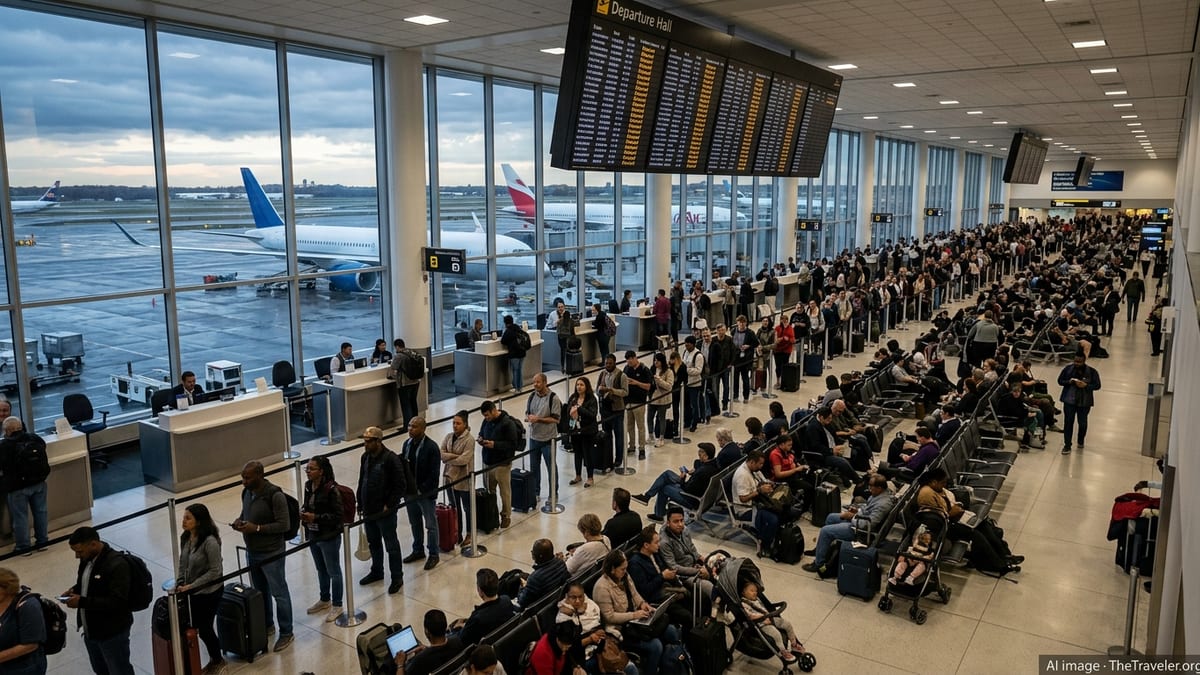
Wide Ripple Effect on Major International and Leisure Routes
The latest disruption at John F. Kennedy International Airport has hit a mix of transatlantic and leisure markets, with delays and cancellations reported on flights to London and Paris alongside high-demand holiday routes such as Cancun and Orlando. Publicly available data and live tracking information indicate that the vast majority of affected services were scheduled during peak afternoon and evening departure banks, when JFK typically funnels a dense wave of European and sunbound traffic.
London services were among the hardest hit, with delays affecting departures to both Heathrow and Gatwick operated by a mix of legacy and low-cost carriers. Paris connections also saw pushed-back departure times and extended gate holds, adding to the broader pattern of congestion at JFK’s international terminals. While only a small number of flights were cancelled outright, the clustering of late departures created a knock-on effect for subsequent rotations across the Atlantic network.
On the leisure side, flights to Cancun and Orlando experienced a combination of late inbound aircraft, ground-handling bottlenecks and air-traffic flow restrictions, resulting in rolling delays that stretched into the evening. For travelers with tight connections at destination hubs or onward cruise and resort arrangements, these hold-ups introduced an added layer of uncertainty at the start of spring travel season.
Additional services to other North American, Caribbean and European cities were also caught up in the disruption, with some aircraft held at gates awaiting departure slots while others queued on taxiways. The cumulative effect was an airport-wide slowdown that placed extra pressure on terminal operations, baggage handling and customer service desks.
American, JetBlue and Emirates Among Carriers Affected
American Airlines, JetBlue and Emirates were among the airlines most visibly impacted by the latest round of disruptions at JFK. According to published coverage and real-time tracking boards, these carriers reported a mix of moderate to extended delays, along with a limited number of cancellations that further tightened available capacity on already busy routes.
JetBlue, which maintains a substantial presence at JFK and relies on the airport as a key hub, saw delays ripple through both its domestic and international schedules. Even when individual flights were only pushed back by an hour or two, the high level of utilization across its fleet meant that late departures from New York frequently translated into downstream schedule challenges at other airports.
American Airlines experienced holdups across select transcontinental and international departures, including services connecting JFK to major European gateways. With aircraft and crews typically set up for tightly choreographed rotations, departure delays of even 60 to 90 minutes can force late-night arrivals into curfew-sensitive airports and complicate next-day scheduling.
Emirates, which operates long-haul services linking JFK with its Dubai hub and onward global network, was also listed among carriers with delayed departures. Long-haul operations are particularly sensitive to timing disruptions because extended flight times and crew duty limits leave less margin to recover lost minutes later in the journey. When paired with crowded evening departure windows and air-traffic metering, even a single delay can cascade across multiple sectors.
Operational Pressures Behind the Day’s Disruptions
While the precise mix of causes behind the 119 delays and eight cancellations at JFK varied by flight and carrier, several common operational pressures were visible in publicly available data and reporting. These included residual schedule imbalances from earlier in the week, weather-related spacing requirements in the broader New York airspace and routine congestion associated with peak-period traffic.
JFK’s role as a major transatlantic gateway means that its afternoon and evening hours are heavily loaded with widebody departures to Europe, coinciding with strong domestic and Caribbean demand. When any element of that system slows, such as ground movement restrictions or air-traffic flow programs, the resulting queues can quickly build across multiple terminals. Aircraft may push back later than planned, wait longer for takeoff clearance or be held at gates while crews and maintenance teams work to prepare the next departure.
In addition, many of the affected flights involve long-haul or high-rotation aircraft that are scheduled intensively throughout the day. A delay on an early sector can leave limited time for recovery, particularly when turnarounds are compressed or when crews are nearing duty-time limits. In such cases, airlines may opt to cancel individual flights to reset the operation, free up aircraft and crews and reduce the risk of further rolling disruptions.
Reports also indicate that strong passenger loads in the run-up to peak spring travel have left less slack in the system. Fuller cabins can lengthen boarding and deplaning times, and rebooking options become more limited when subsequent departures are already near capacity. These factors often contribute to longer wait times at check-in desks and customer service counters during irregular operations.
Impact on Travelers at JFK and Beyond
For passengers at JFK, the combination of 119 delays and eight cancellations translated into longer-than-expected waits at gates, crowded departure areas and, in some cases, missed connections at onward hubs. Travelers heading to London and Paris faced the prospect of arriving in Europe significantly later than planned, affecting business meetings, tour start times and rail connections from airports such as Heathrow and Charles de Gaulle.
Those bound for leisure destinations like Cancun and Orlando encountered uncertainty over hotel check-in windows, ground transfers and pre-booked activities. For families traveling with children at the end of school breaks or ahead of return-to-work deadlines, schedule shifts of several hours can mean arriving home well past midnight or having to adjust work and school plans the following day.
For connecting passengers routed through JFK from other US cities, delays sometimes began long before reaching New York. Late inbound flights can compress transfer windows, forcing itinerary changes or extended layovers. In instances where cancellations occurred, travelers often had to be rebooked on later departures or alternative routings that added extra stops or overnight stays to their journey.
Beyond immediate passenger inconvenience, recurrent days with elevated delays and cancellations contribute to a broader perception of operational unpredictability at major hubs. Travel advisors and corporate travel managers increasingly monitor on-time performance trends when recommending routings or preferred carriers, and episodes such as this can influence future booking decisions, particularly for time-sensitive itineraries.
What Passengers Can Do When Disruptions Hit JFK
The latest wave of delays and cancellations at JFK underscores the importance for travelers of closely monitoring flight status and understanding their options when schedules unravel. Industry guidance commonly recommends checking flight status repeatedly in the 24 hours before departure, using both airline apps and airport information boards, and enabling notifications for gate changes or revised departure times.
When significant delays develop, passengers may benefit from exploring alternative routings or earlier connections, particularly on days when multiple flights serve destinations such as London, Paris, Cancun and Orlando. Reaching out through digital channels can sometimes be faster than queuing at a crowded airport service desk, and same-day changes may be more readily available earlier in a disruption cycle before later flights fill up.
Travelers with tight onward connections, cruises or rail segments are often advised to build in larger buffers when itineraries involve congested hubs like JFK, especially during peak seasons and known weather risk periods. Purchasing flexible fares or travel insurance that covers missed connections and overnight stays can also help mitigate the financial impact when events like the current disruption occur.
For now, publicly available information suggests that airlines operating at JFK are working to gradually absorb the backlog created by the 119 delays and eight cancellations. As aircraft and crews return to normal rotations, on-time performance typically improves, but passengers planning to travel through the airport in the near term are still being encouraged by consumer advocates and travel industry commentary to stay alert to rapidly changing conditions.