

More news on this day
Spring travel through New York’s John F. Kennedy International Airport is off to a turbulent start in April 2026, as a mix of stormy weather, air traffic control staffing constraints and heavy holiday demand fuels rising numbers of flight delays and cancellations.
Get the latest news straight to your inbox!
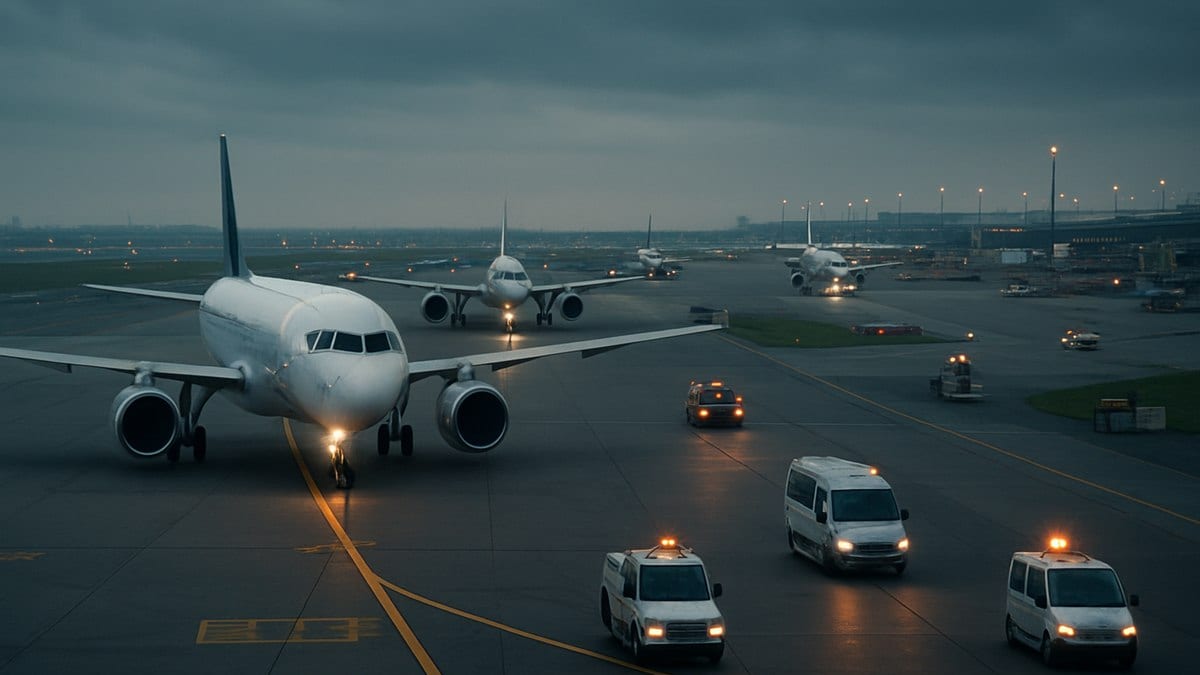
Disruptions Mount As April Holiday Travel Peaks
Publicly available flight tracking data and industry reports show that disruption has intensified across the United States in the first full week of April, with New York’s JFK Airport regularly appearing among the hardest hit hubs. On April 9, national coverage based on flight status dashboards indicated more than 3,000 flight delays and dozens of cancellations across the country, including several hundred delays and a handful of cancellations affecting JFK arrivals and departures.
These April setbacks follow an already volatile late March and Easter period, when severe weather and congestion produced thousands of delays nationwide and left many travelers stranded or rerouted. Aviation outlets describe a pattern of relatively modest cancellation totals but persistently high delay numbers, particularly at large coastal and connecting hubs such as JFK, LaGuardia and Newark.
Passenger anecdotes shared on social platforms and traveler forums in recent days echo the data, with some international travelers at JFK reporting crowded early morning departure banks and tight connections, even when security wait times are described as manageable. For many, the experience has reinforced the sense that any spring trip through New York now carries a higher risk of schedule disruption than in previous years.
Despite the turbulence, some snapshots of the operation show brief periods of relative calm. For example, separate coverage of TSA checkpoint trends around Easter weekend noted comparatively short security lines across most JFK terminals at times, even as the broader New York region continued to experience knock-on effects from weather and air traffic control constraints.
Weather Systems and National Congestion Ripple Into JFK
Weather has been a primary trigger for the April disruption. Meteorological summaries for early April describe waves of low clouds, fog and thunderstorms sweeping along key East Coast corridors, periodically forcing air traffic managers to reduce arrival and departure rates at major airports. When visibility drops or storm cells move over departure paths, JFK’s tightly choreographed schedule can quickly back up, leading to rolling delays.
Earlier in the Easter travel window, dense fog and embedded thunderstorms in the New York area prompted ground stops and capacity restrictions at nearby airports, with operational impacts spilling across the wider network. Even when JFK avoided the most severe holds, the knock-on effect of diversions and missed connections at LaGuardia and Newark frequently pushed extra traffic and rebooked passengers toward JFK, straining gates and departure slots.
Industry analysts point out that the national system is particularly vulnerable to these kinds of weather shocks this year, given how many major traffic flows converge over the Northeast. When storms or low ceilings interrupt approaches into New York, the disruption is felt across transatlantic routes, domestic trunk lines and regional feeder services, all of which rely heavily on JFK’s runways and arrival corridors.
Flight tracking snapshots compiled after Easter show that large portions of the U.S. network remain out of rhythm days after major storms clear, with elevated delay totals persisting at airports like JFK even on days with relatively benign local forecasts. That pattern suggests that the current turbulence is not only about short-lived thunderstorms, but also about how slowly the system can recover once thrown off balance.
Air Traffic Control Staffing Adds Structural Strain
Compounding the weather volatility is a well documented shortage of fully certified air traffic controllers in the New York terminal area. Recent industry analyses of Federal Aviation Administration staffing levels report that the regional facility overseeing traffic for JFK, LaGuardia and Newark is operating well below its long term targets, with certified controller staffing estimated at under 70 percent of ideal levels.
Public regulatory filings and policy documents indicate that these staffing gaps have been significant enough for the FAA to extend temporary waivers on airline slot usage rules at JFK and LaGuardia, effectively acknowledging that the airspace cannot reliably support full scheduled capacity during peak periods. Official modeling associated with those waivers describes the New York airports as especially prone to delay during afternoon and evening hours when demand is highest.
In practical terms, that means even modest disruptions can trigger outsized knock-on effects. When storms, minor equipment outages or runway construction reduce capacity, the limited controller headroom leaves less flexibility to reroute flows or absorb surges. Airlines are then more likely to face ground delay programs, holding patterns and, in some cases, preemptive cancellations to keep the system from becoming overloaded.
Analysts quoted in aviation trade coverage suggest that even accelerated hiring will take years to close the staffing gap, as new trainees require extensive on the job experience before they can handle complex sectors such as New York. As a result, travelers using JFK through the 2026 peak season may need to assume that staffing related constraints will remain an underlying feature of the operation.
Passenger Experience: Short Lines, Long Waits
For travelers on the ground, the April 2026 disruptions at JFK have produced a mixed picture. On some days, publicly available wait time dashboards and media roundups describe relatively short TSA lines, particularly during early morning hours, as staffing adjustments and traveler behavior changes take effect. Easter weekend coverage, for example, highlighted checkpoints at several JFK terminals where screening times were reported in the range of 10 to 30 minutes.
At the same time, passenger accounts shared in online communities over late March and early April describe crowded departure halls, long bag drop queues at certain carriers and gate areas filled with passengers waiting out rolling delays. Some travelers reported arriving three to four hours early on airline advice, only to find themselves through security quickly but then facing extended waits as departure times slid later throughout the day.
The uneven experience reflects the way different constraints intersect at various points in the journey. A flight might depart a lightly affected origin only to reach a bottleneck upon arrival into New York airspace, or a timely inbound aircraft might still be held at the gate while outbound traffic is metered to fit reduced runway capacity. For passengers, those dynamics can make the trip feel unpredictable even when individual airport touchpoints, such as security or check in, seem relatively smooth.
Travel advocacy organizations and consumer rights sites continue to remind passengers that standard protections apply when flights are significantly delayed or canceled for reasons within an airline’s control, such as crew or maintenance issues. However, when weather or air traffic control constraints are cited, compensation options can be more limited, leaving many travelers reliant on rebooking, meal vouchers or travel insurance to soften the impact.
What April Travelers Through JFK Can Expect Next
Looking ahead to the second half of April, publicly available operational forecasts and recent delay statistics suggest that travelers passing through JFK should prepare for continued variability rather than smooth, on time performance. As spring break overlaps with early summer schedule ramp ups, load factors remain high, leaving airlines with limited slack to reposition aircraft or crews after disruptions.
Travel industry outlets advise that early morning departures often provide the best odds of avoiding extended delays, as schedules tend to unravel later in the day once the cumulative effect of small disruptions builds. Passengers connecting through JFK are also encouraged, in many planning guides, to leave generous buffer times between flights, particularly when traveling on separate tickets or combining international and domestic segments.
At a system level, policy discussions around New York’s airspace underscore that meaningful relief from congestion may take several seasons to materialize. Efforts to modernize traffic management technology, grow the controller workforce and calibrate realistic schedules are all underway, according to government and industry documents, but each comes with long implementation timelines.
For April 2026 travelers, that means the safest strategy is to assume the risk of delay or cancellation is elevated when flying through JFK, especially on afternoons, evenings and busy holiday weekends. Building flexibility into itineraries, monitoring flight status closely on day of travel and considering alternatives such as nearby airports or rail connections can help reduce the stress of navigating one of the world’s most constrained air travel gateways at a particularly fragile moment.