

More news on this day
Mounting delays at New York’s John F. Kennedy International Airport are rippling through the U.S. domestic air network this week, disrupting spring travel plans and underscoring how fragile the country’s busiest corridors remain when weather, staffing constraints and packed schedules collide.
Get the latest news straight to your inbox!
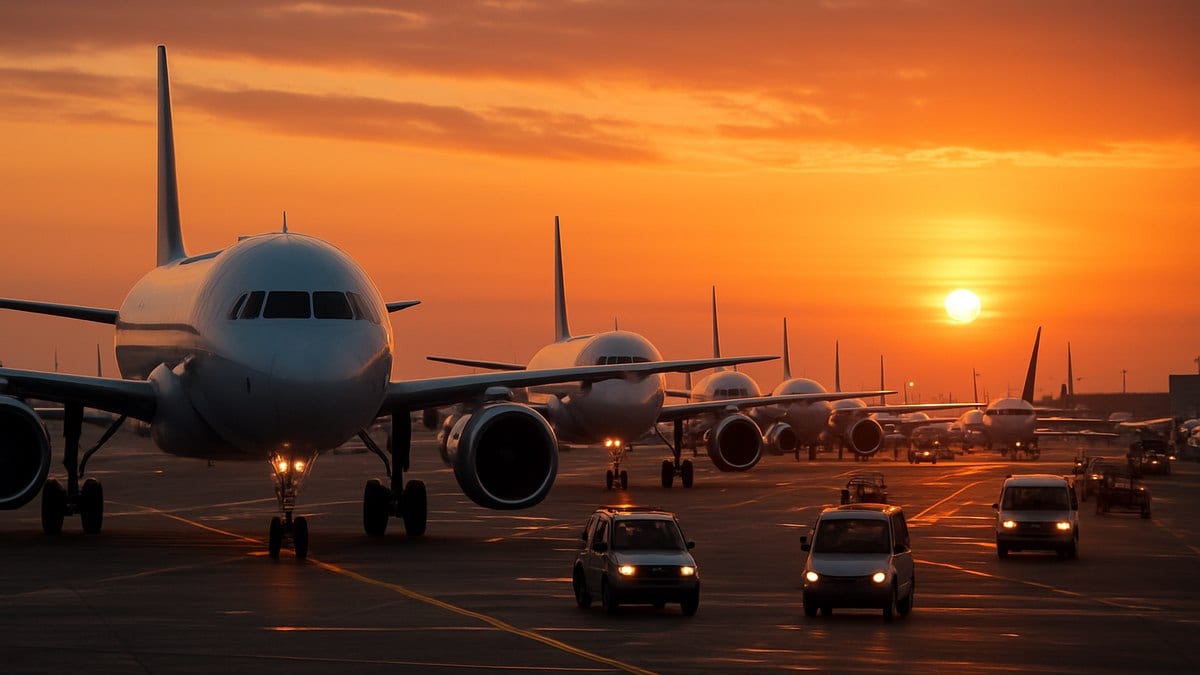
JFK Bottlenecks Trigger Nationwide Knock-On Delays
Publicly available operational data for early April 2026 point to a sustained buildup of delays at JFK, with figures from one recent day showing more than 130 late departures and arrivals and several cancellations at the New York hub. While these raw numbers are modest compared with peak holiday meltdowns, analysts note that even this level of disruption at a slot constrained airport can quickly push aircraft and crews out of their planned rotations, particularly on dense domestic routes along the East Coast and into the Midwest.
Travel tracking tallies covering the broader U.S. network this week show more than 3,000 delayed flights and over 100 cancellations in a single day across major carriers, with New York consistently listed among the most affected metropolitan areas. These same summaries indicate that New York delays are not occurring in isolation but rather as part of a multi hub pattern that includes Los Angeles, Seattle, Orlando, Atlanta, Chicago and Houston, reflecting how a logjam at one coastal gateway can reverberate across time zones.
Historic performance data compiled for 2025 already placed JFK among the more delay prone large U.S. airports, with roughly a quarter of departures running late and cancellations approaching 2 percent. Against that backdrop, aviation researchers observing the first weeks of the 2026 spring travel period describe the current wave of chokepoints at JFK as another example of how limited spare capacity in New York magnifies even routine operational stresses.
Staffing Constraints and FAA Measures Keep New York Under Pressure
Behind the mounting disruption is a set of structural constraints that has been building for several years across the New York airspace. The Federal Aviation Administration has repeatedly acknowledged that air traffic control staffing in the region is running below targeted levels, and waiver documents and orders made public in recent months indicate that authorities do not expect to reach full staffing targets at New York facilities until after the end of 2026. To manage risk, regulators have kept in place caps on operations at JFK, LaGuardia and Newark, limiting the number of scheduled takeoffs and landings per hour and encouraging airlines to trim or consolidate some flights.
Operational advisories issued this week by the FAA’s Air Traffic Control System Command Center highlight how thin staffing margins continue to shape daily traffic flows. One plan advisory for April 7 referenced the possibility of a ground stop or formal delay program at JFK after the late afternoon peak, citing staffing triggers alongside weather as potential catalysts for flow restrictions. These internal planning notes underline how frequently New York airports now operate on the edge of available controller capacity.
Earlier policy steps, including previous decisions to relax slot use rules and extend temporary waivers at New York airports, were framed as tools to reduce congestion and give airlines more flexibility to manage schedules without losing valuable slots. Yet performance statistics and recent travel disruption reports suggest that, even with these measures, the combination of high demand, constrained runway throughput and staffing shortfalls has left JFK and its sister airports vulnerable to rapid deterioration when conditions shift.
Spring Weather and TSA Strains Add to the Turbulence
The latest wave of delays is unfolding against a backdrop of unsettled spring weather and lingering strain at security checkpoints nationwide. In late March and early April, storms and high winds across the eastern United States prompted a series of ground delay programs at multiple hubs, including all three major New York airports on at least one heavily impacted day. These weather systems arrived on the heels of a severe March blizzard and an earlier winter storm that had already exposed how quickly adverse conditions can trigger multi day recovery challenges.
On the ground, long lines at Transportation Security Administration checkpoints have emerged as a separate choke point feeding into departure delays. Coverage this month from national outlets has documented periods of extended screening waits at major hubs, while New York specific updates indicate fluctuating conditions at JFK and Newark, with some carriers warning travelers to arrive earlier than usual. Social media posts and traveler reports aggregated in online forums describe security queues periodically stretching well beyond normal peak volumes, especially during morning and late afternoon surges.
Industry analyses of delay drivers over the past decade point to an evolving role for security and terminal processes in the overall disruption picture. Academic work examining U.S. aviation delays through 2024 notes that congestion at large hub security checkpoints has become a more statistically visible contributor to late departures, particularly where high volume nodes such as New York lack the space or staffing to absorb unexpected spikes in passenger flow.
Ripple Effects Felt Across Domestic Hubs and Regional Routes
As JFK struggles to keep flights running on schedule, domestic routes that rely on New York for connections are feeling the consequences. Recent delay snapshots for one April day show thousands of passengers affected at airports like Chicago O Hare, Dallas Fort Worth, Atlanta, Miami, Orlando and San Francisco, with carriers citing a mix of late arriving aircraft, crew availability and congested airspace as reasons for downstream holds. Published tallies from industry focused travel sites highlight how even a limited number of delays at JFK can set off a chain of missed connections on routes to secondary markets.
Smaller and mid sized airports are also being drawn into the turbulence. In one recent disruption summary, Billings in Montana appeared with several cancellations tied to incoming aircraft that were previously delayed at larger hubs, illustrating how far the ripple can travel from coastal gateways. Airlines trying to reposition jets and crews after an afternoon of delays at JFK often face difficult choices about which regional services to maintain, which to combine and which to cancel outright.
For domestic travelers, the network effect means that disruption in New York can be felt even by passengers who never set foot in the region. A late afternoon delay program at JFK can lead to missed evening connections in Chicago or Dallas, stranding travelers bound for cities as varied as Omaha, Tulsa or Boise. This interdependence is especially acute during school holidays and spring breaks, when load factors are high and there are fewer empty seats across the system to accommodate rebooked passengers.
Travelers Confront Longer Lines and Tighter Margins
For passengers navigating the current wave of disruptions, the immediate experience has been one of longer airport days and tighter margins. Travelers flying through New York this week report a need to build in more buffer time for both departures and connections, particularly in the late afternoon and evening windows when publicly available data shows JFK to be most prone to delay. At the same time, recent messages from several U.S. airports have urged passengers not to arrive excessively early, warning that terminals can become clogged when travelers flood check in and security hours before departure.
Recent federal statistics and private sector disruption reports suggest that, even before this month’s flare up, U.S. domestic performance remained fragile. In 2025, one prominent analysis found that roughly one in four flights out of JFK departed late, while nationwide surveys show an overall increase in the frequency of heavily disrupted days across the National Airspace System compared with the pre pandemic era. With controller staffing in New York expected to remain below targets through at least 2026, observers caution that travelers may need to adapt to a more volatile baseline for on time performance at key hubs.
For now, the combination of structural bottlenecks and seasonal pressures is leaving little slack in the system. As long as JFK continues to operate near capacity with limited staffing margins, any spell of bad weather, extended security lines or minor technical issues can tip the network into another round of rolling delays, sending fresh shockwaves through U.S. domestic travel just as the busy summer season approaches.