

More news on this day
 Follow us on Google
Travelers at New York’s John F. Kennedy International Airport faced a fresh wave of disruptions on May 10, as publicly available flight-status data showed nine cancellations and multiple delays on major routes operated by Delta Air Lines, American Airlines, Endeavor Air, Cape Air, AeroMéxico and other carriers.
Get the latest news straight to your inbox!
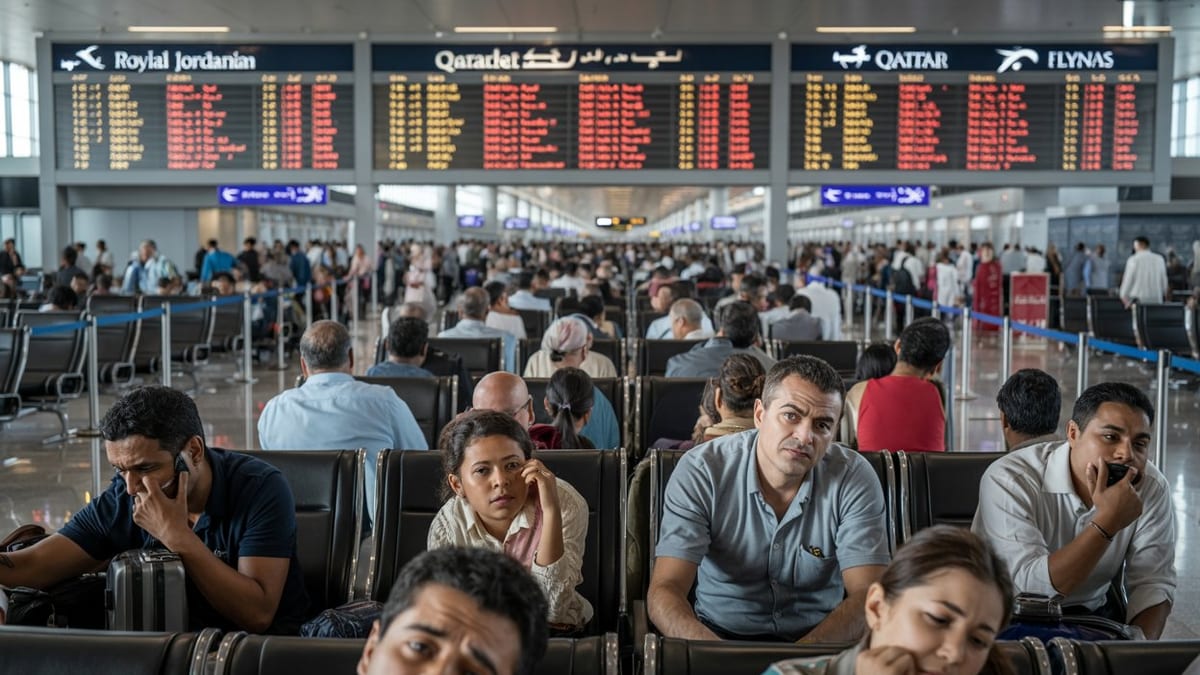
Key Routes Hit From North America to Europe and the Caribbean
Live departure and arrival boards for John F. Kennedy International Airport on Sunday indicated that a mix of domestic and international services were affected, touching long-haul links to Los Angeles, transborder flights to Toronto, transatlantic services to Edinburgh, and leisure-heavy routes to Nassau and Mexico City. Several of the affected flights were marketed or operated by Delta, American Airlines, Endeavor Air, Cape Air and AeroMéxico, underscoring how a relatively small number of cancellations can ripple across multiple airline brands at a major hub.
Data from flight-tracking platforms and online departure boards showed that at least nine scheduled departures or arrivals tied to JFK were canceled over the course of the day, with dozens more flights posting departure or arrival delays ranging from minor holdups to extended waits. While nine cancellations represent a fraction of JFK’s daily schedule, the impact on passengers was outsized because several of the grounded flights served high-demand routes and banked connection waves.
Carriers connecting JFK with Los Angeles have been operating near or at capacity in recent months, and disruptions on this corridor tend to cascade to onward flights across the Pacific and within the United States. Similarly, cancellations affecting Toronto and Edinburgh reduced options for travelers relying on JFK as a connecting gateway between regional U.S. cities, Canada and secondary European markets.
Flights serving Nassau and Mexico City also featured among the disrupted services, highlighting the vulnerability of popular leisure and visiting-friends-and-relatives routes. Publicly accessible load-factor analyses and recent demand reports have indicated sustained strength on Caribbean and Mexico markets from New York, meaning that same-day reaccommodation for affected travelers could prove difficult, particularly on weekend travel days.
Operational Strains Follow Weeks of Elevated Cancellations
The latest disruption at JFK comes after several weeks in which Delta has drawn attention for elevated cancellation counts across its network. Consumer forums and aviation communities tracking airline performance have documented repeated days in early May when Delta cancellations climbed into the hundreds across the United States, often attributed to a combination of crew-availability constraints, maintenance challenges and tight scheduling.
Endeavor Air, which operates as a regional feeder for Delta, has also featured in federal consumer reports on lengthy tarmac delays from JFK in recent months, illustrating the pressure on regional operations that support mainline banks. According to publicly released data from the U.S. Department of Transportation, earlier winter storms and congestion episodes left some Delta and Endeavor-operated flights at JFK facing multi-hour ground delays in late 2025, an experience that continues to shape public perceptions of reliability.
American Airlines has likewise experienced intermittent operational pressure in the New York market, sharing constrained airspace and runways with Delta and JetBlue at JFK and nearby LaGuardia. Aviation analysts note that when a single carrier struggles to keep crews and aircraft aligned during peak travel periods, knock-on effects can spread to competitors that share gates, ground-handling resources, and air-traffic flows.
AeroMéxico has been closely linked with Delta through a joint commercial arrangement on U.S.-Mexico routes, including services between JFK and Mexico City. Regulatory moves in Washington requiring the unwinding of aspects of that partnership by early 2026 have added complexity to the carriers’ coordination. Industry commentary suggests that any additional operational disruption on key Mexico City routes now lands in a more sensitive commercial and regulatory context.
Passengers Confront Long Lines, Limited Options and Confusing Information
At terminal check-in areas and security lanes, travelers reported via social media and travel forums that lines at JFK built quickly on Sunday morning as passengers attempted to rebook, seek meal vouchers or locate their checked bags. With multiple carriers experiencing delays at the same time, counter staff and self-service kiosks faced intermittent queues, and some customers described difficulty obtaining clear, timely updates on revised departure times.
In several cases, travelers on canceled flights to Los Angeles, Toronto and Nassau were offered same-day standby on later departures or rebooked for the following day, according to user accounts posted online. For passengers heading to destinations such as Edinburgh or Mexico City, where nonstop frequencies from JFK are more limited, options often involved rerouting via alternate hubs, adding additional connections and extending total travel times by many hours.
Consumer advocates point to such episodes as examples of how even a modest number of cancellations at a large hub can create significant customer-service challenges. When aircraft are already scheduled close to capacity and load factors on key routes are high, airlines have fewer empty seats available to accommodate displaced travelers quickly. This reality has been visible across the U.S. network in recent months as demand has remained strong while carriers work to balance staffing and fleet utilization.
Some flyers described confusion when flight-status tools in mobile apps showed different information from terminal departure boards or third-party tracking sites. Industry observers say mismatches of this kind can occur when various systems update on different cycles, or when manual changes made at the gate take time to propagate through all channels.
Patterns at JFK Highlight Wider Reliability Concerns
John F. Kennedy International Airport has long ranked among the busiest and most complex airports in the United States, with a heavy mix of long-haul international services, domestic trunk routes and regional operations. According to recent Port Authority presentations and federal transportation data, JFK has recorded some of the nation’s lengthier tarmac delays on peak disruption days, driven in part by runway saturation and limited slack in airline schedules.
Delta, the largest carrier at JFK by many measures, has historically promoted its operational reliability as a key point of differentiation, but its performance has come under closer scrutiny following a major technology-related disruption in 2024 and a series of recent cancellation spikes. Commentators tracking on-time statistics through government reports and real-time flight data have noted that Delta’s ranking among large U.S. carriers has slipped in some measures, even as the airline continues to invest in technology and infrastructure.
American Airlines, which co-anchors JFK’s long-haul network, faces similar constraints, sharing the same airspace bottlenecks and weather systems that can quickly curtail operations along the U.S. East Coast. Veterans of New York aviation note that days featuring a combination of scattered storms, low ceilings, or air-traffic flow programs at surrounding airports can reduce arrival and departure rates at JFK, forcing airlines to cancel selected flights in order to keep the rest of the schedule moving.
Regional partners such as Endeavor Air and Cape Air operate smaller aircraft that often fly shorter sectors feeding the major banks at JFK. When these regional flights are delayed or canceled, passengers may miss long-haul connections, leading to additional rebookings and pressure on customer-service channels. Industry data and past DOT reports show that small regional jets and turboprops can be especially vulnerable to ground delays during congestion, compounding the impact on travelers.
What Travelers Can Do When Disruptions Hit
Travel experts recommend that passengers flying through JFK or other major hubs monitor their flight status closely in the 24 hours before departure and again on the day of travel, using both airline apps and independent tracking tools. When multiple cancellations or significant delays appear on the boards for a given carrier, history suggests that additional schedule adjustments may follow as the day progresses.
Publicly available airline policies indicate that when a flight is canceled or experiences an extensive delay, customers are typically entitled to rebooking at no additional fare, and in some cases may request a refund if they choose not to travel. Travelers are often encouraged to explore self-service rebooking options via mobile apps or websites first, as phone lines and airport counters can become congested when disruptions are widespread.
For those with tight connections, long-haul itineraries or important events at their destination, building extra buffer time into travel plans can provide additional flexibility in the face of operational uncertainty. Analysts observing recent disruptions at JFK and other large hubs note that connections of less than an hour can be risky on days with weather or air-traffic constraints, particularly when transferring between terminals.
As airlines such as Delta, American Airlines, AeroMéxico, Endeavor Air, Cape Air and others continue to adjust schedules and staffing following a turbulent period for the industry, travelers passing through JFK are likely to remain vigilant about reliability metrics. Episodes like Sunday’s cluster of nine cancellations and multiple delays serve as a reminder that even modest disruptions at a global gateway can quickly upend trips for hundreds of passengers headed to destinations across North America, Europe and the Caribbean.