

More news on this day
Mounting delays at New York’s John F. Kennedy International Airport during a peak spring travel stretch are sending shockwaves through the U.S. domestic network, as overburdened hubs struggle to absorb yet another operational jolt.
Get the latest news straight to your inbox!
JFK Climbs the National Delay Tables
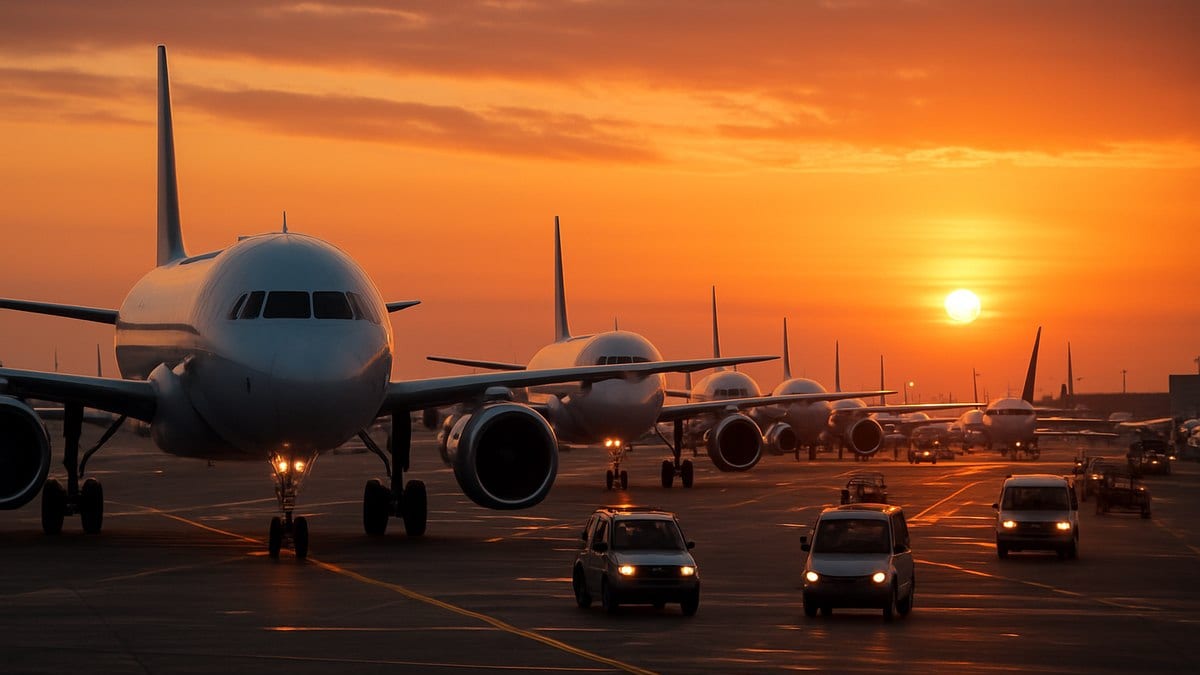
Real-time aviation tracking data for the week of April 6 to 10 indicates that New York’s JFK has repeatedly appeared near the top of U.S. delay rankings, with triple-digit numbers of late departures and arrivals on some days. One recent snapshot cited in industry coverage showed more than 130 delayed flights and several cancellations attributed to JFK alone, placing the airport among the most disrupted facilities in the country at a time of already elevated congestion.
Reports indicate that the latest wave of disruption stems from a familiar mix of factors. Spring weather systems passing through the Northeast, stretched airline staffing, and ground delay programs introduced by air traffic control to manage volume have all contributed to slower operations. With carriers operating at or near full schedules for the busy Easter and spring break period, relatively modest slowdowns at JFK have quickly translated into long queues on taxiways and late turns at crowded gates.
Publicly available information shows that the knock-on effect is especially acute for domestic services that rely on JFK for feed and connectivity. While the airport is often associated with long-haul international flying, the same runway and apron capacity must also accommodate dense shuttle and leisure traffic to cities such as Miami, Orlando, Atlanta and Chicago. When those flights depart late, they arrive late into other hubs, where aircraft and crews are then out of position for subsequent legs.
Historic U.S. Department of Transportation data underscore how sensitive the network is to delays at major coastal gateways. Previous Air Travel Consumer Reports have documented multi-hour tarmac delays on domestic flights into and out of JFK, illustrating how quickly congestion can escalate when weather and schedule intensity collide. Aviation analysts note that current conditions are repeating that pattern, albeit with more pronounced ripple effects because system slack remains limited in the post-pandemic recovery phase.
Network Ripple Effects From Coast to Coast
The turbulence at JFK is compounding a broader pattern of strain across the U.S. domestic system. Over the past week, major hubs including Chicago O’Hare, Atlanta, Miami and Dallas Fort Worth have all recorded hundreds of delays on peak travel days, according to tracking services and published coverage. These disruptions have already been rippling through the network, and the addition of mounting delays at JFK is amplifying the effect.
Recent reporting on Chicago O’Hare over Easter weekend highlighted how thunderstorms and ground delay programs quickly stacked up flights, forcing carriers to juggle limited aircraft and crews. Similar accounts from Atlanta and Miami describe days with several hundred delayed flights and dozens of cancellations, as operations struggled to recover from weather and volume-driven slowdowns. With many of these routes interlinked with New York, additional disruption at JFK can further complicate recovery efforts.
Coverage focused on New York-area airports also points to LaGuardia’s recent struggles as a contributing factor. In early April, LaGuardia recorded one of the highest concentrations of delays in the country over several consecutive days, affecting hundreds of flights and generating widespread missed connections. As some traffic and pressure shift between LaGuardia and JFK, operational stress can migrate rather than disappear, making it harder for airlines to restore reliable on-time performance across the region.
For domestic travelers, the practical result is a patchwork of disruptions that may originate far from their departure city. A morning weather delay into JFK can reverberate through afternoon departures in the Midwest or Southeast as aircraft cycle through multicity routings. Industry observers say that this interconnectedness is especially visible on large carriers’ hub-and-spoke systems, where a single late-arriving aircraft can touch multiple markets before the end of the day.
TSA and Staffing Pressures Add to the Squeeze
Operational strain at JFK is not limited to runways and gates. Security screening capacity has emerged as another pressure point, both at the airport and nationwide. Reports on a partial federal government shutdown and funding standoff in recent weeks describe unpaid Transportation Security Administration staff and elevated absenteeism at some checkpoints, contributing to longer and more unpredictable security queues during high-demand periods.
Travel and general news outlets have noted that security wait times at New York airports have swung from manageable to extensive within hours, particularly on weekends and holidays. At JFK, publicly shared wait-time data and passenger accounts indicate that security lines have occasionally stretched beyond 60 minutes at peak, placing additional stress on departure banks already under time pressure from air traffic restrictions and busy ramp operations.
Airlines and airports are attempting to mitigate some of this uncertainty with enhanced passenger information tools. One major carrier recently expanded in-app features that display estimated TSA wait times at key hubs, including New York, in response to recurring security bottlenecks. Airport operators in several cities also encourage travelers to consult real-time dashboards before leaving for the terminal, though they caution that conditions can change quickly when staffing or volume shifts.
For JFK, the combination of tight security staffing and dense departure waves can have an outsized effect on punctuality. When passengers reach the gate late because of longer screening times, boarding can be delayed even if the aircraft and crew are ready. During tightly scheduled afternoon and evening banks, those small delays compound, creating further challenges for on-time departures across the domestic network.
Spring Weather, Policy Shifts and Structural Fragility
The current bout of disruption is unfolding against a backdrop of shifting operational rules and persistent vulnerability to weather. In early April, media coverage of new runway-related procedures at a major West Coast hub highlighted how regulatory changes can reduce operational flexibility and increase the likelihood of delays. While those particular changes are focused on another airport, they illustrate broader constraints that can echo across the national system when combined with peak demand.
Academic work examining delay propagation in the U.S. network over the past decade points to large, high-volume hubs such as JFK as critical nodes where even modest slowdowns can meaningfully increase the probability of downstream delays. Researchers have found that security and ground-handling disruptions at these hubs have become more visible as distinguishing drivers of delay in the post-pandemic era, rather than being fully absorbed by internal buffers.
Layered onto these structural issues is the seasonal volatility of spring weather. Thunderstorms, low cloud ceilings and strong winds frequently affect the Northeast corridor and other major regions at this time of year, prompting ground stops and flow-control programs that reduce hourly arrival and departure rates. When such measures are imposed at JFK, carriers may be forced to hold aircraft at origin airports or on taxiways, further elongating the delay chain for domestic travelers.
Observers also point to the limited slack in airline schedules after several years of cost-cutting and staffing adjustments. Although hiring has picked up across the industry, publicly available performance data and recent disruption patterns suggest that there is still relatively little margin to absorb irregular operations. As a result, weather events and policy shifts that might once have produced local delays are now more likely to cause national ripples, especially when they occur at gateway airports like JFK.
What Travelers Can Expect in the Days Ahead
With spring break traffic continuing and weather patterns remaining unsettled in parts of the country, aviation data providers expect elevated disruption levels to persist in the short term. National figures in recent days have repeatedly shown several thousand delayed flights and more than one hundred cancellations within a 24-hour window, with New York, Los Angeles, Seattle and Florida hubs frequently featuring among the hardest-hit airports.
For passengers booked on domestic routes connected to JFK, that environment translates into a heightened risk of missed connections, equipment swaps and last-minute schedule changes. Industry analysis suggests that travelers on evening departures and tight layovers are especially vulnerable when inbound aircraft originate at delay-prone hubs. Even where flights are not canceled outright, rolling delays of 30 to 90 minutes can cascade into late-night arrivals and disrupted onward ground transport plans.
Publicly available guidance from airlines and airports continues to emphasize standard resilience strategies, including monitoring flight status frequently, allowing extra time for security and potential terminal transfers, and being prepared for rebooking scenarios on heavily trafficked days. Some carriers are also using travel alerts and flexible rebooking policies during peak disruption windows, though the specifics vary by airline and date.
For now, the mounting delays at JFK have become another focal point in a season of high-profile disruptions across the U.S. air system. As the industry navigates a combination of strong demand, evolving regulations and staffing uncertainty, the experience at New York’s flagship international gateway offers a clear reminder of how quickly local problems can radiate through an interconnected domestic network.