


More news on this day
A strike by aviation workers at Nairobi’s Jomo Kenyatta International Airport has disrupted operations for a second day, leaving thousands of passengers stranded amid widespread delays and cancellations at Kenya’s busiest international gateway.
Get the latest news straight to your inbox!
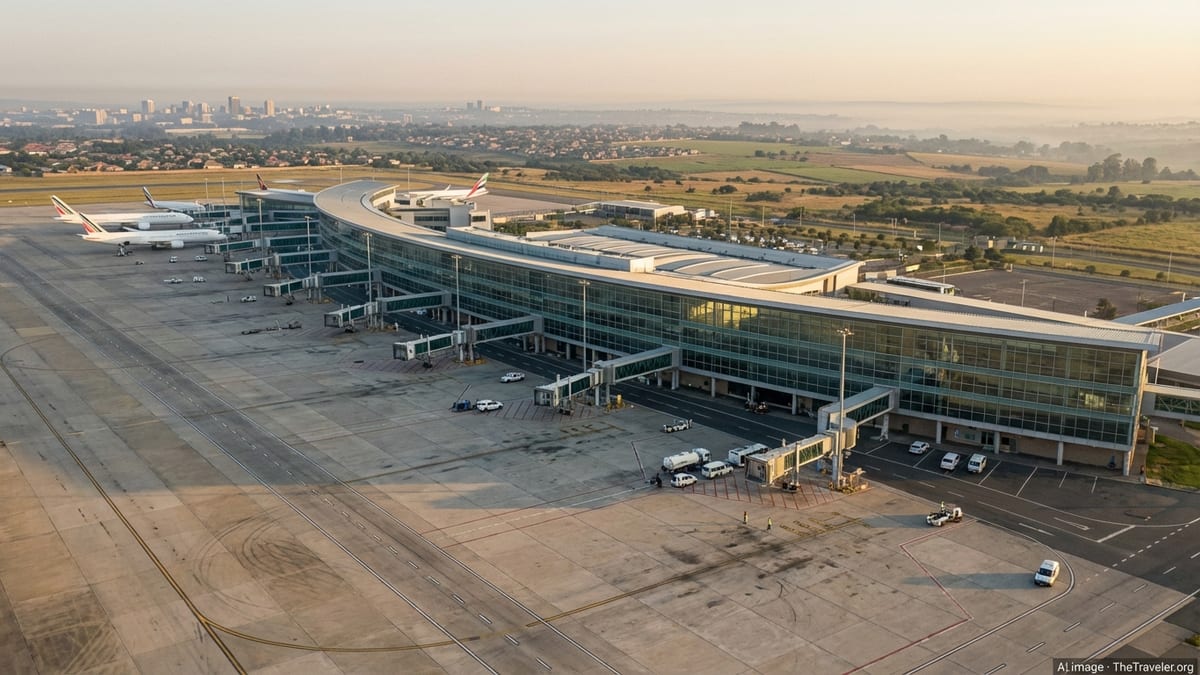
Slowdown at Jomo Kenyatta International Airport brings traffic to a crawl
Reports from Nairobi indicate that a work slowdown by members of the Kenya Aviation Workers Union has reduced operations at Jomo Kenyatta International Airport (JKIA), Kenya’s main international hub, to a fraction of normal capacity. The disruption began on Sunday, August 30, 2026, and continued into Monday, affecting both regional and long-haul flights.
Publicly available information shows that airlines including Kenya Airways, its low-cost subsidiary Jambojet, and several foreign carriers have experienced extended delays as ground handling, security screening, and some airside services operate well below normal staffing levels. Some departures are taking off hours behind schedule while others have been cancelled outright, with aircraft and crew out of position across the network.
JKIA handled more than 9 million passengers in 2024, making it one of Africa’s busiest airports, and the scale of the current disruption is being felt across East Africa’s aviation system. Regional connections to destinations such as Entebbe, Addis Ababa, Kigali, and Dar es Salaam have been particularly affected, as travelers struggle to rebook or reroute through alternative hubs.
At Mombasa’s Moi International Airport, which is also served by unionized aviation workers, local coverage indicates that similar slowdowns have caused delays, though on a smaller scale than in Nairobi. Travellers on coastal holiday routes and domestic connections have reported extended waiting times and last-minute schedule changes.
Union dispute centers on pay, staffing, and job security
According to published coverage of the strike, union members are protesting what they describe as unresolved concerns over pay, staffing levels, and long-running disputes about the implementation of a collective bargaining agreement. The Kenya Aviation Workers Union has previously raised alarms over working conditions and employment terms for ground staff, security screeners, and air traffic–related personnel at JKIA and other Kenyan airports.
In the current action, workers have reportedly adopted a go-slow strategy instead of a full walkout, limiting the number of staff available for critical functions such as baggage handling and passenger check-in. This tactic has allowed a trickle of flights to operate while still exerting significant pressure on airport management and government agencies responsible for aviation.
Recent history shows that labor tensions at JKIA are not new. Aviation staff have mounted several actions in recent years, including protests linked to proposed management changes and privatization plans as well as disputes over overtime, allowances, and staffing. Observers note that repeated recourse to industrial action has turned the country’s primary gateway into a focal point of wider debates about public-sector employment and infrastructure governance.
Government statements and court rulings in earlier disputes have emphasized the strategic importance of JKIA to Kenya’s economy and its role as a regional hub, but unions maintain that workers’ concerns over pay, job security, and working conditions remain only partially addressed, leading to recurring confrontations.
Passengers face overnight waits, missed connections, and rerouting challenges
Images and accounts from the airport show long queues at check-in counters and security lanes, with many passengers camped out on terminal seats overnight as they wait for new departure times. Local media reports describe some travelers being delayed by two hours or more, while others have missed international connections or abandoned itineraries altogether.
Airlines have issued advisories urging passengers to check their flight status before traveling to the airport and to expect extended processing times. Some carriers have reportedly provided hotel accommodation or meal vouchers, particularly for international passengers whose flights were rescheduled to the following day. However, capacity in nearby hotels is described as tight, and many travelers have opted to remain in the terminal.
For tourists at the end of Kenyan safaris or beach holidays, the strike has created uncertainty around return flights and ongoing journeys to Europe, the Middle East, and North America. Travel agents and tour operators are working to rebook clients, in some cases routing them through alternative hubs such as Addis Ababa, Kigali, or Johannesburg to bypass the most congested departure windows in Nairobi.
Local travelers have also been significantly affected, particularly those relying on domestic connections from Nairobi to smaller Kenyan cities. With the national carrier’s schedules under strain and limited rail and road alternatives for long distances, many passengers have few options beyond waiting out the disruption or accepting itinerary changes that involve lengthy layovers.
Knock-on effects for tourism and regional connectivity
JKIA functions as a major gateway for East African tourism, connecting international visitors to Kenya’s national parks, coastal resorts, and neighboring countries. Industry commentators warn that sustained disruptions at the airport could weigh on traveler confidence if similar strikes recur during peak holiday seasons.
According to recent traffic statistics, Kenya’s aviation sector has been recovering from the impacts of the COVID-19 pandemic, with international arrivals and transit traffic gradually approaching pre-2020 levels. The current slowdown threatens to trim that momentum, at least temporarily, by complicating logistics for airlines and tour operators that rely on predictable connections through Nairobi.
The strike also highlights the vulnerability of regional connectivity when a dominant hub experiences operational shocks. Many East and Central African capitals are linked to the global network through JKIA, and cancellations in Nairobi can cascade into schedule changes several countries away. Aviation analysts note that this kind of disruption can prompt airlines to reassess contingency plans, allocate extra aircraft, or diversify routings to reduce reliance on a single hub.
Logistics operators are monitoring potential impacts on air freight, particularly time-sensitive exports such as flowers and fresh produce that move through JKIA to markets in Europe and the Middle East. While cargo operations have not been reported as completely halted, any extended delays risk higher costs and spoilage for horticulture producers and other exporters.
Travel advice: monitoring, flexibility, and alternative routes
Travel advisories from airlines and travel organizations recommend that passengers due to fly through Nairobi in the coming days monitor official airline channels and booking apps closely, as schedules may change at short notice. Many carriers are allowing affected customers to rebook without penalty, subject to fare rules and seat availability.
Travelers currently in Kenya who face tight onward connections are being urged by tourism bodies and travel agents to consider arriving at the airport earlier than usual, keeping hand luggage light, and having contingency plans in case of long queues or further schedule adjustments. Flexible itineraries, including overnight layovers or rerouting via secondary hubs, can reduce the risk of missing key connections.
For future trips, some industry observers suggest that travelers build in additional buffer time around critical flights when routing through major hubs with a recent history of industrial disputes. Adequate travel insurance that covers delays and missed connections is also being highlighted as an important safeguard, particularly for complex itineraries that combine multiple airlines or nonrefundable ground arrangements.
As negotiations between union representatives and employers continue, expectations are that the strike will eventually ease and operations at JKIA will gradually normalize. However, the episode is likely to sharpen conversations about labor relations, infrastructure investment, and the resilience of one of Africa’s most important aviation gateways.
Associated Press: Workers’ strike at Kenya’s main international airport leaves passengers stranded
DW: Kenya passengers stranded amid airport staff strike
MyJoyOnline: Kenya airport staff strike delays thousands of passengers
Malay Mail: Passengers stranded overnight by Kenya airport strike