

More news on this day
Dutch flag carrier KLM will suspend all flights between Amsterdam and Tel Aviv from March 1, 2026, in a move described as temporary but open-ended, raising urgent questions for travelers with spring trips booked to or through Israel.
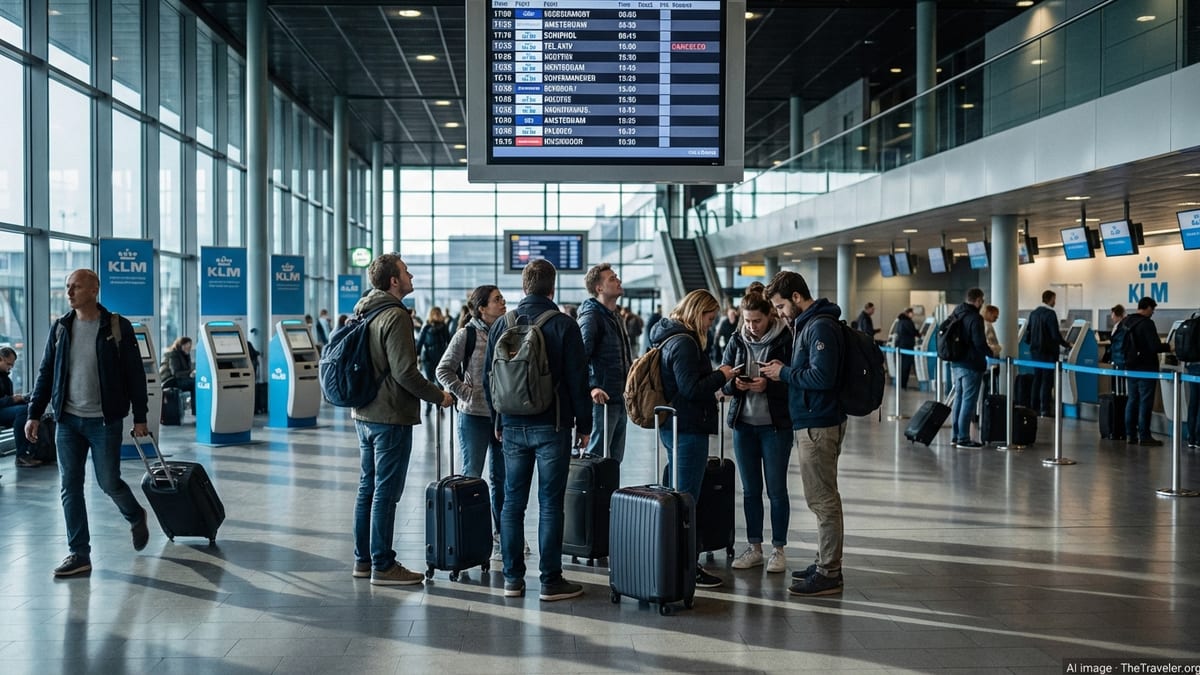
What KLM Has Announced About the March Flight Halt
KLM confirmed this week that it will suspend its Amsterdam–Tel Aviv service starting March 1, 2026, and that the halt will remain in place until further notice. The airline, part of the Air France-KLM group, said operating the route is currently not commercially or operationally feasible. While formally framed as a temporary measure, no prospective restart date has been given.
The decision affects all flights on the carrier’s flagship Amsterdam–Tel Aviv route, which serves Israel’s main international gateway, Ben Gurion Airport. KLM only resumed regular service to Tel Aviv in 2025 after earlier security-related interruptions, and has been operating daily flights that feed long-haul connections across Europe, North America, and Asia via its Schiphol hub.
In travel alerts published on its website and in statements carried by European and Israeli media, KLM has emphasized that it is continuously monitoring conditions and will reassess the suspension as circumstances change. For now, though, tickets are no longer being sold for March departures and existing services from that date are being removed from schedules.
The halt comes at a time when airlines are recalibrating their exposure to volatile parts of the Middle East, balancing commercial demand with elevated operational risks and growing pressure from regulators and insurers.
Security Tensions and Regional Aviation Disruption
The immediate backdrop to KLM’s decision is a sharp rise in regional tensions involving Iran and Western powers, which has already prompted route changes, overflight restrictions, and sporadic suspensions by several international carriers. Governments in Europe, North America, and the Asia-Pacific region have tightened travel advisories for Israel and neighboring countries, citing the risk of further escalation.
Airlines have grown increasingly cautious about flying near potential conflict zones, mindful of past incidents in which civilian aircraft were caught in hostilities. Insurers and aviation regulators also play a significant role, sometimes imposing higher premiums or operational limits that can tip a marginal route into being commercially unviable.
Although KLM has publicly framed its move in terms of commercial and operational feasibility, local and regional outlets note the broader pattern of carriers trimming or pausing Middle East services when the security picture worsens. Earlier in the current crisis, KLM and other airlines temporarily rerouted or suspended flights over certain Middle Eastern airspaces, and Tel Aviv has seen intermittent disruption whenever tensions spike.
For passengers, these geopolitical shifts translate into fewer nonstop options and more complex routings, as airlines that continue to serve Israel may reduce frequencies or rely on indirect paths that avoid sensitive skies, lengthening flight times and constraining capacity.
What This Means for Booked Passengers
Travelers holding KLM tickets to or from Tel Aviv on or after March 1 face one of three likely outcomes: automatic rebooking on alternative dates or routes, voluntary date changes using the airline’s flexibility policies, or full refunds. KLM has said that affected customers will be contacted directly and invited to manage their options through its website, mobile app, or customer service channels.
In practice, passengers whose flights have already been canceled should expect to see updated itineraries appear gradually in their online bookings. Given limited seat availability to and from Israel across the industry, some rebooking attempts may involve longer connections or departures from different European gateways. Travelers who have tight onward plans, such as tours, cruises, or business conferences, are being advised to review their broader arrangements as soon as new flight details are provided.
Those who prefer not to travel in the current environment can typically request a refund of the unused portion of their ticket, according to KLM’s disruption guidelines, or convert their booking into a travel voucher usable across KLM, Air France, and selected partner airlines. Refund and voucher processing is likely to take longer than usual during peak disruption, so travelers should plan finances accordingly and keep documentation of any additional expenses.
Passengers who booked via travel agents or online intermediaries may need to work through those channels for changes and refunds. In such cases, KLM’s policies still apply, but the time frame and process can vary depending on the agency’s own procedures and workloads.
Alternatives for Reaching Israel After March 1
With KLM stepping back from Tel Aviv for the time being, travelers looking to reach Israel from Europe and North America will have to rely on other airlines and routings. Several European and regional carriers continue to serve Ben Gurion Airport, though schedules remain fluid and may be trimmed at short notice if security conditions worsen or demand falls.
For travelers who would normally connect through Amsterdam, the most straightforward alternatives are likely to involve other major hubs, such as Paris, Frankfurt, London, Istanbul, Athens, or Rome, depending on which carriers are still operating into Tel Aviv on specific travel dates. National carrier El Al also maintains a network of routes linking Israel with Europe and select long-haul destinations, though availability can be tight during periods of disruption.
Given the fast-moving situation, industry observers recommend that travelers avoid piecing together separate tickets on different airlines where possible. Single-ticket itineraries, issued by one carrier or alliance, usually offer stronger protection when one leg is canceled or rescheduled, making it easier to secure rebooking or compensation within the same booking framework.
Prospective visitors should also monitor their own governments’ travel advisories for Israel and the wider region, as warnings can affect travel insurance coverage and may influence airlines’ willingness to operate flights. Tour operators and business travel managers are increasingly building contingency plans, including flexible cancellation windows and backup transport options.
How to Plan Ahead in an Uncertain Environment
For travelers considering trips to Israel in the coming months, KLM’s suspension underscores the importance of flexibility. Booking options that allow date changes with low or no fees, choosing hotels with generous cancellation policies, and ensuring that travel insurance covers disruption linked to security events can all mitigate risk.
Experts suggest monitoring airline schedules closely in the weeks before departure, rather than assuming that services showing as available far in advance will operate unchanged. Signing up for real-time flight alerts and airline notifications can provide early warning of changes, giving travelers more time to react and secure alternatives.
Travelers who must fly for essential reasons, such as family emergencies or critical business, may want to prioritize carriers with multiple daily frequencies on the same route, as this can increase the chances of same-day re-accommodation if one flight is canceled. Building in an extra day before important commitments can also provide a buffer against last-minute disruptions.
Ultimately, KLM’s March 2026 halt on flights to Tel Aviv is one part of a broader pattern of volatility affecting Middle East aviation. For now, passengers will need to navigate a patchwork of changing schedules and heightened uncertainty, while airlines weigh when conditions will once again support stable, commercially viable service on this key route.