


For many travelers, Kuala Lumpur International Airport is a transit hub rather than a final destination. But if your layover is long enough, the city’s most iconic sight, Batu Caves, is temptingly within reach. With its 42‑metre golden Lord Murugan statue and 272 rainbow steps leading into a limestone temple cave, it is one of Southeast Asia’s most memorable stopover excursions. This guide explains, in practical detail, how to get from KLIA to Batu Caves and back, how long it really takes, what to do with your luggage, how to dress, and whether a visit is realistic for the number of hours you have between flights.
Get the latest updates straight to your inbox!
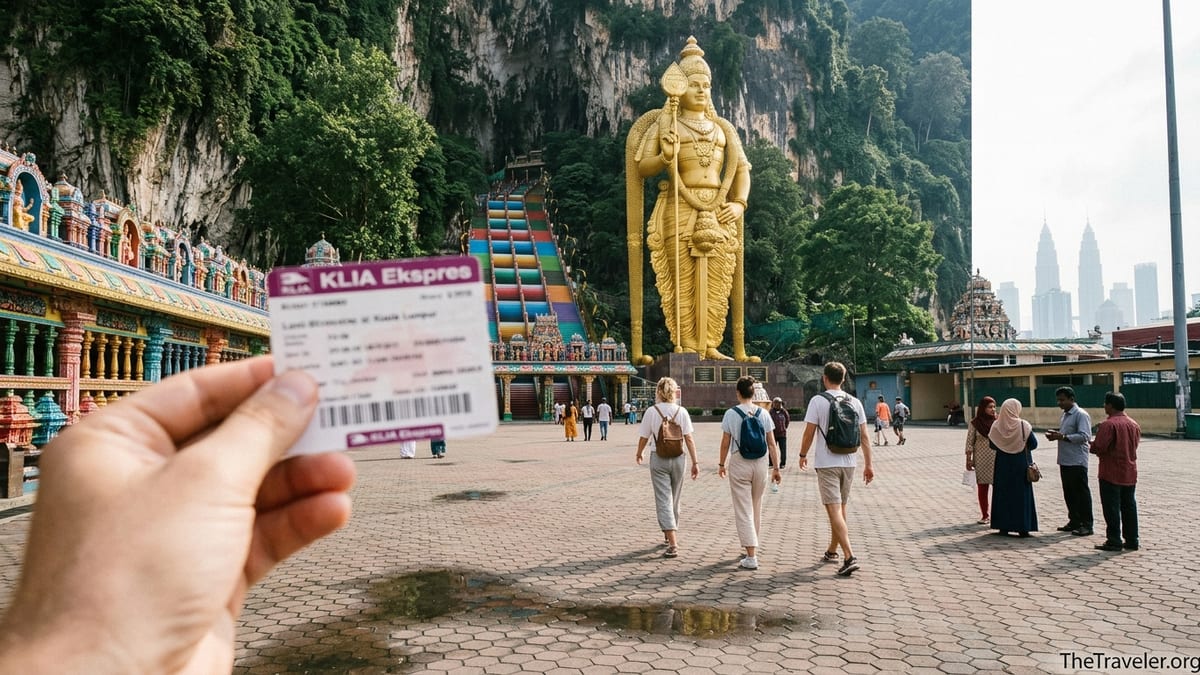
Is Batu Caves Realistic on a KLIA Layover?
Whether Batu Caves fits into your layover comes down to one number: total time between flights. As a conservative rule of thumb, Batu Caves becomes realistic at around 8 hours of daytime layover, and genuinely comfortable from 10 to 12 hours upward. That assumes you are on a single through‑ticket, do not need to reclaim checked baggage, and are comfortable navigating trains or using ride‑hailing apps.
Consider the key time blocks. Immigration and exiting the airport can take anywhere from 20 minutes to over an hour depending on arrival traffic. The KLIA Ekspres or Transit train from KLIA to KL Sentral takes roughly 30 to 40 minutes each way, while the KTM Komuter train from KL Sentral to Batu Caves is about 30 minutes one way, not including waiting times. Realistically, even on an efficient rail itinerary, you should allow a minimum of 2.5 to 3 hours purely for transport plus a further 1.5 to 2 hours at Batu Caves itself.
Travelers on forums routinely report that a quick visit is possible with around 8 to 10 hours on the ground, provided they move promptly and avoid peak rush hour. For example, one common pattern is a morning arrival around 7:00, KLIA Ekspres to KL Sentral, KTM to Batu Caves, exploring for 1.5 hours, then back to the airport for an evening departure around 18:00 or later. In contrast, if your layover is under 6 hours, or your onward flight is long‑haul and you prefer to be at the airport 3 hours early, Batu Caves is usually too risky.
Night‑time layovers are less ideal. Batu Caves is generally most atmospheric in the early morning, and although the temple grounds are open long hours, train frequency and traffic patterns are optimized for daytime. If you arrive late at night and depart again early morning, a city visit to KLCC or a hotel rest near the airport is usually wiser than attempting Batu Caves.
Route Overview: KLIA to Batu Caves and Back
There are two main ways to reach Batu Caves from Kuala Lumpur International Airport: a combined train route using KLIA Ekspres or KLIA Transit plus KTM Komuter, and a direct road route using Grab or a metered taxi. Many travelers choose a hybrid plan, taking the airport train into the city to avoid highway traffic and then using Grab for the shorter hops between KL Sentral, Batu Caves, and central KL landmarks.
The most balanced option for first‑time visitors is usually: KLIA Ekspres from Terminal 1 or 2 to KL Sentral, KTM Komuter from KL Sentral to Batu Caves station, return by KTM to KL Sentral, optional quick lunch or photo stop, then KLIA Ekspres back to the airport. This keeps costs moderate, avoids potential ride‑hailing surges on the full airport journey, and gives you a reliable timetable for the bulk of your travel.
A fully road‑based itinerary is simpler but exposed to traffic risk. A direct GrabCar or taxi from KLIA to Batu Caves is often quoted around 75 to 120 Malaysian ringgit one way, depending on time of day, vehicle type and surge pricing. Journey time is typically 55 to 80 minutes in moderate traffic but can stretch beyond 90 minutes if you hit rush hour congestion around the city ring roads. On a tight layover, that unpredictability can eat into your safety margin for the onward flight.
When planning, sketch your route on paper with times and buffers. For instance: land 08:00, exit airport 09:00, KLIA Ekspres 09:15 to KL Sentral 09:45, KTM 10:00 to Batu Caves 10:30, explore until 12:00, KTM back to KL Sentral 12:30, lunch and quick city stroll 12:30 to 14:00, KLIA Ekspres 14:15 back to KLIA 14:45, airport formalities and boarding for a 17:30 flight. This type of outline makes it clearer how delays in any one segment would affect your overall plan.
KLIA Ekspres, KLIA Transit and KTM Komuter: How the Trains Work
The KLIA Ekspres and KLIA Transit are airport rail services operated by Express Rail Link, connecting both KLIA Terminal 1 and Terminal 2 to Kuala Lumpur Sentral station. KLIA Ekspres runs non‑stop between the airport and KL Sentral, with journey times typically around 28 minutes from Terminal 1 and slightly over 30 minutes from Terminal 2. KLIA Transit follows the same route but stops at several intermediate stations, adding a few extra minutes of travel time but giving more options if you decide to deviate into suburban areas such as Putrajaya.
Trains generally run every 15 to 20 minutes during daytime. Tickets can be purchased from staffed counters or machines in the arrivals hall area, and can also be prebooked online or through the operator’s app. One‑way adult fares are typically in the region of 55 ringgit from the airport to KL Sentral, with small discounts sometimes available through online promotions or travel passes. Seats are unassigned, luggage racks are available at the carriage ends, and onboard space is usually sufficient for carry‑on suitcases.
At KL Sentral, you connect to the KTM Komuter network. Batu Caves is the northern terminus of the Batu Caves–Pulau Sebang line, making navigation straightforward: board any KTM Komuter train on that line in the direction of Batu Caves and stay on until the final stop. Travel time from KL Sentral to Batu Caves is around 30 minutes, with services typically running every 20 to 30 minutes in daytime. Fares are modest by international standards, often under 5 ringgit for the one‑way journey.
The transfer process inside KL Sentral requires a bit of walking but is clearly signed. When you arrive on KLIA Ekspres platforms, follow signs for KTM Komuter. You will pass through fare gates for KLIA Ekspres and purchase a separate KTM ticket at machines or counters before accessing the KTM platforms. If you are pressed for time, resist the temptation to dawdle at the shopping and food outlets inside the station until after your return from Batu Caves.
Using Grab or Taxi: When Road Travel Makes Sense
Grab is Malaysia’s dominant ride‑hailing app and is heavily used by locals and visitors alike. From KLIA Terminals 1 or 2, you can book a GrabCar to Batu Caves or into central Kuala Lumpur. Typical fares for a standard GrabCar from the airport to downtown KL often fall in the 70 to 100 ringgit range, with Batu Caves usually slightly higher due to its northern location beyond the city core. Prices vary with demand and time of day; the app shows a fixed fare estimate before you confirm the ride.
A road‑only itinerary can work well in certain scenarios. If you are traveling as a group of three or four, the per‑person cost of a Grab from KLIA to Batu Caves can be comparable to or cheaper than multiple KLIA Ekspres tickets. If you land very early in the morning before train frequencies ramp up, or late at night when you are concerned about walking through unfamiliar stations, a door‑to‑door car ride can offer peace of mind. Similarly, if your mobility is limited or you are traveling with young children, not having to handle stairs and platform changes may outweigh the traffic uncertainties.
However, you should be realistic about Kuala Lumpur traffic. Morning rush hour into the city typically builds from about 7:30 to 9:30, while evening congestion towards the suburbs can be noticeable from around 16:30 to 19:30. A drive that might take 55 minutes in light traffic can easily spill past 90 minutes at peak times. Travelers on forums regularly report waiting 20 to 45 minutes for a Grab driver to accept a KLIA pick‑up during busy periods, so factor this into your buffer, especially on your way back to the airport.
If you choose road transport one way, consider pairing it with the train the other way to hedge against traffic. For example, you might take Grab from KLIA to Batu Caves early in the morning when highways are still relatively clear, then ride KTM Komuter to KL Sentral after your visit and finish with KLIA Ekspres back to the airport. This combination gives you at least one leg with a predictable timetable anchored by the train schedule.
Luggage, Storage and What to Do With Your Bags
Luggage planning can make or break a layover excursion. If your bags are checked through to your final destination and you do not need to collect them at KLIA, you are in the best possible situation. In that case, you travel with only your cabin baggage and can focus on convenience and comfort rather than security. A small backpack or cross‑body bag is ideal for Batu Caves, leaving your hands free to climb the lengthy staircase.
For travelers who must collect checked luggage at KLIA, or who are ending one ticket and starting another, the airport offers paid storage services. Dedicated baggage and locker facilities operate in both Terminal 1 and Terminal 2, typically on a 24‑hour basis. These counters store a range of items from small daypacks to large suitcases for a fee that scales with size and duration; for example, it is common to see approximate prices in the tens of ringgit for a day of storage for a standard suitcase. This allows you to travel to Batu Caves with only a daypack containing water, a light change of clothes, and valuables.
If your onward flight is on an airline that participates in city check‑in at KL Sentral, you may have a second option: check your luggage and obtain boarding passes at the Kuala Lumpur City Air Terminal inside KL Sentral before heading out to Batu Caves. This is particularly convenient for travelers staying overnight in the city before a next‑day flight, but it can occasionally be leveraged during long daytime layovers if your airline and ticket conditions allow. Always confirm eligibility and cut‑off times with your airline before relying on this option.
Avoid taking large rolling suitcases to Batu Caves if you can. There are many steps, the temple grounds are busy, and storage options on‑site are limited. Most visitors leave anything bulky either at the airport, in city hotel baggage rooms, or at left‑luggage counters in major stations. As a practical example, a traveler with a 10‑hour layover might land at 07:00, collect a large suitcase, store it for the day at KLIA’s baggage service, and then travel to Batu Caves with only a small backpack, retrieving the stored luggage in the late afternoon before check‑in for the onward flight.
Timing Your Visit: Hours, Heat and Crowds
Batu Caves’ temple complex is generally open daily from early morning into the evening, but the most pleasant visiting window is usually from opening time through late morning. In Kuala Lumpur’s tropical climate, temperatures and humidity rise quickly after 10:00. Climbing 272 brightly painted steps in the midday sun can feel punishing, especially after a long flight. Early morning visits often offer cooler air, softer light for photography, and smaller crowds, particularly on weekdays.
From a layover perspective, that means early morning arrivals into KLIA are ideal. A flight landing around 06:00 or 07:00 can put you at Batu Caves mid‑morning after clearing formalities and making the train or Grab journey. You can then return to the airport early afternoon, allowing a generous buffer for security and boarding. Conversely, if your inbound flight lands mid‑afternoon and your onward departure is late evening, you may find yourself visiting Batu Caves in the late afternoon heat and returning through evening traffic, which is logistically possible but less comfortable.
Special event days deserve special care. Batu Caves is the focal point for the Thaipusam festival, which typically falls in January or February. During this period, crowds swell dramatically and transport arrangements change, including extended 24‑hour KTM Komuter services and significant road closures in the vicinity of the caves. While witnessing Thaipusam can be an extraordinary cultural experience, it is not advisable as a casual layover excursion unless you have detailed local knowledge, extremely generous time margins, and a high tolerance for crowds and logistical complexity.
Outside festival periods, weekends and public holidays are still busier than typical weekdays. If your layover falls on a Sunday or during Malaysian school holidays, expect more local families and domestic tourists. To stay flexible, monitor live map apps for traffic patterns and check train operator announcements on the morning of your visit for any planned maintenance that could affect KTM Komuter frequencies.
Dress Code, Etiquette and Practical On‑Site Tips
Batu Caves is a functioning Hindu temple complex, not just a tourist attraction. As such, a basic dress code applies, especially for entry into the Temple Cave and other shrine areas. Visitors are expected to cover shoulders and knees; for women, skirts or shorts that fall below the knee and tops with sleeves are considered respectful, while men should avoid very short shorts and sleeveless vests when entering shrine interiors. If you arrive in clothing that is too revealing, staff may require you to rent a sarong wrap at the entrance.
Footwear is another consideration. Many visitors climb the staircase in athletic shoes, which provide good grip and protection from the sometimes damp steps. However, you may be asked to remove shoes when entering specific shrine areas within the caves, similar to entering a temple. Lightweight sandals with a back strap also work well, as they are easy to slip off and on. Avoid flimsy flip‑flops, especially if it has rained recently, as the incline can become slippery.
You will encounter macaque monkeys on the stairs and around the complex. They are habituated to humans and can be bold, especially if they see food in your hands or sticking out of bags. Keep snacks and water bottles inside your bag when not actively drinking, avoid eye contact or attempts to touch the animals, and do not feed them. Small cross‑body bags that stay zipped are practical, and dangling plastic bags of food are best avoided.
Photography is widely permitted in outdoor areas, including the main statue and staircase. Inside some shrine spaces, flash photography or tripods may be discouraged, and you should follow signage or staff instructions. Be especially discreet around worshippers performing rituals. If in doubt, stand back, observe quietly for a few moments, and emulate the behavior of respectful locals rather than other tourists.
Example Layover Itineraries by Duration
To make the advice more concrete, it helps to look at sample itineraries. Suppose you have a 9‑hour daytime layover, landing at KLIA at 07:30 and departing again at 16:30. After landing, budget up to 60 minutes for immigration, baggage questions and buying train tickets, reaching the KLIA Ekspres platform around 08:30. Take the next train to KL Sentral, arriving roughly 09:05, and transfer quickly to KTM Komuter for a 09:20 departure. You reach Batu Caves around 09:50, spend a focused 1.5 hours climbing the steps, visiting the Temple Cave, and taking photos, then board the 11:20 KTM back to KL Sentral. With a simple lunch at the station, you can catch a 12:30 KLIA Ekspres, arriving back at the airport around 13:00, leaving more than 3 hours before your 16:30 departure.
With a 12‑ to 14‑hour layover, you can add a short city stop between Batu Caves and the airport. For example, after returning from Batu Caves to KL Sentral late morning, you could take the LRT or a short Grab ride to the KLCC area to see the Petronas Towers, have lunch at a mall food court, and then return to KL Sentral or another KLIA Ekspres station for the airport train. Travelers often report that a loop of “KLIA – Batu Caves – KLCC – KLIA” fits into a 13‑hour window without undue stress, provided they keep an eye on the clock.
On a much tighter 6‑ to 7‑hour layover, Batu Caves is borderline and only advisable if you are very comfortable with potential risk. A theoretical plan might involve taking a Grab direct from KLIA to Batu Caves immediately after immigration, arriving within about 60 to 75 minutes, spending a brisk 45 minutes at the site, then returning by Grab directly to the airport. However, this leaves limited room for traffic delays or queues at security, particularly if your onward flight is long‑haul or if airlines recommend arriving three hours early. In such situations, many locals would advise choosing a closer city attraction instead, such as the KLCC area or a neighborhood near KL Sentral.
Always double‑check visa rules before heading into town. Some nationalities are visa‑exempt for short visits, while others may require an e‑visa or be restricted from leaving the transit area without prior arrangements. If immigration staff at KLIA indicate that you should remain airside, even a perfectly planned transport itinerary will not make Batu Caves feasible.
The Takeaway
Visiting Batu Caves during a Kuala Lumpur International Airport layover is entirely achievable, but it is not a casual stroll out of the terminal. Success depends on matching your route to your layover length, using the strengths of the KLIA Ekspres and KTM Komuter network, and leaving honest buffers for traffic, queues and the heat. Travelers with 8 to 12 daytime hours on the ground, checked bags through to their final destination, and a willingness to move purposefully will generally find the excursion rewarding.
Think in concrete numbers: about one hour to clear the airport, around an hour each way between KLIA and Batu Caves via train connections or car, at least 90 minutes on‑site to climb the steps and visit the Temple Cave, and a comfortable 3‑hour buffer before your onward departure. Use airport luggage storage or city check‑in where available, dress modestly for a temple visit, wear comfortable shoes, and keep your valuables secure from opportunistic monkeys and city crowds alike.
If your timing is tight, or you land late at night, there is no shame in saving Batu Caves for a dedicated city stay on a future trip. Kuala Lumpur offers plenty of closer diversions for short layovers, from air‑conditioned mall dining near KL Sentral to skyline views at KLCC. But if your schedule and energy align, a few hours at Batu Caves can transform an otherwise forgettable airport wait into one of the standout memories of your journey.
FAQ
Q1. What is the minimum layover time needed to visit Batu Caves from KLIA?
For most travelers, around 8 hours of daytime layover is the practical minimum, assuming smooth immigration, no checked bags to collect, and efficient use of the KLIA Ekspres and KTM Komuter trains.
Q2. How long does it take to get from KLIA to Batu Caves by train?
Allow roughly 30 to 40 minutes from KLIA to KL Sentral on KLIA Ekspres or Transit, plus about 30 minutes on the KTM Komuter from KL Sentral to Batu Caves, not counting waiting times between trains.
Q3. Is it safe to store my luggage at KLIA while I visit Batu Caves?
Yes. Both terminals have staffed luggage storage facilities that keep bags in secure areas for short or longer periods, for a per‑item fee based on size and duration.
Q4. Can I visit Batu Caves late at night during a layover?
Although the grounds are open long hours, transport options thin out and the atmosphere is much quieter. For a layover, early morning to late afternoon visits are generally more practical and enjoyable.
Q5. What should I wear to respect the dress code at Batu Caves?
Wear clothing that covers shoulders and knees, such as light trousers or a midi skirt and a sleeved top. Avoid very short shorts and strappy tops, especially when entering shrine areas.
Q6. Is a Grab or taxi better than taking the train from KLIA?
It depends on your priorities. Trains offer predictable timing and avoid traffic, while Grab or taxis provide door‑to‑door convenience and can be cost‑effective for small groups, but they are more vulnerable to congestion and driver availability.
Q7. How much time should I plan to spend at Batu Caves itself?
Plan at least 1.5 hours on‑site to climb the steps, explore the Temple Cave and take photos. Two hours or a little more feels less rushed, especially in hot weather.
Q8. Are there food and drink options near Batu Caves?
Yes. Around the entrance and along the approach road you will find simple eateries and stalls serving Indian and Malaysian dishes, snacks and drinks, though many visitors prefer larger dining choices back in central Kuala Lumpur.
Q9. Do I need a tour, or can I visit Batu Caves independently on a layover?
You can easily visit independently using trains or Grab, as routes are straightforward and well signed. Organized tours mainly add commentary and bundled transport rather than essential access.
Q10. What happens if my return trip from Batu Caves is delayed and I risk missing my flight?
If delays occur, switch from trains to Grab or vice versa depending on which is faster at that moment, and head straight back to KLIA without further detours. This is why it is important to build several hours of buffer time into any layover excursion.