


More news on this day
New York’s LaGuardia Airport faced severe operational turbulence as flight-tracking data showed 179 cancellations and more than 300 delays, snarling schedules for Endeavor Air, Republic Airways, American Airlines and Air Canada across busy United States–Canada corridors.
Get the latest news straight to your inbox!
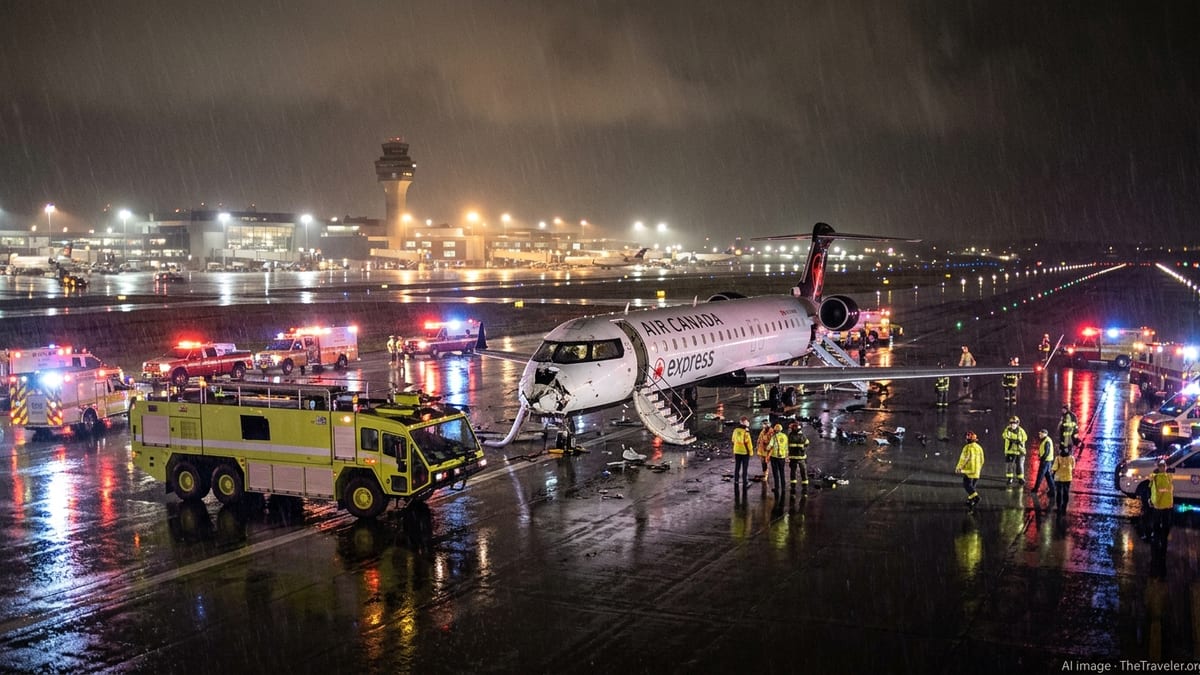
Major Disruptions Hit Regional and Mainline Carriers
Publicly available data from flight-tracking platforms indicates that LaGuardia once again ranked among the most disrupted airports in North America, with nearly 500 flights either cancelled or significantly delayed over a single travel period. The disruptions centered on regional operators Endeavor Air and Republic Airways, alongside mainline and partner services for American Airlines and Air Canada on cross-border routes.
The wave of cancellations, totaling about 179 flights, combined with more than 300 delays, affected a mix of domestic US services and transborder schedules to major Canadian cities. Travelers moving between New York and hubs such as Toronto, Montreal and other key Canadian gateways experienced missed connections, extended ground holds and rolling rebooking throughout the day.
Published coverage of LaGuardia’s performance in recent months has repeatedly highlighted the airport’s vulnerability to operational shocks. When schedules tighten or infrastructure is constrained, regional carriers that operate high-frequency, short-haul flights are often the first to see large blocks of departures scrubbed, amplifying the impact for business travelers and connecting passengers.
Although a number of flights were ultimately able to depart after extended delays, the volume of cancellations meant many itineraries were effectively broken, forcing passengers to seek alternative routings through other New York-area airports or larger US hubs.
US–Canada Corridors Bear the Brunt
The latest episode of disruption at LaGuardia has been particularly visible on high-demand US–Canada corridors. According to publicly accessible schedule data, Endeavor Air and Republic Airways operate a significant share of regional flights feeding larger network carriers on routes linking New York with Canadian cities. When those regional links falter, the effect cascades through both domestic and international networks.
American Airlines and Air Canada, which rely on a mix of mainline and regional partners to sustain frequent cross-border services, also saw operations from LaGuardia heavily affected. Delays on these routes can lead to missed onward connections to Europe, the US West Coast and Western Canada, turning what should be relatively short flights into all-day journeys.
Transborder routes are especially sensitive to disruption because passengers must clear both aviation security and border controls as part of their journey. Prolonged departure holds and gate changes at a congested airport complicate this flow, straining airport facilities and increasing the likelihood that travelers will miss connection windows at onward hubs.
While many long-haul and widebody services operate from other New York airports, LaGuardia’s role as a high-frequency business gateway means that even regional cancellations reverberate widely. Travel planners and corporate travelers often build tightly timed itineraries around these shuttle-style flights, leaving little margin for the kind of delays recently recorded.
Weather, Infrastructure and Congestion Combine
Recent reporting on LaGuardia’s operations has underscored a confluence of factors that can trigger large-scale disruptions: fast-changing weather systems in the Northeast, restricted runway capacity and tight airspace around the New York region. Even when skies appear relatively clear, upstream storms and air traffic management initiatives can sharply reduce the number of movements the airport can handle each hour.
LaGuardia’s compact layout and limited runway configuration leave little flexibility when incidents or maintenance requirements arise. Publicly available information about earlier runway closures and tarmac incidents at the airport has illustrated how quickly congestion can build when one operational element is temporarily removed from service, forcing airlines to consolidate schedules or cancel entire rotations.
Regional airlines such as Endeavor Air and Republic Airways, which operate large fleets of smaller jets on behalf of major carriers, tend to see a higher percentage of cancellations in such scenarios. Aviation performance data released in previous US government consumer reports has shown that regional affiliates frequently shoulder a disproportionate share of schedule cuts when capacity must be trimmed.
Observers note that as LaGuardia continues to handle strong demand from both leisure and corporate travelers, the airport’s limited airfield capacity and the complexity of New York’s airspace make it especially prone to knock-on delays once disruptions begin. The latest figures on cancellations and late arrivals reflect those structural pressures.
Stranded Travelers Face Long Lines and Limited Options
For passengers, the operational statistics translated into crowded terminals, long rebooking queues and limited same-day alternatives. With 179 flights cancelled in a compressed timeframe, many customers were pushed onto later departures or routed through other hubs, with some travelers reportedly facing overnight stays to complete relatively short trips.
Public travel advisories and airline updates encouraged customers to monitor flight status closely and use digital tools to manage rebookings rather than waiting at airport counters. However, heavy load factors across the network meant available seats on remaining flights were scarce, particularly on peak-time services between New York and major Canadian cities.
Families and leisure travelers arriving at LaGuardia for the start of vacations were met with uncertainty as departure boards filled with cancellations and extended delays. Business travelers trying to complete same-day trips or attend time-sensitive meetings found themselves weighing options that included shifting to rail, driving to alternate airports or postponing plans altogether.
Travel industry commentators suggest that frequent flyers using LaGuardia increasingly build contingency time into itineraries, especially during seasons prone to storms or heavy congestion. The latest disruption episode is likely to reinforce that behavior, as travelers absorb the practical consequences of large-scale schedule volatility at one of the region’s key gateways.
What the Latest Chaos Signals for Summer Travel
The scale of the cancellations and delays at LaGuardia offers an early signal of challenges that could intensify as peak summer travel builds. Aviation analysts note that schedules across North America have been growing more ambitious, with airlines adding capacity to capture robust demand while simultaneously dealing with aircraft availability issues and operational staffing constraints.
Recent government performance data, along with ongoing industry analysis, shows that even modest reductions in capacity at a highly utilized airport can create outsized disturbances in on-time performance. In this context, LaGuardia’s latest turbulence may be seen as a stress test of how carriers such as Endeavor Air, Republic Airways, American Airlines and Air Canada manage irregular operations on busy regional and cross-border routes.
For travelers planning upcoming trips through New York, publicly available guidance from airline and airport channels continues to emphasize the importance of checking flight status frequently, allowing extra time at the airport and considering earlier departures when connections are involved. Flexible tickets and travel insurance products are also drawing renewed attention from passengers wary of further disruptions.
While airlines continue to refine their schedules and recovery playbooks, the most recent bout of LaGuardia chaos underlines a broader reality for North American air travel: when a key node in the network stumbles, regional affiliates and cross-border services often feel the impact first, and passengers on both sides of the US–Canada border are left navigating the fallout.