


More news on this day
New York’s LaGuardia Airport is experiencing fresh travel disruption as 95 flight delays and 7 cancellations stack up on July 4, 2026, sending knock-on effects through airline networks across North America and complicating holiday weekend plans for thousands of passengers.
Get the latest news straight to your inbox!
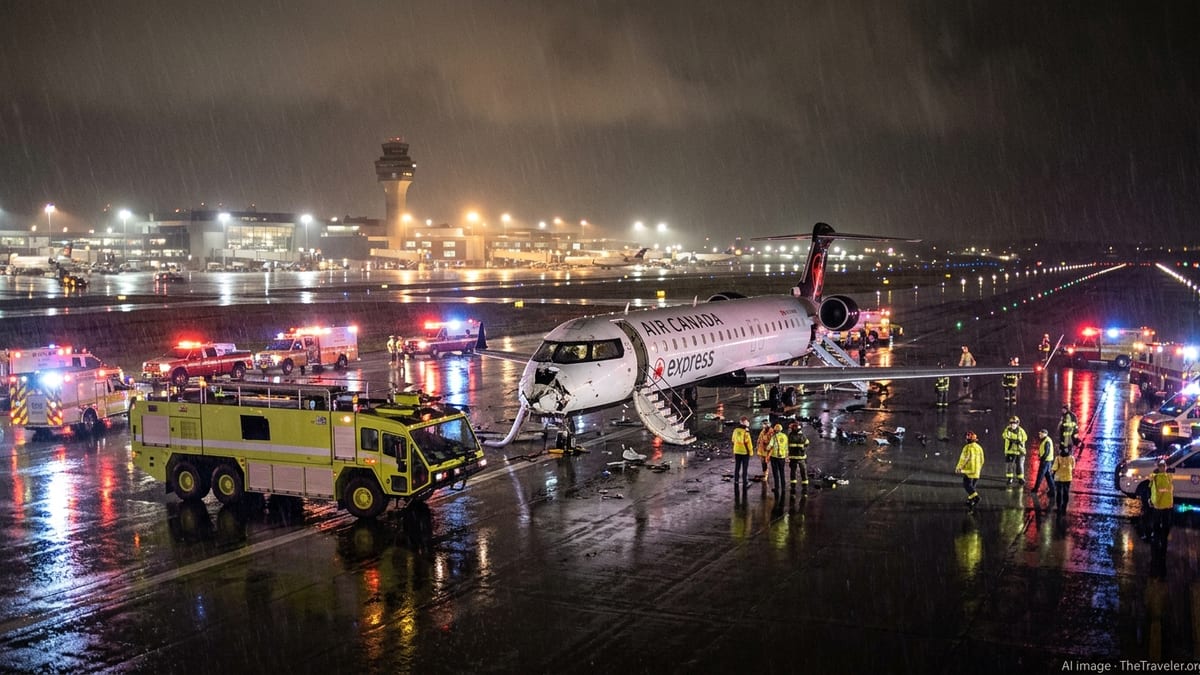
Delays Mount at Key New York Hub
Operational data compiled for July 4 indicate that LaGuardia has logged 95 delayed departures and arrivals alongside 7 outright cancellations, a heavy load even for one of the country’s most delay-prone major airports. The figures place LaGuardia among the more disrupted hubs in the United States at the start of the Independence Day holiday peak, when schedules are tightly packed and turnaround times are short.
Publicly available flight-status boards show delays clustering through the morning and early afternoon banks, with some services pushed back well beyond their originally scheduled departure times. While most flights are still operating, the cumulative effect of rolling delays is lengthening time spent in terminals and raising the likelihood of missed onward connections across the network.
The disruption follows a challenging operational stretch for LaGuardia in recent weeks, including weather-related congestion and ongoing airfield and terminal work. Performance data reviewed for late June and early July show that on-time departure rates have already been under pressure as traffic volumes climb into the core summer travel period.
Major U.S. and Canadian Carriers Affected
The impact is spread across a mix of large U.S. and Canadian airlines that rely on LaGuardia as a key business and short-haul leisure gateway. Delta Air Lines, the largest operator at the airport, appears to be carrying a significant share of the delay burden, with dozens of flights flagged as late on regional and domestic routes. American Airlines and United Airlines are also seeing a number of services pushed back or scrubbed, particularly on high-frequency links into the U.S. Northeast and Midwest.
Air Canada and other cross-border operators are feeling the effects on transborder sectors linking New York with Toronto and Montreal, where a small number of cancellations and delays are already evident. Regional affiliates operating under major airline brands are also caught up, with late-running feeder services tightening connection windows at downline hubs such as Toronto Pearson, Chicago O’Hare, Detroit and Atlanta.
Because many LaGuardia flights are relatively short hops into nearby cities, even modest delays can quickly ripple outward as aircraft cycle through multiple legs in a day. Each late departure from New York increases the risk that crews and aircraft will be out of position for later segments, potentially forcing schedule adjustments and further cancellations beyond the New York region.
Weather, Runway Constraints and Construction Add Strain
Several overlapping factors are contributing to the strain on LaGuardia’s operation. Seasonal weather has periodically reduced visibility and slowed arrival and departure rates at New York-area airports, triggering volume-related spacing measures that can quickly push flights off schedule in already-busy banks. Forecasts and real-time aviation data suggest intermittent constraints in the region through the holiday period, adding uncertainty for airlines and travelers alike.
The airport has also been managing the effects of airfield constraints after a recent period of repair work on Runway 4/22, which previously led to large numbers of delays and cancellations when it was temporarily closed. Although the runway is back in use, the episode has highlighted how sensitive LaGuardia’s tightly packed operation is to any loss of capacity, especially when combined with convective summer weather.
On the ground, continuing redevelopment and modernization projects in and around the terminals, including work linked to Delta’s facilities, can lengthen taxi times and complicate gate assignments during peak hours. Construction activity does not directly cause delays in the way that weather or runway closures do, but it can reduce flexibility when airlines are trying to recover from disruptions or squeeze extra movements into congested time periods.
Knock-on Effects Across North American Routes
The disruption at LaGuardia is sending visible ripples through a wide web of North American routes, as aircraft and crews cycle between New York and secondary cities. Flights from LaGuardia feed into key hubs such as Atlanta, Detroit, Minneapolis, Chicago, Toronto and Montreal, meaning that a late departure from New York in the morning can cascade into afternoon and evening banks farther afield.
Regional airports connected to LaGuardia, including business-focused destinations such as Boston, Washington National, Cleveland and Raleigh-Durham, are likely to see some of the sharpest impacts in the form of delayed arrivals and departures. Travel analytics platforms monitoring same-day performance note that short-haul corridors between these cities and New York rank among the most disrupted in today’s schedules.
Secondary knock-on effects can also appear in markets that do not touch LaGuardia directly but rely on aircraft coming from New York earlier in the day. If a LaGuardia-based jet ends up operating significantly late into another hub, its subsequent legs into cities across the United States and Canada may also leave behind schedule, contributing to a broader pattern of afternoon and evening delays.
What Travelers Can Expect Through the Holiday Weekend
With demand elevated for the July 4 holiday, airlines have limited slack in their systems to absorb disruptions, and LaGuardia’s volume of delays suggests that recovery may extend into the evening and potentially into subsequent days if weather and traffic conditions do not improve. Passengers booked on Delta, American, United, Air Canada and other carriers using the airport should be prepared for gate changes, rolling departure-time revisions and crowded terminal areas.
Publicly available guidance from airlines and aviation agencies consistently recommends monitoring flight status closely on days like this, using carrier apps and text alerts in addition to airport information screens. Travelers facing tight connections in other cities may wish to explore earlier departures, standby options or rebooking to alternative routings if they are still at the planning stage of their trip.
While today’s figures are striking, they are also part of a longer-running pattern in which LaGuardia regularly reports some of the highest delay rates among major U.S. airports, particularly during summer peaks and winter weather events. Industry observers note that continued infrastructure upgrades and airspace management initiatives are aimed at gradually improving resilience, but the current wave of disruptions underlines how vulnerable dense metropolitan hubs remain when any part of the system comes under pressure.