


More news on this day
Massive air travel disruptions are rippling across the United States on Thursday as New York’s LaGuardia Airport grapples with a runway-closing sinkhole, with operational data indicating at least 383 delays and 48 cancellations tied to the latest wave of schedule turmoil.
Get the latest news straight to your inbox!
Runway 4/22 Closure Deepens New York Bottleneck
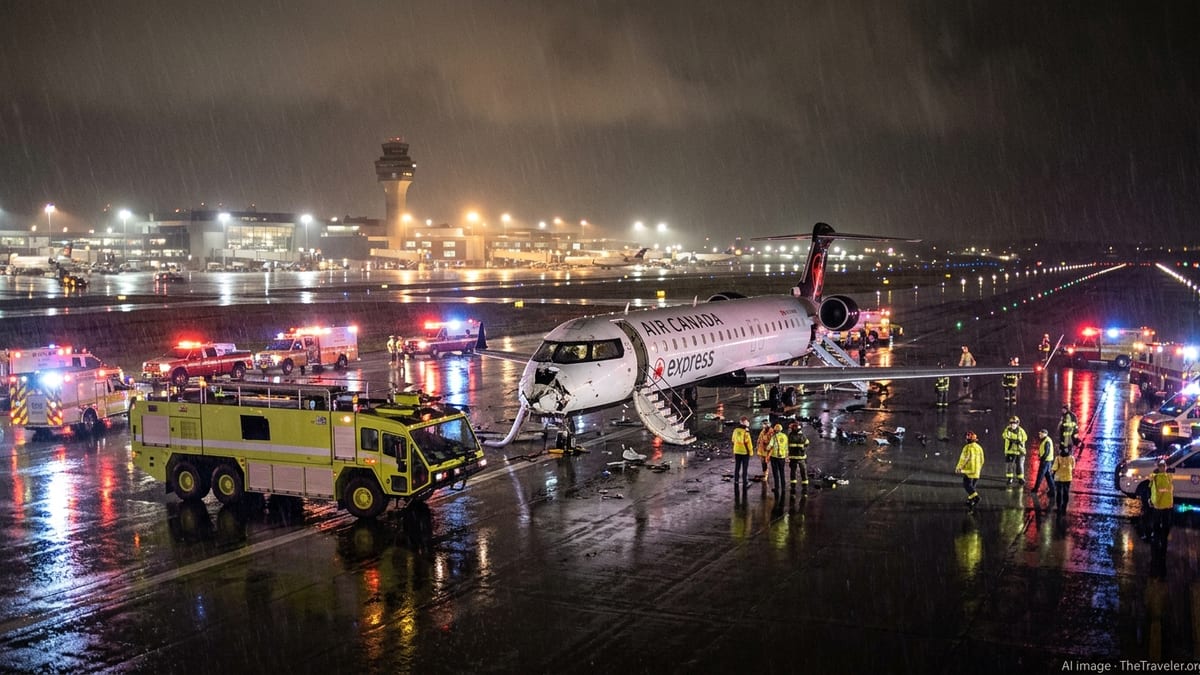
LaGuardia’s current disruption centers on Runway 4/22, which remains closed after a sinkhole was discovered during a routine airfield inspection on Wednesday morning. Publicly available information from airport operators and broadcast outlets indicates that the ground failure opened up adjacent to the pavement, prompting an immediate shutdown of one of the airport’s two primary runways as engineers moved in to assess stability and begin emergency repairs.
With 4/22 offline, all takeoffs and landings are being funneled onto Runway 13/31, drastically reducing the number of movements LaGuardia can safely handle per hour. Traffic that would normally be spread across parallel operations is now compressed into a single runway configuration, a change that aviation planners describe as a textbook recipe for rolling delays as aircraft wait in departure queues and arrivals are spaced out for safety.
Federal aviation planning advisories show that a formal ground delay program was activated for LaGuardia on Wednesday evening and has continued into Thursday, stretching the impact window into a second day of heavy disruption. As of midmorning, live tracking dashboards showed hundreds of delayed flights and dozens of cancellations at the Queens hub, with average outbound hold times repeatedly climbing well past typical peak levels.
Weather has added another layer of complexity. Thunderstorms across the New York region on Wednesday night further reduced airport arrival rates, intensifying congestion just as airlines were attempting to work through the backlog created by the runway closure. The combination of infrastructure damage and convective weather has left schedules fragile and recovery efforts slow.
Major Airlines Hit Across Boston, Toronto, Orlando and Beyond
The disruption at LaGuardia is radiating across the domestic and transborder network, affecting operations not only in New York but also in key markets such as Boston, Toronto and Orlando. Flight status boards on Thursday show Delta Air Lines, United Airlines, Southwest Airlines and multiple regional affiliates including Republic Airways among the most exposed carriers, reflecting LaGuardia’s role as a critical node in their network structures.
In the Northeast corridor, shuttle-style routes between LaGuardia and Boston Logan are seeing dense clusters of delays as aircraft and crews are held in New York, arrive late into Boston, or are reassigned as airlines attempt to keep some semblance of connectivity for business travelers. Similar knock-on issues are visible on flights to and from Toronto, where cross border services have been trimmed or retimed as carriers prioritize limited LaGuardia arrival slots.
To the south, Orlando and other Florida gateways are feeling the effect in the form of rolling delays, with some departures pushed back by more than an hour as aircraft originating from New York arrive late. Industry trackers show that the 48 cancellations linked to the latest LaGuardia operational data are spread across a mix of short haul business routes and high demand leisure services, leaving both weekday commuters and vacationers scrambling for alternatives.
Regional operators flying under contract for major network carriers appear particularly exposed. Public schedules indicate that Republic and other regional airlines have scrubbed or consolidated multiple LaGuardia rotations, a move that helps parent carriers preserve mainline capacity on trunk routes but sharply reduces options for passengers booked on smaller jets serving secondary cities.
Travelers Face Cascading Delays Across the National Network
Because LaGuardia sits near the top of the national delay propagation chain, disruption at the New York hub quickly spills into airports far from the immediate incident. Historical data and current tracking suggest that off schedule departures in Queens are now reverberating through connecting banks in cities such as Chicago, Atlanta and Dallas, as late arriving aircraft miss their planned connection windows and crews time out on duty limitations.
For travelers, the result is a patchwork of missed connections, reroutes through alternative hubs and extended time on the ground as flights wait for available gates in New York. Reports from passenger forums and airline advisories describe long lines at customer service desks, with some travelers opting to abandon LaGuardia itineraries entirely in favor of ground transport or rebooking into John F. Kennedy International Airport or Newark Liberty International Airport.
Operational specialists note that even flights that technically operate on time may depart with empty seats that were originally reserved for passengers stranded by earlier LaGuardia disruptions. This misalignment between booked demand and actual boarding further complicates network recovery, as airlines juggle standby lists, same day changes and rolling waivers intended to give customers more flexibility.
The strain is occurring just as the United States heads into the busy late May travel period, when domestic leisure demand typically accelerates ahead of the Memorial Day weekend. Industry briefings published earlier this month had already highlighted tight capacity and thin margins for error on key routes, conditions that leave airlines little room to absorb an infrastructure event at a major airport.
Fee Waivers, Rebooking and What Passengers Can Expect Next
In response to the ongoing disruption, several large carriers serving LaGuardia have introduced flexible travel policies for affected customers. According to public advisories and customer communications reviewed by TheTraveler.org, airlines including Delta and United have expanded existing East Coast weather waivers to cover itineraries touching LaGuardia, allowing many passengers to change flights without incurring standard change fees or fare differences within specified travel windows.
Some carriers are also permitting rebooking into nearby airports such as JFK, Newark or, in certain cases, Philadelphia, recognizing that capacity constraints at LaGuardia may persist until Runway 4/22 is fully repaired and returned to service. Passengers who can shift to earlier or later travel dates, or who are willing to depart from an alternate airport, appear most likely to secure reasonable replacement itineraries.
Travel experts monitoring Thursday’s operations suggest that the recovery timeline will hinge on both engineering progress at the sinkhole site and the short term weather pattern over the New York metropolitan area. If repairs allow even partial restoration of normal runway capacity and storms stay clear during peak bank times, airlines may be able to gradually unwind the backlog over the next one to two days. Any additional weather disruption, however, risks extending the wave of delays further into the weekend.
For now, the data indicate that travelers with same day or next day LaGuardia departures should prepare for continued uncertainty, build generous buffers into onward connections and remain proactive in monitoring flight status. With 383 delays and 48 cancellations already linked to the latest phase of the incident, the knock on effects highlight how a localized infrastructure failure at a single New York runway can ripple across an entire continent’s aviation system.