


More news on this day
A deepening global jet fuel crunch is rippling through the world’s busiest air corridors, driving mass flight cancellations, packed terminals and steep fare hikes from London and Frankfurt to New York, Bangkok and Hong Kong.
Get the latest news straight to your inbox!
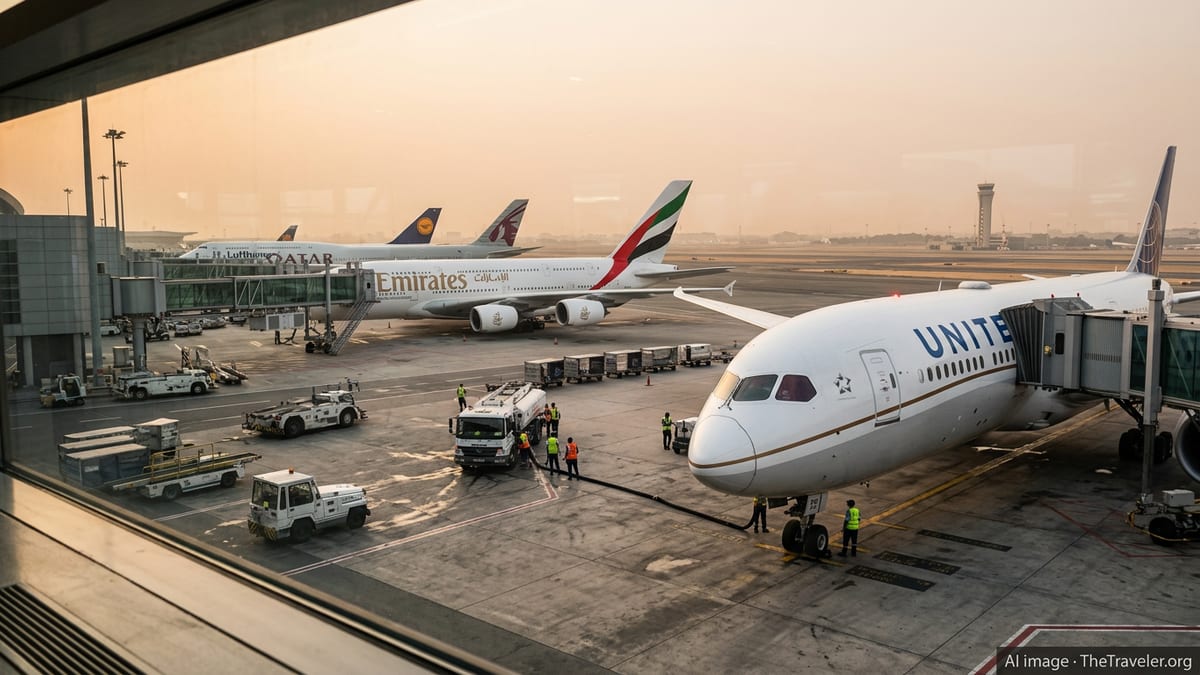
Fuel Crisis Turns Into Worldwide Airline Disruption
Airlines across Europe, North America and Asia are cutting capacity as jet fuel prices remain far above historical norms and supplies tighten following the conflict involving Iran and the partial closure of the Strait of Hormuz. Industry data shows jet fuel benchmark prices more than doubled in March before easing slightly, leaving carriers locked into significantly higher operating costs as the key summer travel season approaches.
Publicly available analysis on the economic impact of the conflict indicates that the shock to oil markets has been especially severe for aviation, with kerosene based fuels among the hardest hit. Trade and energy studies describe a sharp contraction in available supply, with Asia initially absorbing the biggest impact before Europe and the United Kingdom began to feel mounting pressure as seaborne deliveries were disrupted.
Aviation research reports suggest that the fuel spike is already erasing profitability on thinner routes, forcing airlines to ground older, less efficient aircraft and rewrite timetables through October. The pattern is visible across major alliance networks as they consolidate traffic into core hubs and trim frequencies on regional links that feed long haul services.
Analysts tracking airline schedules warn that the adjustment is far from over. Several forecasting notes published in May highlight the risk that if fuel prices remain elevated into the third quarter, carriers could launch additional rounds of cancellations, extending the disruption beyond the northern summer and into early 2027.
UK and Germany Cut Thousands of Flights as Europe Feels the Squeeze
Europe has emerged as one of the regions most exposed to the evolving jet fuel crunch, with its heavy reliance on imported product from the Gulf now colliding with a tightening global market. Research from European aviation bodies points to a marked jump in fuel costs since February, while the International Energy Agency has warned that regional stocks are running at unusually low levels for the time of year.
In the United Kingdom, aviation data cited in recent coverage shows nearly 300 flights cancelled across major airports by mid May as airlines moved to protect balance sheets from surging fuel bills. Carriers have withdrawn marginal services from London and regional cities, reshaping domestic and short haul networks while attempting to preserve higher yielding transatlantic and Mediterranean leisure routes.
Germany has seen even more dramatic schedule cuts. Lufthansa, Europe’s largest network airline, has announced the removal of around 20,000 short haul sectors between May and October, a move linked directly in public reporting to conservation of jet fuel and fleet renewal plans. The adjustment reduces connectivity through Frankfurt and Munich, sending knock on effects across central and eastern Europe as feeder flights disappear.
Industry associations warn that smaller European airports could be particularly exposed if the crisis deepens. Analyses published in late April suggest that secondary hubs, already operating on thin margins, may struggle to remain viable if fuel related cancellations persist, since airlines are reallocating scarce capacity to primary gateways such as London Heathrow, Frankfurt and Paris Charles de Gaulle.
US Carriers Hike Fares and Trim Schedules as Costs Soar
Across the Atlantic, North American airlines are grappling with the same underlying pressures, even as the region benefits from stronger domestic fuel production. Aviation and energy market reports note that the global average jet fuel price recently climbed to more than 160 dollars per barrel, with US fares in April estimated to be roughly 20 percent higher year on year, in large part due to fuel costs.
Published coverage from travel and business outlets describes a wave of responses from US carriers, including the introduction of fuel surcharges, higher baggage and change fees, and targeted reductions in schedules on selected routes. Some low cost operators that rely heavily on thin margins have been hit particularly hard, with one well known budget airline in the United States ceasing operations in early May after prolonged financial strain linked to the fuel spike.
Capacity constraints at major US gateways, including New York area airports, are feeding into tight seat availability during peak periods. Aviation booking platforms and fare trackers show average economy prices climbing sharply on popular transatlantic and transpacific sectors, reflecting both the higher cost base and reduced supply from European and Asian partners.
Analysts caution that while North America may avoid outright fuel shortages, consumers are likely to face an extended period of elevated ticket prices and fuller flights. Airlines that hedged fuel at lower prices earlier in the year appear somewhat better positioned, but research notes that even these carriers remain vulnerable to physical supply issues at overseas destinations.
Bangkok, Hong Kong and Asia Pacific Hubs Brace for Prolonged Turbulence
Asia Pacific, home to some of the world’s busiest international hubs, has been on the front line of the jet fuel shock. Data compiled by regional news agencies and energy consultancies indicates that air traffic across the region fell by around 10 percent in the weeks after the conflict escalated, as soaring fuel costs forced airlines to cut routes and ground capacity.
Benchmark jet fuel prices in Singapore spiked from roughly 90 dollars per barrel to more than 230 dollars in early March before easing, according to commodity market assessments. Analysts highlight structural vulnerabilities across several Asian economies, including lower strategic stockpiles and fragmented approaches to emergency reserves, which leave carriers more exposed to abrupt supply disruptions.
Bangkok, a major connecting point for Southeast Asia, has seen schedule reductions from both local and foreign airlines, with some carriers suspending less profitable regional routes to conserve fuel. Trade and aviation publications report that air cargo operators are also being forced to reroute or consolidate services, increasing costs for exporters who depend on swift access to European and North American markets.
Hong Kong, which has spent years rebuilding connectivity after pandemic era restrictions, is now confronting renewed headwinds. Public statements and network updates from leading Asian airlines indicate modest but noticeable capacity cuts on selected routes through the city, alongside the introduction of higher fuel surcharges on long haul tickets to Europe and North America.
Travelers Confront Higher Prices, Packed Airports and Planning Uncertainty
For passengers, the jet fuel crisis is translating into a difficult and often unpredictable travel experience. Aviation analytics firms estimate that airlines have removed at least several million seats from global schedules for May and June compared with earlier plans, with further reductions possible if fuel supplies tighten again. That combination of fewer flights and resilient demand is pushing fares higher across almost every major market.
Reports from travel agencies and booking platforms point to double digit percentage increases in average ticket prices on many routes touching London, Frankfurt, New York, Bangkok and Hong Kong. Travelers searching for peak season departures now often face limited choice, with non stop services selling out earlier and connecting options involving longer routings or overnight layovers through alternative hubs.
Consumer advocates note that many of the latest cancellations are occurring weeks in advance as airlines proactively reshape schedules around constrained fuel availability. While this can give passengers more time to rebook, it also complicates travel planning for holidays, business trips and events, particularly where hotel reservations and tours were arranged months ahead on the assumption of stable air links.
Industry observers suggest that flexibility will be essential for anyone flying in the coming months. Publicly available guidance from aviation bodies and travel groups consistently recommends monitoring itineraries closely, allowing extra time for connections, and budgeting for higher fares and potential surcharges as the global jet fuel crunch continues to work its way through the aviation system.