

More news on this day
Lao Airlines will resume direct flights between Vientiane and Da Nang on March 29, 2026, restoring a key air corridor that regional tourism officials say will boost visitor flows and strengthen connectivity between Laos and central Vietnam.
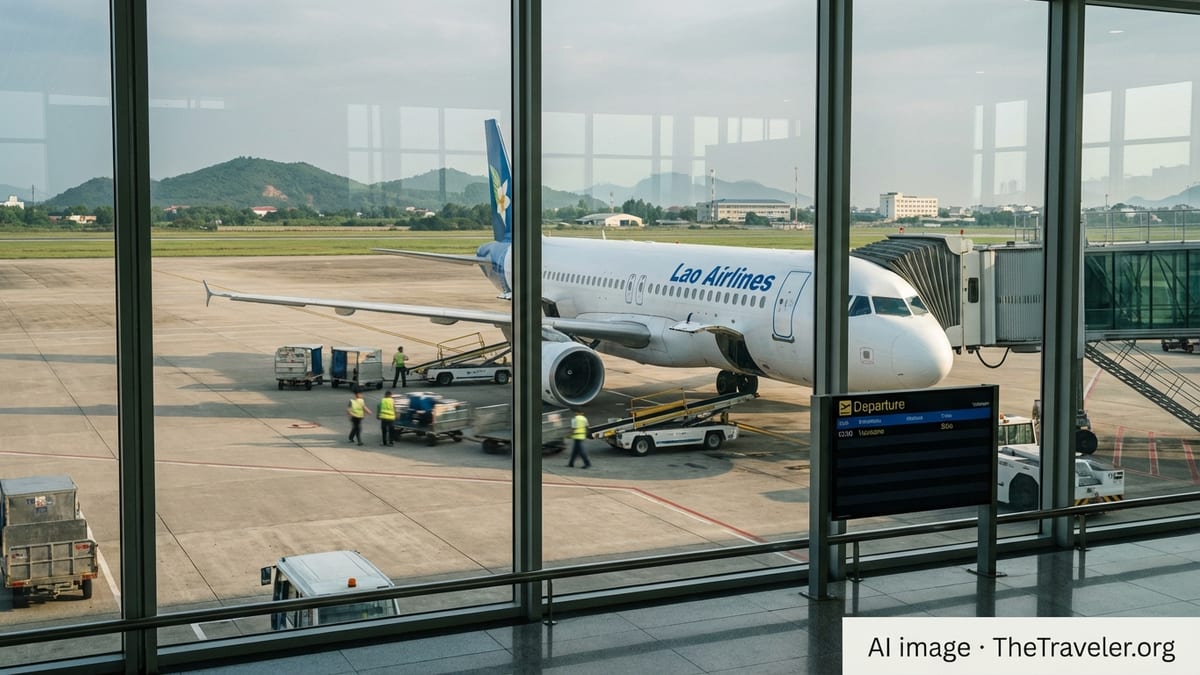
Twice-Weekly Service Returns With New-Generation Aircraft
The Lao flag carrier has confirmed that nonstop services between Wattay International Airport in Vientiane and Da Nang International Airport will restart with two round trips per week, operating on Thursdays and Sundays. The route returns at the start of the northern summer schedule, timed to capture growing demand for short regional breaks and cross-border business travel.
Lao Airlines will deploy its Comac C909 narrowbody on the sector, configured with 90 economy-class seats. The aircraft choice represents a middle ground between the smaller turboprops that previously served the route and larger Airbus jets used during an earlier relaunch, giving the airline more flexibility to match capacity with seasonal demand.
According to the published schedule, flight QV317 is set to depart Vientiane at 11:20 and arrive in Da Nang at 12:40 local time, with the return service QV318 leaving Da Nang at 13:50 and touching down in Vientiane at 15:10. The block time of around one hour and 20 minutes makes it one of the quickest international links in the Mekong subregion.
Tickets are being distributed through Lao Airlines ticket offices in Laos, authorized travel agents and the carrier’s digital channels, with indicative round-trip fares in April 2026 reported from about 290 US dollars. Industry analysts say that positions the route competitively against itineraries requiring at least one connection via Hanoi, Ho Chi Minh City or Bangkok.
Tourism Hubs Bet on Rising Demand in 2026
Tourism authorities in both Laos and Vietnam are positioning the restored connection as a catalyst for visitor growth in 2026. Da Nang, a major coastal gateway in central Vietnam, has set ambitious targets for international arrivals as it promotes a mix of beach resorts, golf, and access to nearby UNESCO-recognized heritage sites such as Hoi An and the former imperial city of Hue.
In Laos, Vientiane serves as both political capital and primary international gateway, feeding travelers onward to Luang Prabang and emerging ecotourism destinations. Officials note that Vietnam has recently been among the top foreign source markets for Laos, while Lao visitor numbers to Vietnam have also been on a steady upward trajectory, supported by relaxed entry rules and increased marketing campaigns.
Travel trade representatives say the twice-weekly pattern suits long weekend trips and short leisure breaks, especially for outbound Vietnamese travelers seeking quieter destinations in Laos. At the same time, the schedule is expected to appeal to Laotian travelers attracted by Da Nang’s beaches, shopping and seafood, particularly in the peak summer months.
Regional tourism bodies are also highlighting the route’s potential to disperse visitors beyond the two cities. Da Nang’s growing role as a transit hub for central Vietnam and Vientiane’s links to northern Laos give tour operators new options to package multi-stop itineraries combining culture, coast and countryside across the two countries.
Strengthening Regional Connectivity Across Mainland Southeast Asia
The relaunch of Vientiane–Da Nang flights fits into a broader push by governments and airlines in mainland Southeast Asia to deepen cross-border air connectivity. Direct links between secondary cities are seen as vital to reducing travel times, supporting trade and tourism, and easing pressure on large hub airports.
With both Vientiane and Da Nang located in the same time zone, mid-day departures and arrivals minimize jet lag and enable smooth same-day transfers onto domestic networks. Aviation observers point out that the restored route effectively shortens the journey between Laos and central Vietnam to under two hours curb-to-curb in many cases, compared with half a day or more when connections are required.
For Laos, the service adds another international point to its modest but strategically important route map, which plays a key role in opening the landlocked country to regional markets. For Vietnam, it complements a growing web of intra-ASEAN flights that support its goal of becoming a regional aviation and tourism hub.
Industry watchers say the use of a 90-seat aircraft reflects a pragmatic, connectivity-first approach. Instead of chasing high volumes, Lao Airlines appears to be prioritizing regular, reliable links that can be sustained throughout the planned March to September operating window, positioning the route as a stable option for tour planners and corporate travel managers.
Route History Highlights Post-Pandemic Adjustments
The Vientiane–Da Nang corridor has seen several iterations in recent years as airlines and destinations adjusted to shifting market conditions. Before the pandemic, Lao Airlines linked the two cities with ATR-72 turboprops that routed via Pakse in southern Laos, a configuration that extended journey times but reflected more modest demand.
In 2023 the airline briefly launched a nonstop Vientiane–Da Nang service using an Airbus A320, only to suspend it months later amid a slower than expected recovery in regional travel. The current restart, using the smaller Comac C909, is widely viewed as a more measured attempt to rebuild the market with capacity calibrated to realistic load factors.
Local tourism businesses in Da Nang note that the route has tended to perform strongest during the spring and summer high season, when Laotian travelers flock to the Vietnamese coast for seaside holidays, shopping and entertainment. As a result, there is industry expectation that the 2026 operation will again concentrate on these peak months, with performance closely watched before any decision on extended year-round service.
On the Laos side, tour operators acknowledge that outbound demand remains relatively limited given the country’s small population and competition from established regional favorites such as Thailand and South Korea. However, they argue that improved connectivity, coupled with new infrastructure projects like the Laos high-speed rail, could gradually reshape travel flows over the medium term.
Opportunities for Multi-Destination Itineraries and Niche Markets
Beyond point-to-point traffic, the revived flights are expected to stimulate more complex itineraries across the Mekong region. Travel consultants are already promoting packages that combine Vientiane or Luang Prabang with Da Nang, Hoi An and Hue, appealing to visitors who want to experience both inland Buddhist heritage and Vietnam’s central coastline within a single trip.
The convenient mid-day timings facilitate same-day connections onto domestic services in both countries, enabling travelers from markets such as South Korea, Japan and Europe to route into Da Nang and continue into Laos with minimal downtime. This is particularly attractive to long-haul visitors looking to maximize their time in destination rather than at airports.
There is also growing interest from niche segments including golfers, incentive groups and cultural tour operators. Central Vietnam’s established golf courses and resort infrastructure pair naturally with Laos’ slower-paced cultural and nature-based experiences, while improved air links make it easier for organizers to guarantee smooth logistics for groups.
Travel industry sources say the performance of the Vientiane–Da Nang route in the coming months will be closely watched as a barometer for regional demand. If load factors track positively, it could strengthen the case for additional cross-border routes linking secondary cities in mainland Southeast Asia, further knitting together one of the world’s most dynamic tourism regions.