

More news on this day
Passengers traveling through Las Vegas’ Harry Reid International Airport on Sunday faced widespread disruption, with more than 170 flights delayed and at least one cancellation affecting major U.S. carriers and routes to Chicago, New York, Los Angeles and other destinations.
Get the latest news straight to your inbox!
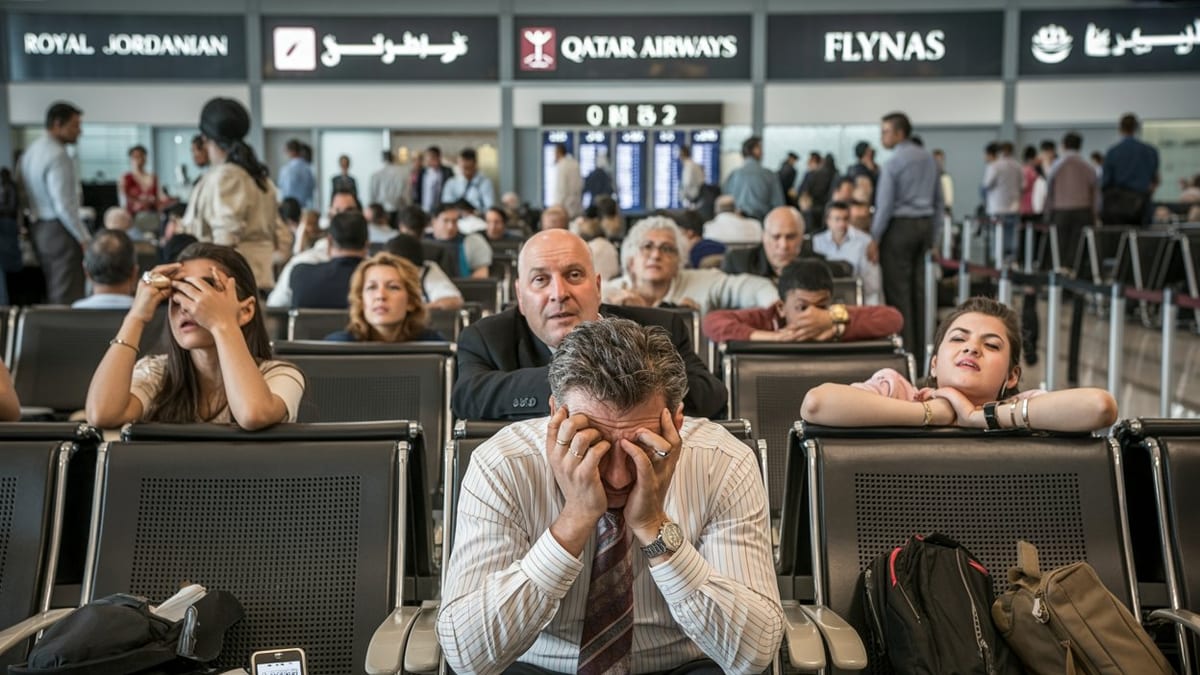
Image by Travel And Tour World
Operational Snags Ripple Across a Busy Travel Day
Publicly available flight-tracking data for Harry Reid International Airport on Sunday showed delays mounting across the departure and arrival boards, with well over one hundred flights running behind schedule and a smaller number canceled outright. The disruption affected both morning and afternoon waves of traffic, catching leisure travelers returning from weekend stays as well as business passengers positioning for the workweek.
Reports indicate that delays varied widely in length, from modest schedule slips of 30 to 45 minutes to more substantial holdups stretching beyond two hours on some services. While most flights eventually departed, the growing backlog created longer dwell times at gates and increased congestion on taxiways, complicating efforts to bring the operation back on time.
Information from airport and aviation data platforms suggests the issues were not driven by a single, isolated failure, but by a combination of factors typical of a high-volume hub. Those include tight aircraft and crew rotations, scattered weather challenges across the national network, and air traffic management initiatives that can quickly cascade into multiple delayed departures and arrivals.
Harry Reid International, one of the country’s busiest passenger airports, has seen strong traffic in recent years as Las Vegas continues to attract tourism, sports and convention travel. On peak days, even minor disruptions can propagate quickly, leaving airlines with limited flexibility to absorb additional schedule shocks.
Major Airlines Feel the Strain on Key Domestic Routes
The day’s disruption touched nearly every large U.S. carrier with a presence in Las Vegas. Publicly available schedules and delay logs show Southwest Airlines, the airport’s largest operator by departures, contending with a significant share of the delayed flights, particularly on short- and medium-haul routes serving the West and Midwest.
Delta Air Lines, United Airlines and American Airlines also reported multiple delayed services into and out of Las Vegas, according to flight-tracking boards. Many of those flights connect to larger hub airports, where knock-on effects can be magnified as delayed aircraft and crews arrive late for subsequent legs.
The presence of several ultra low cost and leisure-focused carriers at Harry Reid added another layer of complexity. These operators often rely on tight aircraft utilization and point-to-point networks, meaning any disruption at an intermediate stop such as Las Vegas can leave limited backup options for reaccommodating passengers on later services.
Industry observers note that while the overall number of cancellations remained relatively low compared with the volume of delays, airlines can face hours of recovery work after a busy travel window. Rebalancing aircraft, rescheduling crews and assisting displaced passengers typically continues well after the worst of the disruption has eased from public view.
Flights to Chicago, New York, Los Angeles and Beyond Disrupted
The impact of Sunday’s problems in Las Vegas was felt on several of the nation’s most heavily traveled corridors. Flights between Harry Reid International and Chicago-area airports, including Chicago O’Hare, experienced notable delays, according to real-time flight status dashboards. Weather and traffic patterns in the Midwest can compound delays originating in the Southwest, turning moderate setbacks into longer waits for passengers on connecting itineraries.
Services linking Las Vegas with New York-area airports were also affected, with certain departures and arrivals from major East Coast gateways posting late-operating times. New York’s own crowded airspace and frequent traffic management initiatives can leave little margin when inbound aircraft from the West depart late or face en route slowdowns.
On the West Coast, traffic between Las Vegas and Los Angeles saw a series of pushed-back departure times as carriers adjusted to aircraft arriving behind schedule from earlier segments. Given the importance of the Las Vegas–Los Angeles corridor for both leisure and business travel, even short delays can quickly create bottlenecks at gates and on taxiways on both ends of the route.
Beyond these marquee city pairs, disruptions extended to secondary markets across the Mountain West, Pacific Northwest and South. Passengers on connecting itineraries through Las Vegas reported missed onward flights and the need to be rebooked onto later services, particularly on routes that do not operate at high daily frequency.
Traveler Experience Marked by Longer Waits and Tight Connections
For many affected passengers, the operational challenges translated into crowded departure areas, longer waits at gates and rising concern over missed connections. Publicly visible social media posts and traveler forums highlighted extended stays in the terminal, frequent gate-change notifications and shifting estimated departure times as airlines worked to reset the schedule.
Some travelers reported arriving to find their flights already delayed, which in a few cases provided unexpected extra time to clear security and reach the gate. Others, particularly those with tight connections in Chicago, New York or Los Angeles, faced more difficult choices as revised departure times left little room to make onward flights at other hubs.
Information available from consumer-facing flight status tools indicates that rebooking options varied considerably by route and airline. Passengers on high-frequency routes such as Las Vegas to Los Angeles generally had more same-day alternatives, while those bound for smaller markets often faced longer waits for the next available seat.
Seasoned travelers following aviation data and airline advisories noted familiar patterns: once delays exceed about an hour, recovery can take several flight cycles, meaning evening departures may still reflect schedule stresses that began in the morning. On a busy travel Sunday, that dynamic can leave terminals crowded well into the night.
What Comes Next for Airlines and Passengers
As of late Sunday, publicly available tracking suggested that operations at Harry Reid International were gradually stabilizing, although residual delays remained on some routes. Airlines typically use overnight hours to reposition aircraft and realign schedules, with the goal of resuming closer-to-normal operations on Monday morning.
Industry analysts point out that Las Vegas remains structurally vulnerable to ripple effects from national air traffic issues, given its reliance on visitors arriving from a wide mix of regions. Congestion, weather or airspace constraints affecting Chicago, New York, Los Angeles or other major hubs can quickly translate into disruption for Las Vegas-bound passengers, even on days when local conditions are favorable.
Travel experts often recommend that passengers flying through busy leisure and convention markets build extra time into their itineraries, particularly on Sunday afternoons and evenings, when demand tends to peak. Choosing earlier departures, allowing longer connection windows and monitoring flight status tools are cited as practical steps for reducing the risk of missed flights when delays arise.
For the airport and its airline partners, the latest round of disruptions serves as another reminder of how quickly a dense flight schedule can be strained by external factors. While the number of outright cancellations remained limited compared with prior severe-weather or system outage events, the volume of delayed flights underscores the ongoing challenges of keeping complex, interconnected networks running smoothly during peak travel periods.