

More news on this day
Passengers traveling through Las Vegas’s Harry Reid International Airport faced a difficult travel day as publicly available tracking data showed more than 170 delays and at least one cancellation, disrupting operations on major carriers including Southwest, Delta, United and American Airlines and affecting routes to Chicago, New York, Los Angeles and other key hubs.
Get the latest news straight to your inbox!
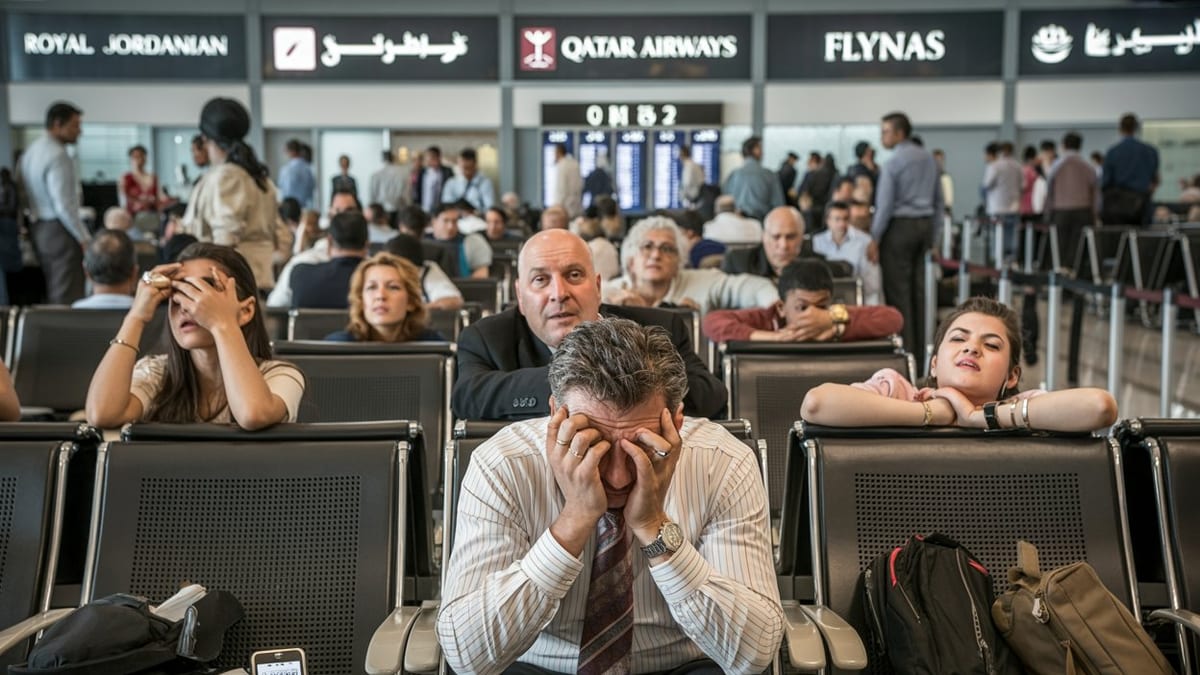
Image by Travel And Tour World
Ripple Effects Across Major U.S. Airlines
The latest operational data indicate that disruptions at Harry Reid International were concentrated among the nation’s largest carriers, with Southwest Airlines shouldering a significant share of delayed departures and arrivals. Delta Air Lines, United Airlines and American Airlines also recorded multiple delayed flights into and out of Las Vegas, contributing to a crowded departures board throughout the day.
Regional and low-cost operators serving Las Vegas were not immune, with reports showing smaller carriers also posting late departures. The pattern of delays appeared spread across both domestic point-to-point services and key connecting flights, creating knock-on impacts for passengers traveling beyond Las Vegas to secondary markets.
While only a single cancellation was recorded in the latest figures, the volume of delayed services meant many travelers still faced missed connections, shortened layovers and rebooked itineraries. For some, the impact was limited to an hour or two added to their journey, while others encountered much longer total travel times as they waited for new routing options.
Airline operational updates and schedule boards reflected a mix of arrival and departure delays, suggesting that congestion in the Las Vegas operation fed into aircraft and crew availability challenges across multiple fleets. Publicly available information shows that carriers continued to adjust schedules into the evening to restore a normal operating rhythm.
Key Routes to Chicago, New York and Los Angeles Disrupted
The delays in Las Vegas were felt most acutely on high-demand domestic corridors, particularly flights connecting Harry Reid International with Chicago, New York and Los Angeles. These routes function as important links between Las Vegas and three of the country’s busiest aviation markets, and any disturbance can quickly spread across national networks.
Services to and from Chicago’s major airports, New York area airports and Los Angeles International showed clusters of delayed operations, according to flight-tracking summaries. Some departures left Las Vegas late and arrived behind schedule, while others were held on the ground at origin points waiting for improved spacing in the Las Vegas area.
Because many Las Vegas flights continue onward to other destinations after brief turnarounds, late arrivals on these trunk routes translated into secondary delays for passengers heading to cities across the Midwest, East Coast and West Coast. Publicly available schedules show that aircraft serving Las Vegas often operate several legs in a single day, so a disruption early in the sequence can ripple well beyond the initial route.
Travelers connecting in Chicago, New York and Los Angeles reported adjusted connection windows and, in some cases, same-day rebookings when onward flights could not be held. As a result, the operational strain originating in Las Vegas contributed to broader congestion for passengers who were not starting or ending their trips in Nevada.
Operational and Weather Factors Behind the Backlog
While no single cause has been definitively identified in public reporting, recent patterns at U.S. airports suggest that a combination of airspace management, localized weather and staffing constraints can quickly translate into large numbers of delayed flights. National Airspace System advisories and prior ground delay programs involving Las Vegas illustrate how changing wind, visibility or traffic flow requirements can reduce capacity for arrivals and departures.
In recent months, Federal Aviation Administration traffic management initiatives at various airports have led to temporary ground stops and metering of flights into constrained airspace. When similar programs affect Las Vegas, airlines may be required to hold flights at their origin points, extend scheduled block times or adjust routings, each of which can appear as a delay for passengers even when safety margins are being preserved.
Industry coverage in recent days has also highlighted the impact of staffing pressures in airport operations and security screening across the United States. Although Harry Reid International has generally been described in local commentary as maintaining comparatively efficient passenger flows, even modest slowdowns at checkpoints or in ramp operations can contribute to missed pushback times during peak banks of departures.
High passenger demand into Las Vegas, supported by tourism, conventions and special events, leaves airlines with limited slack in their schedules. When disruptions occur on a busy travel day, carriers have fewer spare aircraft and crews available to absorb delays, increasing the likelihood that minor schedule irregularities develop into network-wide challenges.
What Travelers Experienced at Harry Reid International
For passengers in the terminals, the statistical picture of 170 delays translated into crowded gate areas, packed food outlets and frequent updates on departure boards. Some travelers with early-morning departures reported moderate waits before boarding, while others on midday and afternoon services encountered shifting departure times as operations adjusted.
Publicly shared accounts described a mix of experiences, with some passengers noting relatively smooth passage through security and others indicating that they had to arrive earlier than usual to account for possible bottlenecks. The variation reflected how quickly conditions at a large hub can change over the course of a single day, as waves of flights depart and arrive in compressed banks.
Airlines encouraged travelers via publicly accessible advisories to monitor their flight status closely and use mobile apps or airport kiosks to manage same-day changes where permitted. Some carriers offered fee-free rebooking options for significantly delayed itineraries, in line with their customer service policies and broader industry practice during disruptive events.
Despite the inconvenience, most flights ultimately operated, and the limited number of outright cancellations helped contain the scale of stranded passengers needing overnight accommodation. Nevertheless, the combination of rolling delays and tight connections meant that many travelers arrived at their final destinations several hours later than planned.
Guidance for Upcoming Las Vegas Departures
Travel experts and consumer advocates generally advise passengers flying through busy hubs on days with elevated delay counts to adopt a few practical measures. Publicly available guidance emphasizes arriving earlier than usual, especially during morning and late-afternoon peaks, and building extra time into itineraries that involve connections.
Passengers planning to depart from Harry Reid International in the coming days may benefit from monitoring both airline alerts and general aviation status information to see whether traffic management initiatives are in effect. Choosing flights earlier in the day, when possible, can sometimes reduce exposure to knock-on delays that accumulate as schedules become more compressed.
Observers also point to the value of direct flights when traveling from Las Vegas to major markets such as Chicago, New York and Los Angeles. While no routing is immune to disruption, nonstop services avoid the additional risk that a missed connection at an intermediate hub will extend total travel time late into the night.
The recent wave of delays at Harry Reid International underscores how quickly conditions at a major U.S. airport can shift and how widely the effects can spread across airline networks. For travelers, careful advance planning, flexible expectations and close attention to live flight information remain key tools for navigating an increasingly complex air travel environment.