

More news on this day
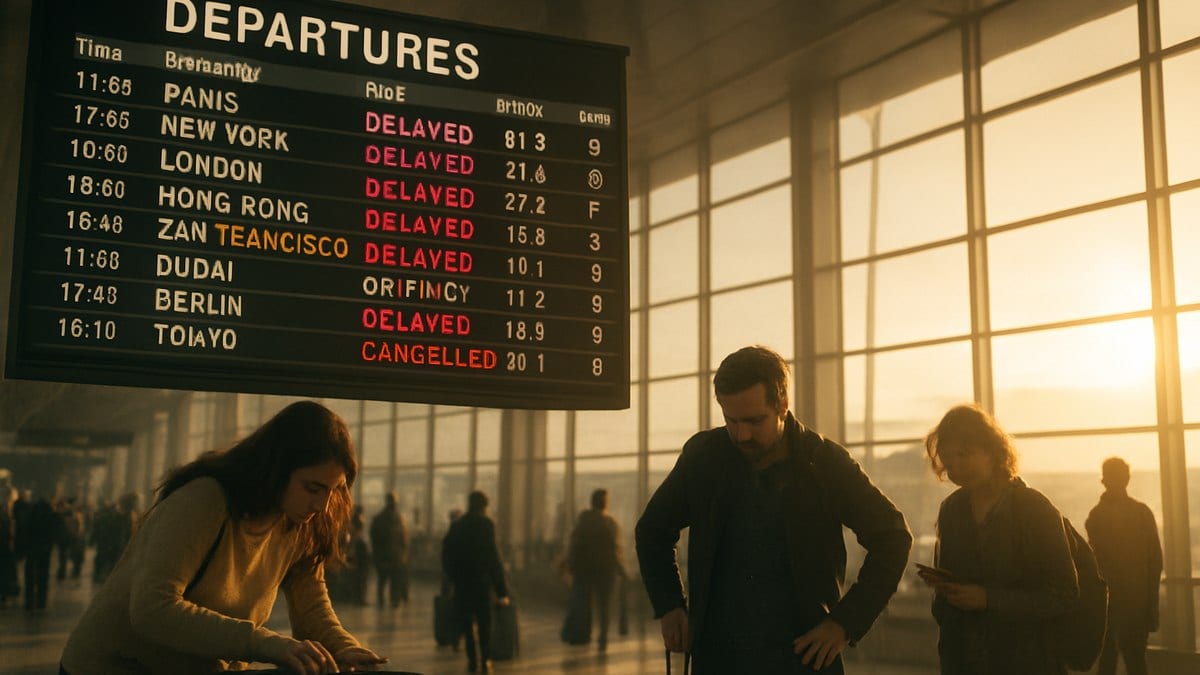
Flight disruptions intensified at Los Angeles International Airport on April 10, as publicly available tracking data showed 69 delayed departures affecting major U.S. and international airlines and rippling through an already strained air travel system.
Get the latest news straight to your inbox!
Delays Concentrated Among Major Domestic and International Carriers
Open flight-tracking dashboards for April 10 indicated that the bulk of the 69 delayed departures at LAX were clustered around the busiest domestic hubs and key international services. Larger U.S. carriers operating from Los Angeles, including American, Delta, United and Alaska, appeared prominently in the delay logs alongside foreign airlines serving long haul routes to Europe, Asia and Latin America.
Publicly available schedules showed that many of the impacted flights were bound for other major hubs such as Chicago, New York, Dallas, Seattle and Vancouver, suggesting that the knock-on effects would extend beyond Southern California. With LAX functioning as a key connection point for the West Coast, delay patterns at the airport can create cascading disruptions for travelers who planned tight connections or same-day onward journeys.
Although cancellation numbers remained comparatively modest, the high volume of late departures pointed to mounting schedule strain, particularly in the afternoon and evening banks when traffic peaks. Aviation data services tracking the April 10 operations at LAX showed a growing cluster of delays over the course of the day rather than a short-lived spike, indicating a system that struggled to recover once it fell behind schedule.
For passengers, that translated into longer waits at departure gates, missed connections and last-minute rebooking, with some travelers facing overnight stays in Los Angeles as later flights filled up. Social media posts and traveler forums reflected a mix of minor frustrations over one-hour holdups and more serious complaints from those who saw their trips disrupted across multiple legs.
Operational Strains Add to Safety Concerns After Recent Taxiway Incident
The mounting delays at LAX emerged only days after a taxiway incident drew national attention to operations at the airport. According to published coverage of Federal Aviation Administration documentation, a Frontier Airlines jet earlier in the week passed close to two service vehicles that crossed in front of the aircraft while it was taxiing slowly for departure. The episode did not result in injuries, but it has prompted additional scrutiny of ground movements at one of the country’s busiest airports.
Reports indicate that federal regulators are reviewing data and communications associated with the taxiway encounter as part of a broader focus on runway and surface safety following a deadly runway crash at New York’s LaGuardia Airport in March. While the April 10 delays at LAX were not directly linked in public documentation to that investigation, the timing has reinforced traveler unease over both schedule reliability and operational safety.
Industry observers note that high traffic volumes, complex construction projects and tight staffing patterns across airlines and ground handling providers can combine to amplify routine disruptions. When weather, equipment checks or air traffic flow programs add friction to an already busy operation, airports such as LAX can quickly see delay counts rise into the dozens.
LAX has been in the midst of a multiyear modernization program that includes new rail links, a consolidated rental car center and airfield improvements. While much of this work is designed to reduce congestion over the long term, ongoing construction has, at times, contributed to short-term bottlenecks in curbside traffic, ramp access and gate availability, all of which can magnify the impact of even modest schedule disruptions.
National and International Factors Feed Into Local Disruptions
The April 10 spike in delays at LAX also unfolded against a backdrop of broader turbulence in global aviation. Data from the same period pointed to widespread disruptions at major European gateways, with hundreds of delayed flights reported across London Heathrow, Gatwick and other key hubs as air traffic control capacity, staffing and weather intersected to slow operations.
Domestic U.S. air travel has likewise faced headwinds in recent weeks. Public coverage has highlighted the ongoing strain on air traffic control staffing and the operational fallout from intermittent technical outages affecting individual airlines and regional facilities. In early March, for example, a nationwide ground stop for a popular carrier triggered extensive late departures across its network, including flights serving LAX.
Security-related measures have also affected flight patterns in parts of the country. A temporary flight restriction over the El Paso and Santa Teresa area on April 10 underscored how fast-changing security directives can abruptly alter airspace availability, causing reroutings and time-consuming diversions that ripple into broader schedule reliability.
While none of these issues alone explains why 69 flights departed late from LAX on April 10, they point to a fragile operating environment in which local disruptions are often intertwined with national and international pressures. When a single hub falls behind, especially one with LAX’s connectivity, the delays can quickly propagate through airline networks on both sides of the Atlantic and Pacific.
Travelers Face Longer Queues, Rebookings and Missed Connections
For passengers moving through LAX on April 10, the system-level pressures translated into very personal challenges. As delay counts rose, travelers reported longer dwell times at gates and in crowded concourses, with some describing difficulty in accessing updated departure information as airlines adjusted boarding times in small increments throughout the day.
Publicly available posts on traveler forums on April 10 and the preceding days described a pattern of repeated short delays that ultimately stretched to several hours, echoing experiences seen at other hub airports during recent disruption cycles. Passengers on multi-leg itineraries in particular expressed concern about misaligned connections, especially when their onward flights departed from different terminals or involved tight international transfer windows.
Customer service desks and digital channels came under additional pressure as affected travelers sought rebooking options. Many airlines prioritized same-day reaccommodation within their own networks, but limited remaining seat capacity during peak periods meant that some customers were offered next-day departures or alternative routings through secondary hubs.
Airport services such as parking, ground transportation and nearby hotels also felt the strain. As departure times slid later into the evening, ride-hailing and shuttle services experienced demand spikes, while last-minute overnight stays pushed up bookings at hotels surrounding the airport. For visitors on short trips, even a several-hour delay departing LAX could erase planned time at their destination.
What Passengers Can Expect in the Coming Days
With LAX serving as a critical node in both domestic and international aviation, industry analysts expect that the April 10 wave of delays will remain visible in network performance metrics for at least another day, as aircraft and crews reposition and airlines work through residual imbalances in their schedules. However, there were early signs in late evening data that some carriers were successfully compressing turnaround times in an effort to restore normal operations.
Travel agencies and aviation tracking services advising customers on April 10 encouraged passengers with upcoming LAX departures to build additional buffer time into their plans over the coming days, particularly for early morning flights that rely on inbound aircraft arriving late the previous night. They also urged travelers to monitor their airline apps closely, as same-day schedule changes and aircraft swaps remain common tools for managing disruption.
For now, publicly available information suggests that LAX’s core infrastructure remains fully open, with runways, taxiways and terminals handling near-normal volumes despite the elevated delay totals. The situation remains fluid, however, and additional operational adjustments or weather developments along key routes could either ease or intensify pressure on schedules.
As the summer travel season approaches, the pattern of mounting delays at major hubs such as LAX on April 10 will likely feed into renewed debates over system resilience, staffing levels and investment priorities across the U.S. aviation sector. For travelers, the experience serves as another reminder that even in clear weather, today’s tightly wound airline networks leave little room for error when disruptions begin to accumulate.