

Thailand’s blockbuster islands like Phuket, Koh Phi Phi, and Koh Samui have long drawn travelers with their sugar-white beaches and neon-lit nights. In 2026, though, many visitors are rethinking those hotspots as visitor numbers surge, resorts multiply, and once-sleepy bays fill with speedboats. The good news is that you do not have to give up turquoise water or fragrant night markets to escape the crowds. From little-known Thai islands to under-the-radar neighbors elsewhere in Southeast Asia, quieter alternatives still offer that elusive castaway feeling along with a more sustainable pace of travel.
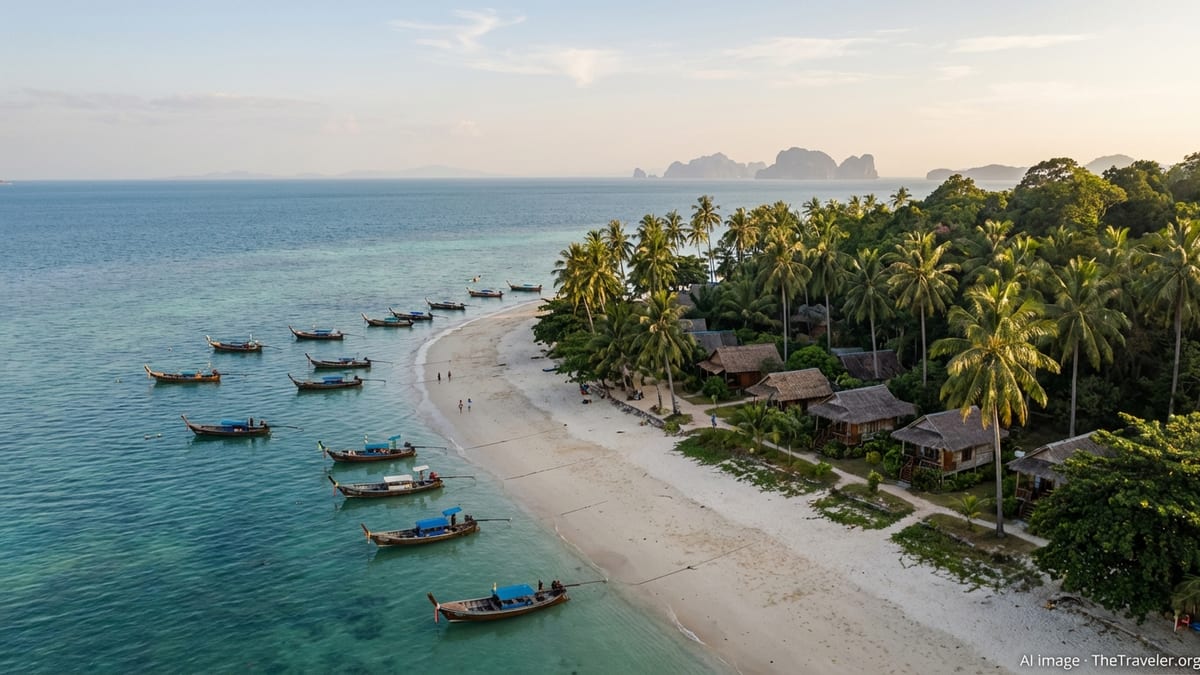
Koh Yao Noi: Slow Life Between Phuket and Krabi
Sitting quietly in Phang Nga Bay between Phuket and Krabi, Koh Yao Noi has become a byword for low-key island life even as nearby coasts grow increasingly hectic. Speedboats whisk passengers here in under an hour from Phuket, yet the island still feels worlds away: motorbikes putter along shaded roads, fishing skiffs bob offshore, and rubber plantations and coconut groves dominate the interior. Recent coverage of so-called quietcations in Asia has singled out Koh Yao Noi as an antidote to overdeveloped resort islands, noting its lack of party bars and cruise-ship crowds.
The main draw is the landscape. Koh Yao Noi’s eastern shore faces an amphitheater of limestone karsts that glow pink at sunrise, backdropping long beaches that remain largely undeveloped aside from a handful of bungalow resorts and small, design-forward hideaways. At low tide, sandbanks stretch far into the bay, leaving longtail boats marooned on rippled flats and offering wide horizons with almost no buildings in sight. Inland, narrow lanes lead to rubber farms, water buffalo pastures, and small piers where fishermen unload the day’s catch.
Daily life here moves at a pace that rewards staying put. Travelers spend mornings kayaking through mangrove forests, stopping at tiny piers for iced coffee, or hiring local longtail captains for unhurried trips to craggy islets and quiet snorkeling spots. Afternoons lend themselves to hammock time, bike rides to family-run restaurants, or gentle walks along the shore as village children play football in the shallows. This is a Muslim-majority island, and cultural norms tend to be conservative but welcoming; visitors who dress modestly away from the beach and keep noise down after dark are likely to find locals warm and curious.
Koh Yao Noi works especially well for travelers who want easy access from Phuket’s international airport without accepting Phuket’s bustle as the price of arrival. While there are now a few upscale beach resorts, the island’s small size and limited infrastructure naturally cap development. Outside of the peak holiday weeks, it is still possible to stroll along quiet stretches of sand at dawn and hear only birds, boat engines, and the rustle of palm fronds.
Koh Kood and Koh Wai: The Quiet East Coast Duo
On the opposite side of the country, near Cambodia, the Trat archipelago offers an alternative to the Gulf of Thailand’s big-name islands. Koh Chang has already become a mainstream destination, but its smaller neighbors Koh Kood and Koh Wai retain an atmosphere that many visitors describe as Thailand “the way it used to be.” Reached by boat from the mainland pier south of Trat town, they sit just far enough off the beaten path to require effort, which helps keep visitor numbers relatively modest.
Koh Kood, one of Thailand’s largest islands by area, is still sparsely populated and lightly developed. Palm-fringed beaches unfurl along its west coast, broken only by small-scale resorts and wooden piers that stretch out over shallow, clear water. Inland, dense jungle hides waterfalls and shaded river estuaries ideal for paddleboarding or kayaking. Fishing communities cluster along elevated boardwalks, and even on busy weekend evenings the island feels more village-like than resort-driven. For many repeat visitors to Thailand, Koh Kood has become the preferred substitute for more frenetic islands such as Koh Samui or Koh Chang.
Nearby Koh Wai is smaller, quieter, and even less built up. Just a handful of bungalow operations line its sandy eastern shores, while the interior remains covered in jungle and the western side turns rugged and hilly. The beaches are simple by design: a few hammocks, a scattering of loungers, and good snorkeling just off the sand thanks to coral reef patches offshore. There are no major roads and very limited nightlife, which is exactly the appeal for travelers looking to log off, read, and swim rather than bar-hop.
Combined, Koh Kood and Koh Wai show a side of Thai island life that feels far removed from the shopping malls and traffic of larger resort hubs. The trade-off is that amenities are more limited: ferry services are largely seasonal, medical facilities are basic, and power cuts do occur. In return, visitors gain uncrowded coves, long beach walks with only a few other footprints, and the chance to support smaller family-owned guesthouses and restaurants that depend on a slower, steadier stream of guests rather than mass tourism.
Koh Kradan and Koh Bulon Lae: Underdogs of the Andaman Sea
In the Andaman Sea, south of Trang and Satun, a scattering of small islands provides an alternative to the better-known Andaman circuit of Phuket, Koh Phi Phi, and Koh Lipe. Among them, Koh Kradan and Koh Bulon Lae stand out for travelers seeking quiet, low-rise beach stays within sight of turquoise water and intact coral. They share powder-soft sand and clear shallows but have so far avoided the heavy nightlife and dense resort construction that define some of their famous neighbors.
Koh Kradan, part of a protected marine area, is frequently cited by regional tourism boards as one of southern Thailand’s most beautiful islands, and its main beach makes a persuasive case. Sand here is bright white and fine, and on calm days the sea is so transparent that coral and fish are visible from the shore. Much of the island falls under national park management, which has helped check large-scale development. Accommodation leans toward small resorts and simple bungalows tucked under trees rather than high-rise hotels. Visitors drift between swimming, offshore snorkeling, and easy hikes to viewpoints overlooking the surrounding islets.
Further south, small Koh Bulon Lae has developed a reputation among regional specialists as one of the last truly tranquil islands in Satun province. With no cars, limited internet, and just a cluster of family-run bungalows, it appeals to travelers who prioritize silence and starry skies over nightlife. Shallow, clear water wraps around the island’s main bay, and a short jungle trail cuts through the interior where monitor lizards and birds are commonly spotted. Most evenings are spent in open-air restaurants, where owners serve up fresh fish and curries before guests wander back along dark, sandy paths to their wooden huts.
These islands require more planning than a straightforward Phuket package. Sea conditions dictate ferry schedules, many accommodations close during the southwest monsoon months, and cash is still king on the ground. Yet for those willing to adapt, Koh Kradan and Koh Bulon Lae provide an experience increasingly hard to find in Southeast Asia: the chance to wake to the sound of waves rather than pool music, to snorkel directly off a quiet beach, and to talk with the same handful of local hosts day after day, building the sort of human connection often lost in bigger resorts.
Koh Phithak and lesser-known Gulf Islands: Community and Culture
Not all island escapes in Thailand revolve around postcard-perfect beaches, and some of the best alternatives to headline destinations are small, community-based islands along the lesser-visited Gulf coast. Koh Phithak in Chumphon province exemplifies this quieter strand of tourism. With an area of just over one square kilometer and fewer than fifty households, the island is home to families who largely earn their living from fishing and coconut farming rather than full-time tourism. For visitors, that means homestays and guesthouses where the rhythms of local life set the schedule.
Days on Koh Phithak tend to center around simple activities: strolling along the concrete paths that loop the island, watching fishermen mend nets, tasting fresh coconut juice produced from the island’s groves, and learning about traditional seafood processing. Calm waters between the island and the mainland make for easy kayaking and stand-up paddleboarding, while short hikes lead to viewpoints looking back toward the Chumphon coastline. The absence of large hotels, party bars, and branded coffee shops reinforces the impression of staying in a working community rather than a resort enclave.
Other small Gulf islands, from quiet specks off the Chonburi coast to little-developed spots in national marine parks, offer similar escapes from the hyper-commercial vibe of some larger islands. Facilities can be basic, and travelers should be prepared for shared bathrooms, simple bedding, and set meal times instead of extensive menus. Yet these are precisely the destinations where it is easiest to see how islanders balance tourism with traditional livelihoods, and where travelers can contribute directly to household incomes rather than to outside investors.
For those seeking an alternative to nightlife-heavy islands, these community-focused Gulf destinations open a window onto everyday Thai coastal culture. They appeal to visitors interested in conversation as much as coastline, who enjoy joining fishing trips, trying home-cooked dishes, and observing religious ceremonies. Early mornings bring the clatter of boats and the scent of frying garlic from open kitchens rather than the thump of lingering music from late-night venues.
Beyond Thailand: Regional Alternatives with a Similar Feel
While Thailand remains Southeast Asia’s best-known beach hub, neighboring countries are increasingly positioning themselves as options for travelers looking for similar scenery with fewer people. In recent years, surveys of regional travelers have highlighted Vietnam as a leading alternative for tropical beach breaks, with islands such as Phu Quoc drawing particular interest. Although development has accelerated in parts of Phu Quoc, stretches of coastline and smaller islets offshore still feel less crowded compared with Thailand’s busiest beaches.
Elsewhere in the region, quieter islands in the Philippines and Indonesia tempt those willing to take an extra flight or ferry. In the southern Philippines, compact islands ringed by coral reefs have begun to feature in offbeat travel roundups, promoted for their mix of volcanic peaks, hot springs, and small coastal towns rather than mega-resort strips. In Indonesia, runners-up to Bali such as the smaller Nusa islands and less-visited corners of Lombok and Flores provide many of the same elements that make Thai islands so popular: warm seas, year-round greenery, and a blend of surf, snorkeling, and cultural day trips.
The appeal of these regional alternatives lies not only in thinner crowds but also in the sense of discovery. Beaches are more likely to be lined with small, locally owned homestays and cafes than with international chains. Transport links can be less straightforward and online reviews thinner on the ground. For flexible travelers, these gaps can make the trip feel more like exploration and less like following a well-trodden circuit, while also distributing visitor income beyond a handful of resort centers.
Choosing a regional alternative does not necessarily mean forsaking Thailand altogether. Many travelers now pair a short stay in a well-connected Thai hub with onward journeys to less publicized islands across Southeast Asia. This approach combines ease of flights into major airports with quieter final destinations, and it reflects a growing desire to balance bucket-list stops with more restorative time in places where beaches, villages, and reefs still see relatively few outsiders.
Planning a Quieter Island Escape Responsibly
Escaping the crowds is only part of the story. The global turn toward slow travel and quietcations has shone a spotlight on how visitor choices can shape the future of smaller islands, for better or worse. Many of Thailand’s lesser-known islands rely on fragile ecosystems, limited freshwater supplies, and small waste management systems. Choosing them as alternatives to big-name destinations should go hand in hand with more thoughtful travel habits, from staying longer in one place to traveling in shoulder seasons when the pressure on local services is lower.
Practical planning begins with understanding seasons and logistics. In the Andaman Sea, many small islands scale back operations during the southwest monsoon months, when seas can be rough and some ferry routes pause. The Gulf of Thailand’s weather patterns are different, so islands there may be more accessible at times when Andaman destinations are not. Booking flexible, refundable tickets where possible allows travelers to adjust plans in response to sea conditions, while choosing reputable transport operators adds a margin of safety and reliability.
On the ground, supporting small, locally owned businesses can make a tangible difference. Opting for family-run guesthouses, eating at local restaurants, and hiring island-based boat operators keeps more tourism income in the community. Simple actions such as carrying a refillable water bottle, minimizing single-use plastics, and following local advice about reef-safe sunscreen help to reduce environmental impact. Respect for cultural norms, whether that means covering up away from the beach on more conservative islands or keeping noise levels low in small villages, fosters goodwill and preserves the very qualities that make these destinations attractive.
Above all, a less crowded island experience is as much about mindset as it is about geography. Travelers who arrive ready to embrace slower service, patchy connectivity, and simpler comforts tend to find that these are small prices to pay for quiet bays, starlit skies, and conversations with local hosts. By choosing alternatives to Thailand’s most famous islands and traveling thoughtfully, visitors can help ensure that these quieter corners remain unspoiled options long after the next travel trend has moved on.
The Takeaway
As Thailand’s marquee islands prepare for another wave of visitors inspired by glossy television series, social media posts, and long-postponed holidays, the appeal of quieter alternatives grows stronger. Islands like Koh Yao Noi, Koh Kood, Koh Wai, Koh Kradan, Koh Bulon Lae, and small Gulf communities such as Koh Phithak offer the key ingredients that made Thai beach travel famous in the first place: clear water, easygoing hospitality, and an inviting blend of culture and nature.
They also reflect a broader shift in how people want to travel. More visitors are trading back-to-back excursions and crowded party streets for early mornings on empty sand, unhurried meals at family-run kitchens, and days shaped by tides and weather rather than by timetables. For those willing to venture a little farther or compromise on certain conveniences, these lesser-known islands in and around Thailand provide rich rewards, from healthier reefs and quieter trails to deeper connections with the people who call these shorelines home.
Choosing a less crowded alternative is not only a personal preference but also a small act of stewardship. By spreading visitor numbers across a wider map and supporting destinations that are actively trying to avoid the pitfalls of overtourism, travelers help preserve Southeast Asia’s coastal beauty. The perfect island, it turns out, might not be the one everyone is posting about, but the one where you can still hear the waves.
FAQ
Q1. Are these alternative Thai islands suitable for first-time visitors to Thailand?
Yes, most are accessible enough for first-timers who are comfortable with basic logistics. Islands like Koh Yao Noi and Koh Kood in particular have a good mix of comfort, transport options, and English-speaking hosts, while still feeling much calmer than Phuket or Koh Phi Phi.
Q2. When is the best time of year to visit quieter Thai islands?
The dry season from roughly November to April generally offers calmer seas and more reliable sunshine, especially in the Andaman Sea. However, specific islands have slightly different weather patterns, and shoulder months can be ideal for fewer visitors and lower prices if you are flexible.
Q3. How do costs on less crowded islands compare with popular spots like Phuket or Koh Samui?
Prices vary, but many quieter islands offer better value at the midrange level, with simple bungalows and guesthouses costing less than equivalent rooms in major resort hubs. Upscale boutique properties may still be expensive, though daily costs for food and activities often remain moderate.
Q4. Do these islands have reliable medical facilities?
Medical services on smaller islands are usually basic, often limited to small clinics or first-aid posts. For anything serious, transfer to a mainland hospital or a larger island is typically required, so comprehensive travel insurance and bringing necessary medication are important.
Q5. Is it easy to get around without renting a motorbike?
On compact islands like Koh Wai or Koh Bulon Lae, you can walk almost everywhere. Larger islands such as Koh Kood and Koh Yao Noi often have songthaews, taxis, or bicycle rentals, but renting a motorbike can provide more freedom if you are experienced and comfortable with local road conditions.
Q6. How can I minimize my environmental impact when visiting these islands?
Practical steps include traveling with reusable bottles and bags, choosing reef-safe sunscreen, avoiding single-use plastics, and sticking to marked paths. Supporting accommodations and tour operators that demonstrate clear environmental practices also helps reduce your footprint.
Q7. Are these quieter islands family-friendly?
Many are well suited to families, particularly those with calm, shallow beaches and limited traffic, such as parts of Koh Kood and Koh Yao Noi. Parents should be aware that kids’ clubs, lifeguards, and specialized facilities are less common than in large resorts, so activities tend to be more nature- and family-led.
Q8. Can I find good internet and mobile coverage on lesser-known islands?
Coverage is improving, but it can still be patchy and slower than on the mainland or in major resort areas. Expect dependable connections in main villages and at some resorts, with weaker signals in more remote bays. If staying connected is critical, check with your accommodation in advance.
Q9. Do I need to book accommodation in advance on these islands?
During peak periods such as major holidays and school breaks, advance booking is advisable, as smaller islands have limited rooms. In shoulder seasons, it is often possible to find places on arrival, but having at least the first night reserved can make logistics smoother.
Q10. How safe are these quieter islands for solo travelers?
Violent crime is uncommon in most small island communities, and many solo travelers report feeling comfortable. Usual precautions still apply: secure valuables, be cautious when swimming or hiking alone, and use reputable transport, especially after dark or in rough sea conditions.