

Connecticut is often reduced to quick impressions of Ivy League bricks and commuter trains, yet the state’s culture is far more layered. From Indigenous nations whose homelands stretch across the region to immigrant communities that have reshaped its cities, Connecticut offers visitors a subtle but rich cultural landscape. Understanding how people live, gather, celebrate, and protect place here will help travelers connect more deeply with the towns and neighborhoods they pass through.
Understanding Connecticut’s Cultural Landscape
Connecticut sits at a crossroads of New England tradition and metropolitan influence from New York and Boston. Its small size hides striking contrasts: compact postindustrial cities, wealthy coastal enclaves, fishing villages, and quiet farming towns in the northwest hills. Locals tend to identify strongly with their town and region, whether that is the shoreline, the Connecticut River Valley, the Naugatuck Valley, Greater Hartford, or the Litchfield Hills. Travelers who pay attention to these regional nuances will notice different accents, priorities, and even senses of humor within a short drive.
The state’s Indigenous peoples, including the Mashantucket Pequot and Mohegan Tribal Nations, have called this land home for thousands of years and remain a living presence in its cultural life today. Centuries of English settlement shaped many of the town greens, congregational churches, and colonial-era homes that visitors see, but Connecticut has also been a center of abolitionism, industrial innovation, and labor organizing. These histories intersect in ways that continue to influence civic life and local identity.
Modern Connecticut is also more diverse than many visitors expect. Recent data shows that roughly one in six residents is foreign-born, a higher share than the United States overall. Immigrant communities from Latin America, the Caribbean, South and East Asia, and West Africa have added new faith communities, small businesses, and festivals to longstanding Italian, Irish, Polish, and Portuguese neighborhoods. Travelers will hear multiple languages in city streets, see a wide mix of cuisines on offer, and encounter communities that are still negotiating questions of belonging and change.
Economically, Connecticut straddles old and new. Some towns are anchored by insurance, finance, and education, while others are reinventing vacant mill buildings as arts spaces and breweries. This blend of continuity and reinvention is central to local culture. Visitors who approach with curiosity about how towns are changing, and about who has lived there long before, will find residents are often eager to share both pride and concern about their communities.
Indigenous Presence and Living Traditions
For travelers interested in the deepest roots of Connecticut culture, spending time with the stories and contemporary life of Indigenous nations is essential. The Mashantucket Pequot Tribal Nation operates a major museum and cultural center in southeastern Connecticut that brings to life the history and present of the Pequot people. Exhibits focus on pre-contact life, the violence of the 17th century, and the ongoing process of cultural renewal. Seasonal events, from maple sugaring celebrations to teacher institutes, highlight how the community passes on language, foodways, and land-based knowledge today.
Nearby, the Mohegan Tribe maintains cultural institutions that preserve Mohegan stories and artifacts and share them on their own terms. Small tribally run museums and interpretive sites, as well as historic places such as Fort Shantok, reflect long relationships with the Thames River valley and the surrounding hills. These are not static memorials but parts of a living homeland where ceremony, governance, and daily life continue. When visiting, travelers should treat them with the same respect they would offer in any sacred or historic place.
Many visitors first encounter tribal names through resort casinos, which have become major employers and entertainment hubs. While facilities like Mohegan Sun and Foxwoods Resort Casino are large-scale commercial enterprises, they are also deeply tied to the economic self-determination of their respective tribal nations. Revenues help support cultural programming, education, and land stewardship. Travelers who spend time in tribally owned museums, nature trails, and community events will gain a fuller understanding that life for these nations extends well beyond the gaming floor.
Cultural etiquette in these settings is straightforward but important. Photography may be limited in certain exhibits or at ceremonies; when in doubt, ask before taking pictures. Read interpretive materials carefully, listen to audio guides produced by tribal members, and be aware that some topics are painful, including wars, displacement, and broken treaties. Many staff members are educators or culture bearers who welcome thoughtful questions. Approaching with humility, rather than assuming expertise from a brief visit, is the best way to show respect.
Everyday Etiquette and Social Norms
Connecticut residents can come across as reserved at first, especially in smaller towns where people often know one another. Politeness tends to be low-key: eye contact, a nod, and a simple greeting go a long way. Striking up conversation about the weather, local sports, or traffic is common, but prying into income, property values, or politics early in a conversation is usually frowned upon. Over time, locals often open up with dry humor and candid opinions, especially if they sense that a visitor is genuinely interested in their town or region.
Punctuality matters in much of daily life. Trains, ferries, and cultural events operate on fixed schedules, and people expect arrivals close to the stated time. In restaurants, showing up on time for reservations is appreciated, as is calling ahead if plans change. Tipping follows broader U.S. norms, with around 18 to 20 percent considered standard in sit-down restaurants and bars when service is attentive. In smaller independent businesses, a tip jar near the register is common but never required.
Connecticut can be surprisingly rules-conscious, particularly around driving, parking, and noise. Many towns enforce speed limits and school zone rules strictly, and residents notice when out-of-state plates roll through stop signs. On narrow village streets or near historic greens, parking restrictions are often in place to protect fragile landscapes and ensure emergency access. Travelers should read signs carefully and respect resident-only zones, especially during beach season on the shoreline or foliage season in the Litchfield Hills.
Dressing for local life is more practical than flashy. Business districts in Hartford or Stamford might call for business-casual attire, but most museums, breweries, and small-town restaurants are relaxed, especially on weekends. On the shoreline and in college towns like New Haven and Storrs, casual clothing mixed with sturdy layers for shifting weather fits in well. The key is to match the setting rather than assuming that all of Connecticut has the same standards as a corporate office or a beach resort.
Foodways, Farms, and Coastal Traditions
Connecticut’s food culture is grounded in both long-standing local ingredients and a wave of global influences. Along the shoreline, seafood remains central. Menus highlight local oysters, clams, and lobster, and seasonal clam shacks draw lines for fried seafood platters and rolls stuffed with lobster or whole-belly clams. Many spots are family-run and close in the off-season, so travelers visiting outside summer should be prepared for a quieter coastal dining scene and check hours locally.
Pizza is a point of serious regional pride, particularly in New Haven, where coal-fired pies known as “apizza” have earned national attention. The style is typically thin, charred, and light on cheese, with toppings ranging from classic tomato pie to white clam variations that reflect shoreline ingredients. While famous names often draw visitors, similar styles appear in neighborhood pizzerias across central and southern Connecticut, where multigenerational Italian American families maintain longstanding recipes.
Inland, farm stands and orchards provide another window into local culture. Apple picking in autumn, maple products in late winter, and plant sales in spring give travelers a chance to see how families maintain seasonal rhythms even as many residents work office jobs. The Litchfield Hills and Connecticut River Valley host small farms that sell vegetables, cheeses, and baked goods at roadside stands and farmers markets. Buying directly from these producers not only supports local agriculture but also invites conversations about land use, climate change, and rural identity.
Connecticut’s immigrant communities have added their own flavors to the table. Visitors will find vibrant Peruvian, Portuguese, Jamaican, West African, Vietnamese, and South Asian eateries in cities and along transportation corridors. Bakeries turn out everything from pastel de nata to guava pastries. Food trucks, especially around universities and office parks, showcase fusion that speaks to a younger and more diverse generation. Travelers who step beyond familiar chains and seek out neighborhood spots will encounter a far richer picture of what people in Connecticut actually eat.
Arts, Education, and the Life of the Mind
Connecticut has long punched above its weight in arts and ideas, in large part due to the density of universities, independent schools, and humanities institutions. New Haven, home to Yale University, anchors a lively arts scene with galleries, theaters, and music venues that draw local audiences alongside students and visiting scholars. In Hartford and New Britain, major art museums hold collections ranging from American impressionism to contemporary installation, while smaller institutions showcase regional painters, photographers, and craftspeople.
Across the state, repurposed mills and factory buildings have become hubs for artists and small creative businesses. In towns that once produced textiles, hardware, or clocks, travelers now find studios, coworking spaces, and performance venues tucked into brick complexes along rivers and canals. Community theaters, historical societies, and volunteer-run arts councils often program concerts, poetry readings, or seasonal fairs. Attending one of these local events can be a way of seeing how residents keep a sense of community alive in the face of economic shifts.
Public art is also playing a growing role in shaping local identity. In shoreline towns, large outdoor murals honor maritime heritage and local stories. A notable recent example in Westbrook uses trompe l’oeil techniques to depict the town’s nautical history and early submarine experiments on the façade of a café, part of a broader effort to revitalize the town center. Such projects reflect how municipalities and artists collaborate to beautify streetscapes while anchoring them in real history rather than generic imagery.
For visitors, one practical implication is that cultural calendars can be dense, even in smaller towns. From film festivals and book fairs to chamber music concerts in rural churches, the state makes up for its modest size with a wide range of programming. Checking local event listings or simply walking into a town’s visitor center or independent bookstore can reveal concerts or exhibits that do not appear on national tourism radars but matter deeply to residents.
City Streets, Small Town Greens, and Regional Identity
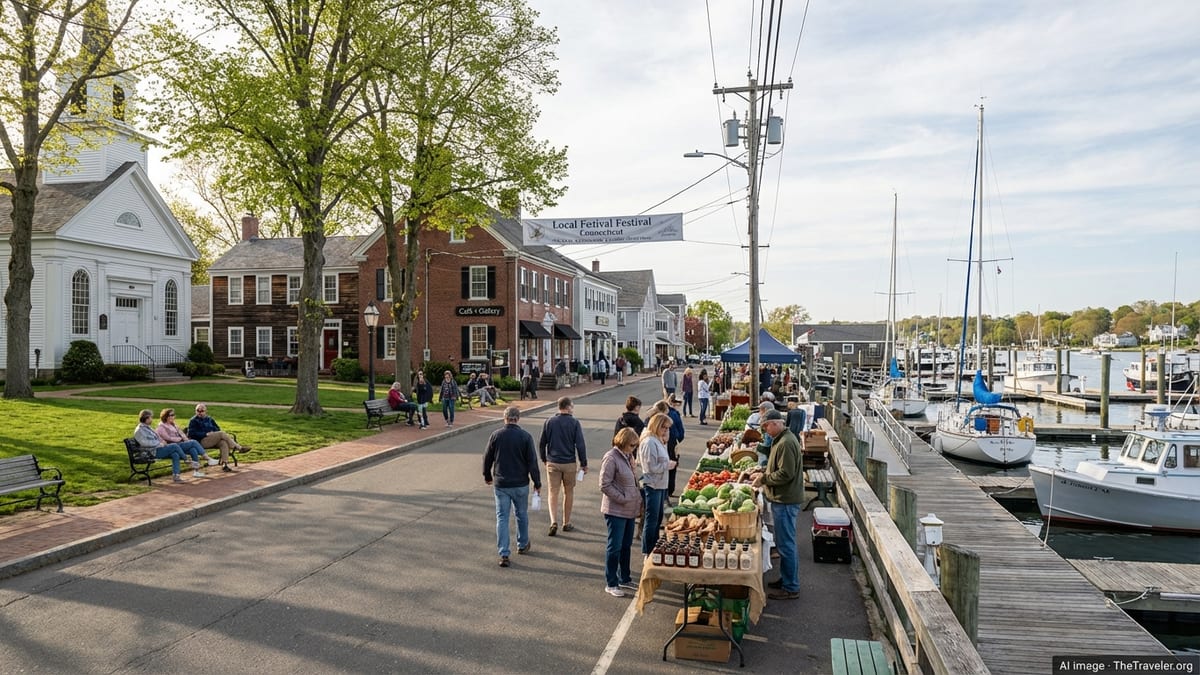
Most travelers experience Connecticut as a series of exits along major highways, but the real cultural texture emerges once you step off the interstates. Old New England town greens, often anchored by a white-steepled church and a scattering of 18th and 19th century buildings, still function as civic hearts. Here, you might encounter farmers markets, summer concerts, veterans memorials, and festivals that bring together long-time residents and newcomers. Respecting these spaces as shared living rooms rather than backdrops for photos helps visitors fit more comfortably into local rhythms.
Cities like Hartford, New Haven, Bridgeport, and Stamford offer a different but equally important face of Connecticut culture. These are places where waves of migration have layered Italian, Polish, Puerto Rican, Colombian, Syrian, and more recent communities from around the globe. Murals, storefront churches, mosques, and social clubs map these histories onto the streetscape. Walking tours that focus on immigration, civil rights, or labor history can provide context that moves beyond surface impressions of blight or gentrification.
Regional pride can be strong, sometimes shaded with friendly rivalry. Residents of the northwest hills may champion their stone walls, trout streams, and understated inns as the “real” Connecticut, while shoreline communities emphasize maritime history and beach culture. Central Connecticut towns might point to their manufacturing legacy and ethnic festivals. For travelers, listening to these perspectives without taking sides is part of appreciating how deeply people feel about their corner of a small state.
At the same time, there is an emerging sense of shared purpose around issues like river restoration, rail connectivity, and affordable housing. Organizations across regions collaborate on trails, heritage corridors, and cultural tourism initiatives. When visitors support these efforts by using local guides, patronizing independent lodging, or respecting trail etiquette, they become small but meaningful participants in the state’s ongoing story.
Seasonal Rhythms, Festivals, and Outdoor Life
Connecticut’s culture is intimately tied to the changing seasons, which shape everything from food and fashion to recreation and ritual. Winter brings indoor concerts, theater seasons, and museum-going, as well as quiet landscapes along frozen rivers and snowy greens. Spring is marked by school sports, maple celebrations, and the first outdoor markets. Summer opens up the shoreline’s beaches, lakeside cabins, and outdoor dining, while autumn draws leaf-peepers to the hills and orchards.
Festivals punctuate this cycle and offer accessible entry points into local life. Coastal towns host seafood and arts festivals on their harbors, often featuring local bands, historical reenactments, and craft vendors. In inland cities, cultural parades and street fairs celebrate Puerto Rican, West Indian, Italian, and other heritages, complete with food, music, and dance that spill into the streets. University towns layer on commencement rituals, alumni weekends, and student-run arts festivals that briefly swell local populations.
Outdoor recreation is both a pastime and a cultural marker in Connecticut. Hiking trails, river paddling routes, and state parks provide shared spaces where residents from different backgrounds interact. Trails near tribal lands and historic sites sometimes include interpretive signage that highlights Indigenous place names and ecological knowledge, inviting visitors to understand landscapes as more than scenery. Along the shoreline, sailing, rowing, and recreational fishing anchor social life in many communities, supported by clubs and informal networks.
Weather can change quickly, so being prepared with layers, rain protection, and sturdy shoes is not just practical but also a sign that a traveler understands local conditions. In popular leaf-peeping or beach destinations, planning ahead for parking and respecting capacity limits helps keep these landscapes accessible to residents who rely on them year-round. Joining locals on a short hike, a harbor walk, or a winter birding outing can deepen a visit far more than simply driving through.
The Takeaway
To understand Connecticut’s local culture, it helps to look beyond headline stereotypes of wealth or elite universities. What emerges instead is a mosaic of Indigenous nations, multigenerational families, and newer immigrant communities who all shape daily life. Their stories are written into casinos and museums, town greens and murals, working waterfronts and repurposed mills. Visitors who notice these layers, and who seek out places where residents actually gather, gain a more honest picture of the state.
Respectful curiosity goes a long way. Learning a bit about tribal history before visiting a museum, asking locals about their favorite independent businesses instead of relying solely on chains, and observing how people use public spaces are small acts that signal care. Connecticut may not shout its identity as loudly as some destinations, but for travelers willing to listen closely, its culture reveals itself through conversation, craft, food, and landscape.
In the end, what travelers should know is that Connecticut is more than a corridor between bigger cities. It is a place where people wrestle with history, change, and belonging in ways that mirror broader American stories, but with its own distinctive accent. Engaging with that complexity, rather than skimming the surface, can turn a brief stop into a meaningful encounter.
FAQ
Q1. Is Connecticut friendly to visitors who are just passing through on a road trip?
Yes. While people may seem reserved at first, most are helpful when approached politely, especially if you show interest in local recommendations and respect town rules.
Q2. How can I respectfully learn about Indigenous cultures when visiting Connecticut?
Visit tribally run museums and cultural centers, read on-site materials carefully, follow posted photography rules, and approach staff with thoughtful, nonintrusive questions.
Q3. Do I need a car to experience local culture in Connecticut?
A car offers the most flexibility, especially for reaching small towns and rural areas. However, some cities and college towns are walkable, with trains and buses connecting key hubs.
Q4. What is considered appropriate tipping and dining etiquette?
In sit-down restaurants, tipping around 18 to 20 percent for good service is standard. Making reservations for popular spots and arriving on time is appreciated.
Q5. Are there any clothing norms I should be aware of?
Dress is generally casual and practical. Business-casual fits urban offices and upscale restaurants, while jeans and layers are fine for most museums, cafes, and small-town outings.
Q6. How diverse is Connecticut’s population?
Connecticut is more diverse than many expect, with about one in six residents born outside the United States and long-established ethnic communities in many towns and cities.
Q7. What are some uniquely Connecticut foods to try?
Seek out New Haven–style pizza, shoreline seafood such as lobster and clam rolls, seasonal farm stand produce, and dishes from local immigrant-owned restaurants.
Q8. Is photography welcome in cultural and historic sites?
Policies vary. Many sites allow casual photography but may restrict flash or photos of specific exhibits. Always check signs or ask staff before photographing people or ceremonies.
Q9. How can I support local communities while traveling in Connecticut?
Patronize independent businesses, attend community events, buy from farm stands and local artisans, and respect parking, noise, and trail-use guidelines in each town.
Q10. What time of year is best for experiencing local culture?
Each season offers distinct experiences, from summer coastal festivals to autumn harvest events and winter arts programming. Autumn and late spring often balance activity with comfortable weather.