

More news on this day
Lufthansa is strengthening its presence in Southeast Asia with the launch of year-round nonstop flights between Frankfurt and Kuala Lumpur from late October 2026, restoring a key intercontinental link and adding premium capacity on one of the region’s fastest-growing corridors.
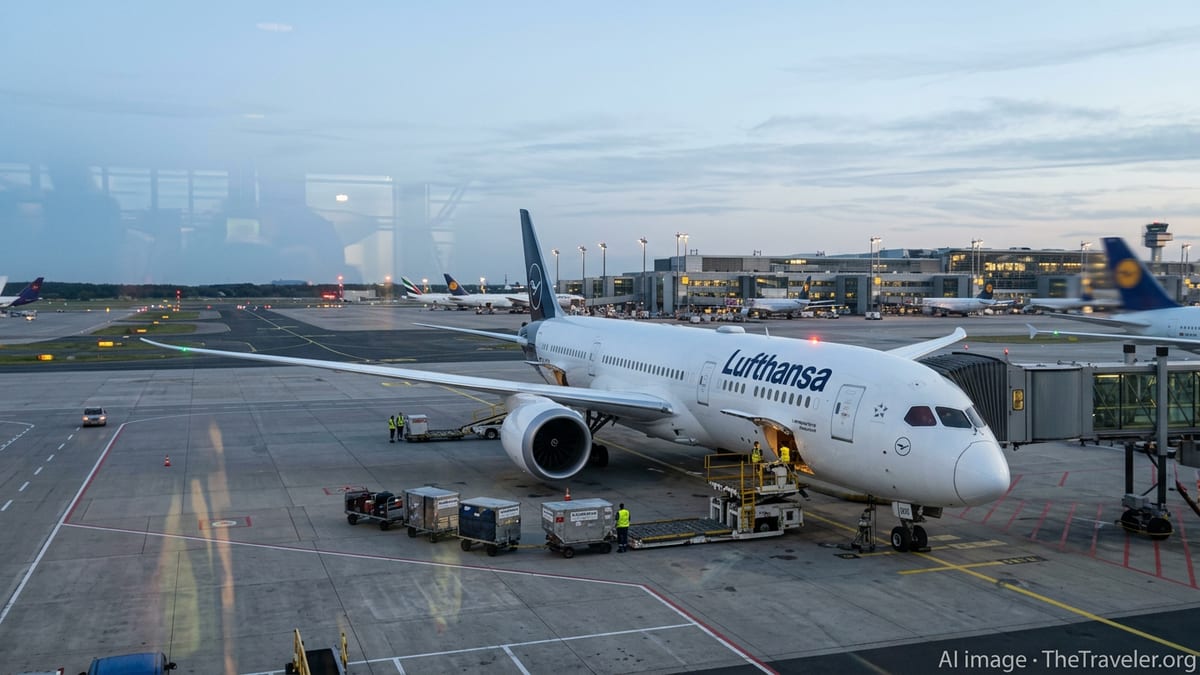
Year-Round Link Returns After Decade-Long Absence
The German carrier will resume the Frankfurt–Kuala Lumpur route on 25 October 2026 for the northern winter 2026/27 schedule, nearly ten years after it last served Malaysia in 2016. The new service is planned as a five-times-weekly operation, restoring a nonstop option that had been missing from the market and offering business and leisure travelers a direct bridge between Germany and Malaysia.
Flights are scheduled as LH704 from Frankfurt and LH705 from Kuala Lumpur, with evening departures from Germany and late-night departures from Malaysia timed to maximize connectivity over Lufthansa’s Frankfurt hub. The pattern, operating every day except Tuesday and Thursday from Frankfurt and every day except Wednesday and Friday from Kuala Lumpur, is designed to provide consistency for corporate itineraries while aligning with banked waves of long-haul arrivals and departures in Europe.
Lufthansa will be the only airline from its core home markets of Germany, Austria, Switzerland, Belgium and Italy offering a nonstop service to Malaysia. For Kuala Lumpur, the route marks the return of a major European network carrier and complements existing long-haul services to other hubs, reinforcing the airport’s status as a regional gateway.
Dreamliner Service Featuring New Allegris Cabin
The Frankfurt–Kuala Lumpur route will be operated with Boeing 787-9 Dreamliner aircraft in a 287-seat configuration across three cabins: Business Class, Premium Economy and Economy. Lufthansa has confirmed that the aircraft will feature its new Allegris long-haul product, bringing an upgraded hard and soft product to the Southeast Asia market.
Allegris introduces a redesigned Business Class with enhanced privacy, direct aisle access for all seats and multiple seating options tailored to different traveler preferences. Premium Economy and Economy cabins are also being refreshed with improved ergonomics, larger entertainment screens and updated materials, aiming to elevate the onboard experience on flights that are expected to run at around twelve to thirteen hours in each direction.
The deployment of the fuel-efficient 787-9 underscores Lufthansa’s focus on operating modern, lower-emission aircraft on longer sectors to Asia. For premium travelers and corporate accounts in both Europe and Malaysia, the combination of the Dreamliner and the Allegris cabin is likely to be a key selling point in a competitive market where product differentiation is increasingly important.
Stronger Southeast Asia Network and New One-Stop Options
The Kuala Lumpur launch deepens Lufthansa’s Southeast Asia network, which currently includes Bangkok, Singapore and Phuket. With the addition of Malaysia’s capital, the carrier will offer four distinct points in the subregion, allowing it to cater to a broader mix of leisure, corporate and visiting-friends-and-relatives traffic flows.
From Frankfurt, passengers originating in North America, Europe, the Middle East and parts of Africa gain a new one-stop option to Malaysia and onward destinations. Lufthansa is promoting “seamless” connections from Kuala Lumpur to more than 150 points across Europe via Frankfurt, leveraging its own network and that of its partners within its global alliance.
The schedule provides same-day connections in both directions for many key European business centers, including cities in Germany, Switzerland, Austria, Belgium, the Netherlands, France and Scandinavia. This is expected to appeal to multinational firms with operations in Malaysia as well as to small and medium-sized enterprises seeking more direct access to Southeast Asia without transiting through Middle Eastern or other Asian hubs.
Malaysia’s Tourism Boom and Trade Links Underpin Demand
Underlying the route decision is Malaysia’s recent surge in visitor numbers and its deepening economic ties with Europe. Tourism data for 2025 indicates that Malaysia welcomed around 42.2 million international visitors, making it one of Southeast Asia’s most visited countries and highlighting its appeal as a destination for culture, nature, gastronomy and events.
On the trade side, Germany is Malaysia’s largest partner within the European Union, and more than 700 German companies are reported to be active in the country across sectors such as manufacturing, engineering, chemicals and services. These corporate links generate consistent premium demand, particularly between Kuala Lumpur and industrial regions in western and southern Germany that are well connected through Frankfurt.
Lufthansa executives have framed the new route as a strategic move to capture both growing inbound tourism flows to Malaysia and outbound travel from a rising Malaysian middle class. By providing a nonstop option to Germany, the airline is positioning Frankfurt as a preferred gateway for Malaysians heading to Europe for business, study or leisure, and for Europeans seeking direct access to Malaysia and the wider Southeast Asia region.
Competitive Dynamics and Opportunities for Regional Connectivity
The relaunch of Frankfurt–Kuala Lumpur reshapes competitive dynamics on Europe–Malaysia traffic, which has largely been routed through alternative hubs since Lufthansa’s withdrawal a decade ago. Travelers have typically relied on Middle Eastern carriers, Asian network airlines and other European hubs to make the journey with at least one stop.
A nonstop option from Frankfurt shortens total travel time and simplifies itineraries, particularly for time-sensitive business travelers and high-yield segments. It also gives Lufthansa a stronger platform to retain and win corporate contracts that require robust coverage of both Europe and key Asian markets, including Malaysia.
For Kuala Lumpur International Airport, the new service supports its ambition to reinforce its role as a connector between Southeast Asia, Australia and Europe. The presence of a major European airline with a large onward network in Frankfurt complements the offerings of local and regional carriers and could spur further schedule adjustments, partnerships or capacity growth as demand develops around the 2026 launch and beyond.