

More news on this day
Lufthansa pilots have begun a 48-hour strike that is disrupting operations across Germany’s main hubs and rippling through key European connections, forcing thousands of travelers to adjust their plans or face lengthy delays.
Get the latest news straight to your inbox!
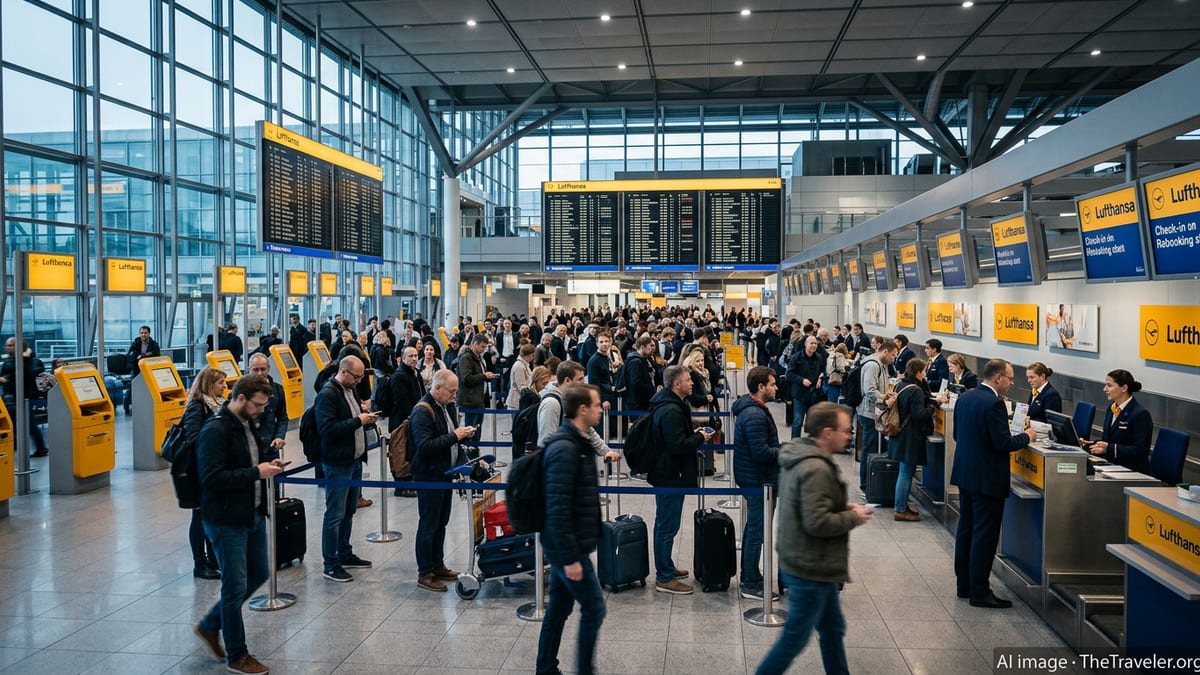
Strike Targets German Departures and Core Lufthansa Brands
The walkout, called by the Vereinigung Cockpit pilots’ union, runs from 00:01 on Thursday, 12 March, until 23:59 on Friday, 13 March 2026. It affects departures from German airports across Lufthansa Passenger Airlines, Lufthansa Cargo and regional carrier Lufthansa CityLine, with the impact concentrated at the airline’s main hubs in Frankfurt and Munich.
Lufthansa has warned of hundreds of cancellations over the two days, particularly on short-haul European routes, where frequencies are high and aircraft and crews are tightly scheduled. The union has called on more than 5,000 pilots to participate in the action, which follows months of stalled talks over pensions, pay and working conditions at the group’s various entities.
Despite the scale of the strike, the airline stresses that it expects to operate more than half of its planned schedule using a special timetable. Long-haul flights are being prioritized, with Lufthansa aiming to maintain around 60 percent of intercontinental services, while many regional and intra-European sectors bear the brunt of cancellations.
Flights operated by other carriers in the Lufthansa Group, including Austrian Airlines, Swiss, Eurowings, Discover Airlines and Air Dolomiti, are not directly affected by the pilots’ strike and are expected to operate largely as scheduled, although knock-on effects remain possible at congested hubs.
Frankfurt and Munich See Widespread Disruptions
Frankfurt Airport and Munich Airport, Lufthansa’s two largest hubs and key transfer points for travelers across Europe, are experiencing the most severe operational disruption. Many passengers transiting through these airports are facing broken connections as feeder flights into the hubs are reduced or canceled.
At Frankfurt, reduced departures, long queues at service desks and crowded airside areas are being reported as travelers seek rebooking on remaining flights or onto partner airlines. Airport authorities are urging passengers to arrive early, monitor their flight status closely and only come to the terminal if their flight is confirmed to operate.
Munich, a major gateway for Southern Germany and Central and Eastern Europe, is seeing similar patterns. While a core schedule is running, particularly on long-haul routes to North America and Asia, many regional services into neighboring countries have been cut from the timetable. Travelers connecting through Munich on tight layovers are particularly vulnerable to missed onward flights.
Because aircraft and crews are out of regular rotation, disruptions can also appear at secondary European airports that depend on Lufthansa links into Germany, from Scandinavia and the Benelux countries to Southern and Eastern Europe. Even where flights operate, delays are common as the system absorbs the strain of the reduced schedule.
Limited Exemptions and What Flights Are Still Operating
While the strike is broad, there are notable exemptions. In light of heightened geopolitical tensions and recent airspace disruptions in parts of the Middle East, Lufthansa has carved out a list of routes to selected destinations in the region that continue to operate. Services from Germany to key markets such as Egypt, Israel, Jordan, Qatar, Kuwait and the United Arab Emirates are among those largely maintained to ensure critical connectivity.
Cargo operations are also continuing in a reduced form. Lufthansa Cargo is preserving a slimmed network, focusing on high-demand freight lanes and using available aircraft where pilots and slots permit. Shippers, however, are being warned to expect limited capacity and potential rerouting via alternative hubs.
Within Europe, a patchwork of options remains. Some capacity is being backfilled by non-striking Lufthansa Group airlines and Star Alliance partners, while larger aircraft are being swapped onto certain trunk routes to move more passengers per flight. The upshot is that while travel is heavily disrupted, it has not come to a complete standstill, especially on major intercontinental routes and select high-demand corridors.
Travelers booked on codeshare services operated by partner airlines may find their flights less affected, even if they carry a Lufthansa flight number. Nonetheless, all passengers are being advised to verify the operating carrier and check for real-time updates, as operational decisions can change rapidly during industrial action.
What Affected Travelers Should Do Right Now
Passengers due to fly with Lufthansa, Lufthansa Cargo or Lufthansa CityLine during the strike window should first check the status of their booking through the airline’s official channels or their travel agency before heading to the airport. If their flight is canceled, Lufthansa is offering rebooking at no additional cost onto alternative dates or, where possible, onto partner airlines.
Given high call volumes and congested airport counters, online and app-based rebooking tools are the fastest option for most travelers. Those with complex itineraries, such as multi-city trips or journeys involving multiple airlines, may still need to work via their travel agent or the airline’s customer service line to secure suitable alternatives.
For time-sensitive travel, such as important business meetings or fixed tour departures, travelers may wish to proactively explore backup itineraries on non-striking carriers, particularly on key intra-European routes where rail or low-cost airline alternatives are available. However, seats on competing services are filling quickly, and fares may be higher than usual due to surge demand.
At the airport, travelers whose flights are canceled or heavily delayed are entitled to assistance such as meals, refreshments and hotel accommodation where overnight stays become necessary, and they should keep receipts for any additional out-of-pocket expenses related to the disruption.
Your Rights Under EU Passenger Protection Rules
The strike places Lufthansa in the spotlight of European passenger protection law. Because the industrial action involves the airline’s own staff, legal experts note that many affected travelers are likely to qualify for compensation under EU Regulation 261/2004, in addition to the standard right to rebooking or refund.
In general terms, passengers whose flights are canceled at short notice or subject to long delays may be entitled to financial compensation, the amount of which depends on flight distance and length of delay at the final destination. This can reach up to several hundred euros per person on long-haul routes, separate from the obligation to provide care such as meals and accommodation.
To support a future claim, travelers should retain their booking confirmation, boarding passes if issued, and any written communication from the airline regarding cancellations or delays. Documentation of arrival times, hotel invoices and receipts for meals and incidentals can also be useful when seeking reimbursement or statutory compensation.
Special rules can apply when tickets are booked through partner airlines or when journeys involve multiple carriers on a single itinerary. In such cases, it is important to identify the operating airline for each leg of the trip, as this will usually determine which carrier is responsible for providing care and, where applicable, compensation. Travelers uncertain about their rights can consult consumer protection bodies or specialist claims services, but should be wary of firms that charge high commissions for handling straightforward cases.