

More news on this day
Passengers across Europe are facing widespread cancellations and delays as a one day strike by Lufthansa cabin crew grounds around 500 flights and adds fresh urgency to a growing labor dispute at Germany’s largest airline group.
Get the latest news straight to your inbox!
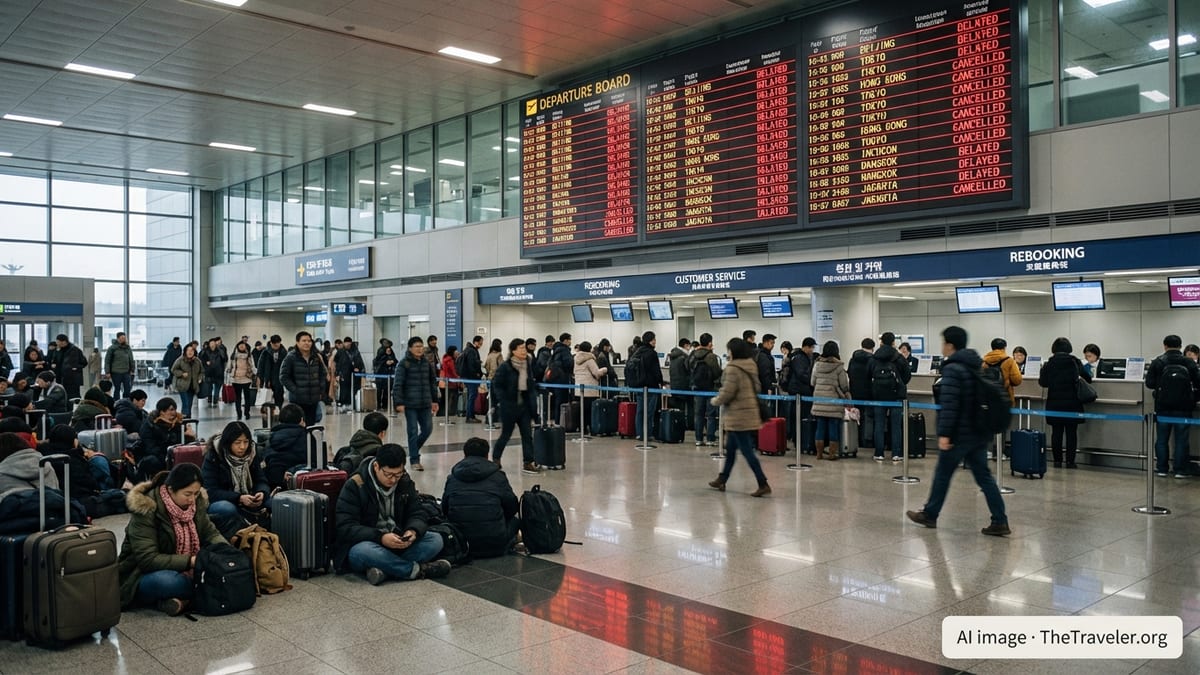
Hundreds of Flights Scrapped at Key German Hubs
Published coverage from European travel and aviation outlets indicates that the latest cabin crew walkout has hit Lufthansa’s main bases in Frankfurt and Munich hardest, with hundreds of departures scrubbed from Friday’s schedule. Reports describe boards filled with cancellations as aircraft remain on the ground and crews join picket lines at Germany’s busiest airports.
Across Frankfurt, Munich and several regional airports, estimates from news reports and airport data converge on roughly 500 Lufthansa and Lufthansa CityLine flights being cancelled in the space of a single day. The disruption has rippled through the wider network, interrupting feeder services, forcing missed connections and creating bottlenecks at transfer points used by long haul travelers.
Travel industry analysis suggests that between 70,000 and 100,000 passengers may have been affected by the cancellations and associated delays, many of them returning from Easter holidays. While some flights operated as planned or with replacement aircraft and crews, the scale of the strike left little room for the airline to recover capacity at short notice.
Operational updates published by Lufthansa show attempts to consolidate services and rebook travelers on remaining flights within the group, but staffing constraints and the late timing of the strike announcement limited options. Passengers arriving at airports often discovered only at check in that their flights had been cancelled or that onward connections were no longer guaranteed.
Union Demands and Escalating Labor Disputes
The strike has been organized by the Independent Flight Attendants’ Organization, known by its German acronym UFO, which represents cabin crew at Lufthansa and its regional unit Lufthansa CityLine. The union has framed the walkout as a necessary escalation after what it describes in public statements as stalled or insufficient progress in collective bargaining.
Published reports on the dispute indicate that UFO is seeking higher base pay, inflation compensation, and improved rostering rules for crew who have faced repeated waves of disruption since the pandemic and the more recent geopolitical tensions affecting airspace in the Middle East. The union argues that staff workloads and irregular schedules have intensified while the airline group has returned to strong demand and higher ticket yields.
The latest cabin crew action comes on top of a separate and ongoing dispute with the Vereinigung Cockpit pilots’ union, which has already led to previous strike days and is planning further walkouts. According to union announcements carried by specialist logistics and aviation outlets, pilots at Lufthansa, Lufthansa Cargo and Lufthansa CityLine have been called to strike again on April 13 and 14, raising the prospect of back to back disruptions.
This overlapping pattern of industrial action places additional pressure on Lufthansa’s restructuring plans, particularly around its regional businesses. Analysts note that the group has been shifting flying from Lufthansa CityLine to the newer Lufthansa City Airlines, a move that unions view as an attempt to secure lower wage scales and more flexible contracts, setting the backdrop for a sharp escalation in labor tensions this spring.
Impact on European Connectivity and Holiday Travel
The timing of the strike has amplified its impact well beyond Germany. Reports from travel news outlets in Austria, Switzerland, Hungary and Romania describe extensive knock on cancellations and delays on Lufthansa routes to Vienna, Zurich, Budapest, Bucharest and other cities, as grounded aircraft and crews at German hubs break the chain of connecting services.
At several regional airports, including Hamburg and Düsseldorf, entire rotations on core domestic routes such as Hamburg Frankfurt were cancelled in advance of the walkout. Airports and national aviation authorities reported congested terminals as travelers tried to secure alternative connections on other carriers or rebooked for later dates.
For many passengers, the disruption coincided with the return leg of Easter holidays, a period when flights are typically heavily booked and last minute alternatives are scarce or significantly more expensive. Travel advisories issued by consumer agencies and aviation watchdogs urged affected passengers to check flight status continuously and to avoid traveling to the airport without confirmed rebookings.
With aircraft and crews out of position, experts warn that operational knock on effects may persist beyond the formal strike period. Even as Lufthansa works to restore its timetable, residual delays, missed connections and sporadic cancellations are expected over the following days while the airline gradually resets its network.
Passenger Rights, Rebooking Options and Compensation
Publicly available guidance from consumer organizations in the European Union highlights that passengers caught up in the strike are protected under EU air passenger regulations, which set out clear rules on rebooking, refunds and compensation in the event of cancellations or severe delays. Because the disruption is caused by employees of the airline, strikes of this nature are generally treated as events within the carrier’s control rather than extraordinary circumstances.
Under these rules, travelers whose flights are cancelled are entitled to a choice between a full refund and re routing at the earliest opportunity, including on alternative dates if immediate rebooking is not possible. Airlines are also required to provide care such as meals, refreshments and hotel accommodation when passengers are forced to wait for replacement flights.
In addition, many travelers may qualify for fixed compensation amounts based on the distance of their journey and the length of delay at arrival, provided that they were informed of the cancellation at short notice and no comparable alternative routing was offered. Consumer advocates caution, however, that processing times for claims can be lengthy when disruptions affect tens of thousands of passengers at once.
Lufthansa’s customer information pages outline options for free rebooking on other flights within the Lufthansa Group during specific travel windows around the strike dates, as well as the possibility to request refunds. Travel experts advise passengers to document all expenses, retain boarding passes and booking confirmations, and submit claims through official channels rather than third party intermediaries.
Outlook for Lufthansa’s Summer Operations
Looking ahead, attention is turning to the potential impact of the dispute on the crucial summer travel season. Industry commentators point out that the current wave of strikes occurs at a time when airlines across Europe are rebuilding capacity, facing higher operating costs and contending with geopolitical uncertainties that already constrain certain long haul routes.
If no agreement is reached with cabin crew and pilots in the coming weeks, the risk of further industrial action could weigh on traveler confidence, especially among long haul customers relying on Lufthansa’s Frankfurt and Munich hubs for connections. Corporate travel managers and tour operators are closely monitoring developments as they finalize summer schedules and group bookings.
For now, publicly available statements from both unions and the airline signal a willingness to return to the negotiating table, but there is little indication that a comprehensive settlement is imminent. Observers expect intense bargaining in the days surrounding the planned pilots’ strike in mid April, with the possibility that mediation or political pressure may be brought to bear if the disruptions continue to escalate.
Until a durable compromise is found, travelers using Lufthansa and its regional affiliates are likely to face a period of heightened uncertainty, marked by rolling schedule adjustments, more frequent rebookings and the need for closer monitoring of flight status in the run up to departure.