

More news on this day
Lufthansa is testing a controversial change to its onboard hygiene routine, exploring whether economy cabins on some ultra-short European flights can skip standard cleaning between rotations as the airline looks to cut turnaround times, reduce waste and keep tight schedules on track.
Get the latest news straight to your inbox!
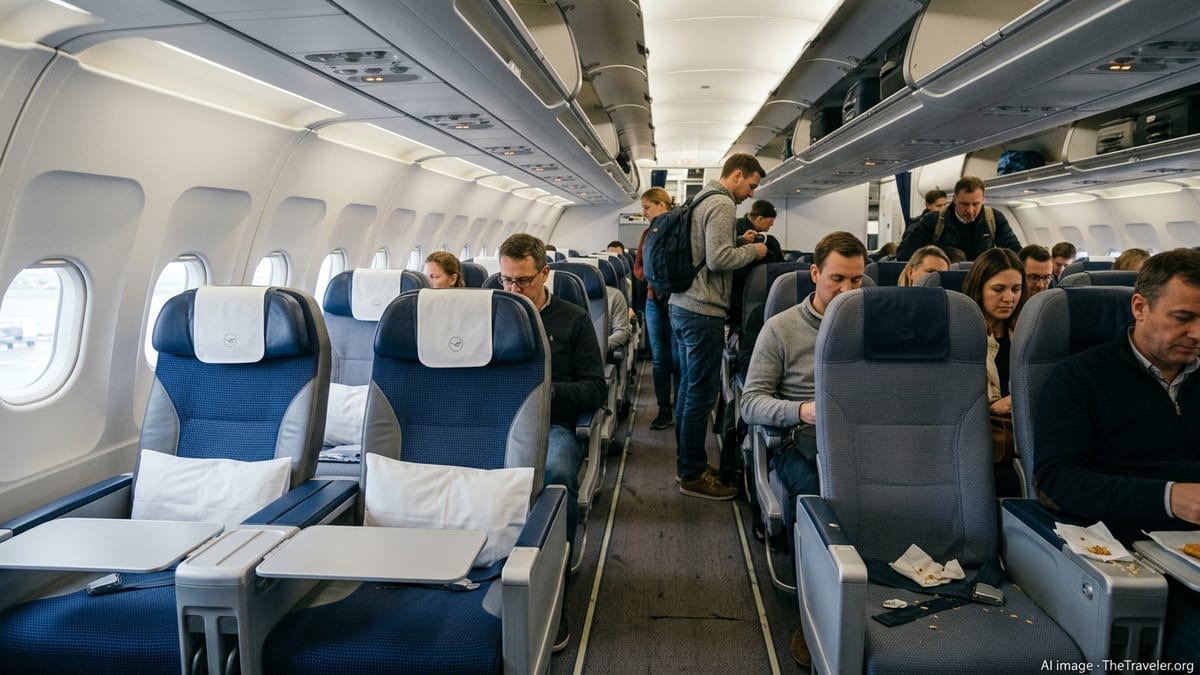
What Lufthansa is testing on ultra-short sectors
According to recent reports from German aviation forums and passenger accounts, Lufthansa has begun limited trials in which cleaning teams do not perform the usual full economy cabin tidy between certain domestic and very short intra-European flights. The focus appears to be on high-frequency routes with block times of around 30 to 60 minutes, typically shuttles linking hubs such as Frankfurt and Munich with nearby cities.
Publicly available information indicates that the tests apply only to flights where the aircraft is on the ground for a very short period and where the cabin is assessed as being in acceptable condition. In these cases, cleaners may concentrate on premium cabins and lavatories while economy seats receive only minimal or no in-depth treatment before the next boarding begins.
The initiative is part of a broader push by European airlines to squeeze more efficiency out of short-haul operations. With airports and carriers facing congested schedules and pressure to improve on-time performance, every minute gained during turnaround has become a valuable operational lever.
Lufthansa has not announced a permanent policy change and the current approach is being described in industry coverage as an experiment rather than a systemwide standard. The airline continues to emphasise its existing hygiene commitments in official materials, particularly for long-haul and higher-fare cabins.
Balancing punctuality pressures with passenger expectations
The move comes as airlines across Europe confront tight connection windows and continued strain on airport staffing. Lufthansa’s own operational updates have highlighted how small disruptions on the ground, including catering and cleaning delays, can ripple through the network and cause missed connections and aircraft being out of position for later flights.
By trimming or skipping some cleaning tasks in economy on ultra-short flights, the carrier is effectively prioritising departure punctuality and aircraft utilisation over cosmetic refreshes between every single hop. Supporters of the trial argue that a lightly used cabin on a 30-minute sector does not necessarily require the same level of intervention as a long-haul arrival and that faster turnarounds help protect connecting passengers from longer delays.
For many travellers, however, expectations around cleanliness have risen since the pandemic era, when airlines heavily promoted disinfection and enhanced hygiene as a core part of the flying experience. The idea that any cabin could be left largely untouched between groups of passengers is generating concern among those who see cleaning not just as an aesthetic factor but as a health and comfort issue.
Industry analysts note that Lufthansa must strike a careful balance. The airline competes directly with low-cost carriers that routinely work with very short turnarounds, yet it also positions itself as a full-service brand where basic standards are assumed rather than questioned, even in the back of the plane.
Hygiene optics and the legacy of pandemic-era promises
The timing of the trial is also sensitive given the lingering memory of pandemic-era marketing, when carriers invested heavily in messaging about deep cleaning, cabin filtration and contact minimisation. While most of those measures have since been scaled back, many passengers still assume that at least a visible level of cleaning takes place between every flight.
Reports about skipped or reduced cleaning in economy risk colliding with those expectations, especially when they spread on social media alongside anecdotes about overflowing seat pockets, sticky tray tables or litter left behind by previous occupants. Even if such conditions are not representative of the majority of flights, individual stories can shape broader perceptions of an airline’s standards.
Aviation health specialists typically emphasise that modern aircraft cabin air is filtered effectively and that surface contamination is only one part of the overall hygiene picture. Nonetheless, cleanliness plays an outsized role in passenger confidence. A cabin that looks untidy or poorly maintained can reinforce wider worries about what else might be overlooked, from basic sanitation to technical upkeep.
For a brand like Lufthansa, which markets German engineering and reliability as part of its identity, the optics of cutting back visible cleaning on any part of the product can be particularly sensitive, even if the operational rationale is strong.
Environmental and cost arguments behind reduced cleaning
Beyond punctuality, the trial intersects with ongoing efforts by Lufthansa Group to reduce waste and optimise resource use on board. Company sustainability reports in recent years have described ambitions to cut food waste on short-haul flights and move in-flight plastics and other materials into a more circular model, with fewer single-use items loaded and discarded after each sector.
Cleaning is tied closely to that agenda. Every turnaround generates bags of mixed waste, from disposable headrest covers and packaging to paper and catering remnants. If the cabin remains in reasonable condition between very short sectors, skipping a full clean can lower the volume of consumables used and reduce the number of waste bags trucked away, contributing indirectly to emissions and cost savings.
At the same time, scaling back cleaning has limits as an environmental strategy. If passengers respond by bringing more disposable items on board or by leaving more rubbish behind, the net benefit can quickly erode. Some consumer advocates argue that focusing on durable onboard products, recycling infrastructure and responsible catering adjustments may yield clearer sustainability wins than reducing visible hygiene measures.
From a cost perspective, cleaning contracts and staffing are a material line in an airline’s short-haul budget. Ultra-short routes already operate with thin margins, so shaving minutes and labour from the ground process is attractive to network planners. The challenge, analysts suggest, lies in ensuring that operational savings do not trigger reputational costs that outweigh the financial gains.
What travellers can expect on upcoming Lufthansa flights
For now, available information indicates that most Lufthansa passengers will not notice significant changes to cleaning routines, particularly on medium and long-haul services and on flights where the aircraft has a standard-length turnaround. The testing appears confined to a subset of short segments where operational pressures are highest.
Travellers connecting through Frankfurt, Munich and other hubs, however, may encounter cabins that have not been fully reset on very short feeder legs, especially if they are seated in economy. In practice this may mean more visible traces of the previous flight, such as crumbs, wrappers or used wipes left for crew to collect after boarding rather than before.
Consumer groups and frequent-flyer communities are likely to continue monitoring feedback as the trial progresses. If complaints about cabin condition rise or if incidents circulate widely online, Lufthansa may be pushed to clarify or adjust its approach. Conversely, if on-time performance visibly improves without a marked deterioration in passenger satisfaction scores, the airline could be encouraged to formalise or expand the practice.
As European aviation moves into a busy summer season, the debate highlights a broader question for the industry: how far travellers are willing to trade visible comfort and hygiene rituals for tighter schedules, lower emissions claims and stable fares on the continent’s most heavily trafficked short routes.