


More news on this day
European air travel is entering a new phase as Germany’s Lufthansa Group deepens its investment in Italy’s ITA Airways, a move that public information indicates will tighten tourism and business ties between Italy, the United States and Germany and recalibrate the competitive landscape for long haul travel into Europe.
Get the latest news straight to your inbox!
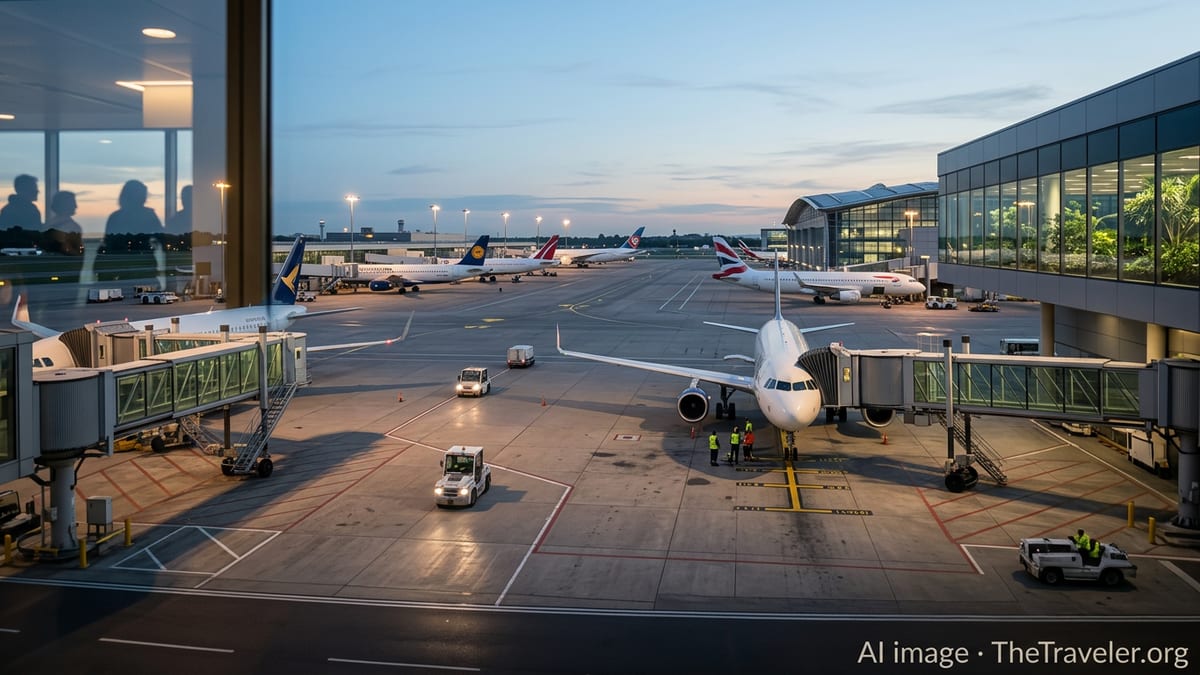
Lufthansa Cements its Position in Italy’s Aviation Market
Publicly available information shows that Lufthansa Group finalized a 41 percent stake in ITA Airways in January 2025 following European Commission approval of the deal and associated remedies during 2024. The investment followed a capital increase at ITA Airways and an agreement with Italy’s Ministry of Economy and Finance to share control of the carrier, positioning the German group as a key strategic partner in Italy’s aviation sector.
Company disclosures indicate that the acquisition gives Lufthansa a significant foothold in one of Europe’s largest outbound tourism and export markets, with Italy described as the group’s most important international market after the United States outside its existing home bases. The deal also includes an option structure allowing Lufthansa to pursue a majority stake over time, signaling long term intent to integrate ITA more deeply into its multi hub network.
Analysts following the transaction note that the move extends Lufthansa Group’s reach into southern Europe through Rome Fiumicino and Milan Linate, complementing its existing hubs in Frankfurt, Munich, Zurich, Vienna and Brussels. The strategy is presented as strengthening European connectivity while creating a stronger challenger to large US and Gulf carriers on intercontinental routes.
Transatlantic Links Drive Tourism Between Italy and the United States
Italy’s tourism outlook is closely tied to transatlantic demand, and the ITA Airways restructuring is aligned with that trend. ITA’s long haul network already focuses heavily on North America, with nonstop flights from Rome to several major US gateways and additional capacity during peak travel seasons. Traffic from the United States has been one of the strongest sources of post pandemic recovery for Italian destinations ranging from Rome and Milan to Venice, Naples and Florence.
According to published coverage and airline statements, codeshare partnerships with US carriers have expanded choices for American travelers heading to Italy and beyond. These arrangements allow passengers to book connecting itineraries across a single ticket, pairing US domestic feeds with ITA’s European and Mediterranean network. Increased schedule coordination and shared loyalty benefits are designed to make itineraries via Rome or Milan more competitive with routings through other European hubs.
Travel industry data cited in recent reports highlights resilient demand from US leisure and premium travelers for Italian city breaks, wine regions and cultural itineraries, even as global economic conditions fluctuate. With Lufthansa now supporting ITA’s fleet and network development, tourism specialists anticipate further capacity growth on key US routes and more seamless one stop connections from secondary American cities into Italian and wider European destinations.
Germany Italy Partnership Reconfigures European Connectivity
The strengthened relationship between Lufthansa and ITA Airways is reshaping intra European connectivity as well as long haul traffic flows. ITA’s integration as a fifth network airline within Lufthansa Group’s portfolio is expected to channel more passengers through Rome and Milan, redistributing flows that previously concentrated on northern European hubs alone.
Regulatory documents and company reports describe how the transaction was cleared in Brussels subject to measures intended to preserve competition on certain short and long haul routes. These conditions include commitments to release slots and maintain access for rival carriers on selected city pairs, particularly where overlaps between ITA and Lufthansa Group were considered sensitive. The framework aims to balance a stronger pan European network with continued choice for travelers.
Industry observers point to the planned transition of ITA from SkyTeam to Star Alliance by 2026 as another structural shift. Once complete, passengers will be able to combine ITA’s Italian network with Star Alliance partners across Europe, North America and Asia, backed by coordinated frequent flyer benefits and through check in. This alignment is expected to reinforce Rome Fiumicino’s role as a southern gateway into Europe for travelers from the Americas, the Middle East and Africa.
Raising Standards for Passenger Experience and Multimodal Travel
Lufthansa Group and ITA Airways have framed their collaboration as an effort to elevate service quality and connectivity standards across the combined network. Public documents from both airlines highlight plans to gradually harmonize digital platforms, booking flows, lounge access and customer care policies, particularly for premium cabin and frequent flyer customers. The objective is to give travelers a more consistent experience regardless of whether they are flying under a Lufthansa, SWISS, Austrian, Brussels Airlines or ITA code.
Reports also emphasize Italy’s ambition to leverage the partnership to promote more sustainable and efficient mobility. Policy statements associated with the transaction reference integrated air rail solutions within Italy, intended to connect regional cities and tourist areas to major hubs while reducing road congestion. For international visitors arriving from the United States or Germany, this approach could simplify same day transfers to secondary destinations such as coastal resorts, lakes and heritage sites.
At the same time, capacity investments are being scrutinized through an environmental lens. European industry analysis notes growing pressure on airlines to renew fleets with more fuel efficient aircraft and adopt sustainable aviation fuel where available. With ITA’s fleet renewal program underway and Lufthansa Group’s broader decarbonization strategy, the partnership is seen as a test case for how large network carriers can expand tourism links while keeping pace with climate related expectations and regulatory targets.
Implications for European Tourism Competitiveness
The tightening triangle between Italy, the United States and Germany in aviation terms carries wider implications for European tourism competitiveness. By weaving Italy more firmly into a continental network anchored in Germany, the Lufthansa ITA partnership gives tour operators and online agencies new options for building multi country itineraries, from US gateways into Rome or Milan and onward to central and northern Europe.
Destination marketers across Italy are expected to benefit from enhanced access to corporate and high yield leisure traffic routed through Lufthansa Group channels, including joint promotions and coordinated schedules that favor weekend city breaks and short stays. At the same time, Germany’s outbound tourism sector gains simplified access to Italian resorts and cultural centers, further deepening one of Europe’s most established travel corridors.
Specialists caution, however, that the ultimate impact on fares and service levels will depend on how remedies are implemented and how aggressively competing airlines respond. Low cost carriers remain influential on point to point routes into Italy, and other full service groups continue to court transatlantic travelers with their own partnerships. Within that competitive context, the enhanced Lufthansa stake in ITA Airways stands out as one of the most significant recent efforts to set new benchmarks for global connectivity while reinforcing Europe’s position as a top long haul tourism region.