


More news on this day
Newly announced flight cancellations across Japan on May 12 are disrupting travel on some of the country’s busiest international and domestic routes, as major carriers including China Airlines, American Airlines, United Airlines and Jetstar adjust schedules serving Narita, Fukuoka, Osaka and other hubs.
Get the latest news straight to your inbox!
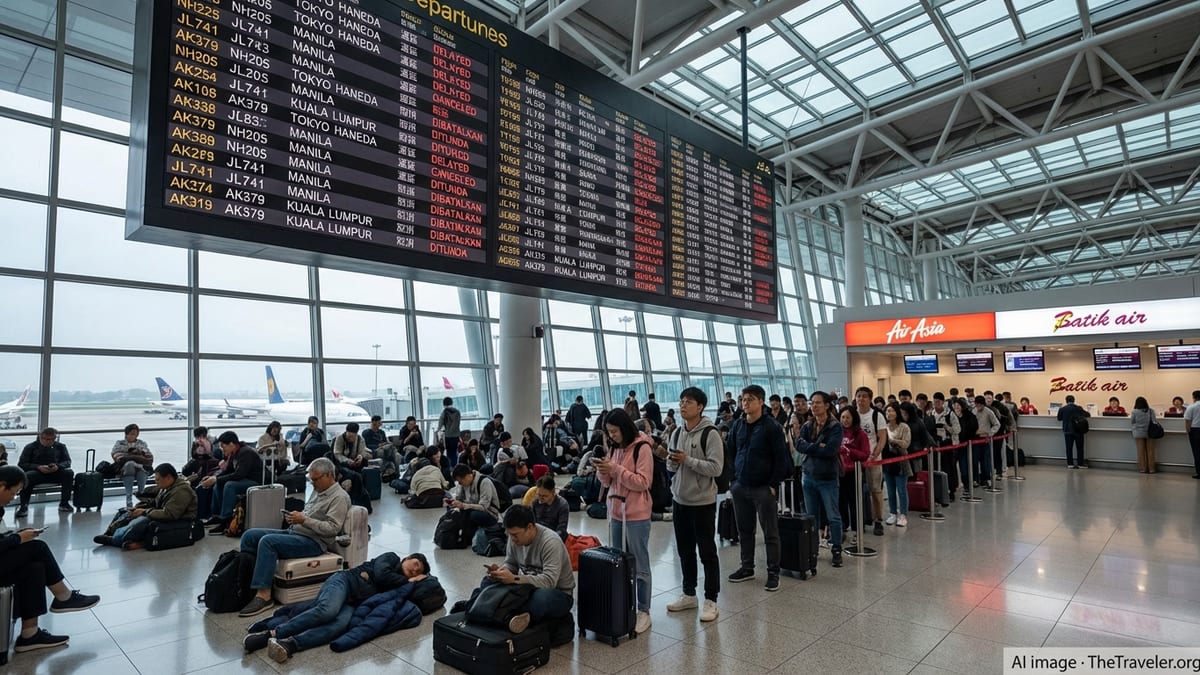
Ripple Effect Across Japan’s Major Gateways
Published flight boards and timetable data for May 12 show a fresh round of cancellations touching several of Japan’s main international gateways, led by Tokyo Narita, Kansai International near Osaka and Fukuoka Airport. The disruptions span both long haul and regional services, affecting connections to Tokyo Haneda, Dallas Fort Worth, Saipan and a range of Asian and North American cities.
Operational data from Narita on Tuesday indicates multiple international departures listed as cancelled or not operating, including selected services normally marketed by large global carriers. While many flights are still running according to schedule, the pockets of disruption are forcing same day rebookings, missed connections and, in some cases, the need to reroute via alternative Japanese airports.
In western Japan, schedule changes at Osaka and Fukuoka are compounding the impact. These airports act as feeders into the wider global network via Tokyo as well as through direct international links of their own, so even a modest number of cancellations can cascade into itinerary changes for travelers bound for North America, Micronesia and Southeast Asia.
The uneven pattern of cancellations, rather than a blanket shutdown of specific routes, reflects a broader trend in which airlines prune underperforming or operationally constrained flights while preserving core high demand frequencies.
China Airlines Trims Japan Links as Regional Pressures Mount
China Airlines services between Taiwan and Japan are among those seeing schedule adjustments this season, with route information and booking displays indicating selective cancellations or frequency reductions on certain days. Flights linking Taipei with cities such as Narita and Fukuoka remain in operation overall, but not all previously loaded departures are now appearing for sale or operation on individual dates.
Recent timetable data for Taiwan to Japan traffic shows that China Airlines still maintains a broad Japan network, yet capacity is now more tightly aligned with demand patterns. Industry commentary over recent months has highlighted how carriers in the region have been fine tuning Japan schedules in response to evolving tourism flows, currency movements and bilateral political tensions.
For passengers, the practical impact is that a flight that appeared firm at the time of booking in late 2025 or early 2026 may subsequently vanish from the operating calendar, particularly on secondary time slots. Travelers with multi leg itineraries using Japan as a transit point, including those routing between Europe and Asia via Taipei and Japanese gateways, are among the most exposed to such last minute changes.
Publicly available guidance from travel agents and airline customer advisories suggests that most affected China Airlines customers are being offered options to move to alternative departures on the same route, accept rerouting via another Japanese airport or seek refunds, depending on fare conditions.
American and United Adjust Transpacific and Hub Feeders
Transpacific networks operated by American Airlines and United Airlines are also seeing targeted adjustments that touch Japan on and around the current schedule period. According to published coverage of North America to Asia capacity changes, both carriers have been balancing their Japan operations against other Asian growth markets while monitoring premium and leisure demand into Tokyo.
American’s connectivity between Japan and Dallas Fort Worth, one of its primary hubs, remains a pillar of its transpacific offering, but the cancellation of even a single rotation on a given day can strand travelers whose onward connections through Texas depend on tight banks of departures. Similar dynamics are playing out for services linking Japan with United’s U.S. gateways, where selective cancellations can break well used connection patterns to domestic U.S. cities.
Online schedule snapshots for May show that not every flight number historically associated with Japan routes is operating daily. In some cases, aircraft redeployments, maintenance requirements or softer shoulder season bookings appear to be driving decisions to temporarily pull individual frequencies out of the schedule.
For long haul travelers, these changes can translate into longer connections, forced overnight stays or the need to depart from a different Japanese gateway such as shifting from Osaka or Fukuoka to Tokyo Narita or Haneda to keep transpacific legs intact.
Jetstar and Other Low Cost Carriers Hit Osaka, Fukuoka and Secondary Airports
Low cost carriers are playing a visible role in the current wave of disruptions, particularly on high frequency domestic and short haul routes. Jetstar Japan’s network between Osaka, Fukuoka and Tokyo has been a key component of budget travel within the country, and current schedule information shows a series of cancellations and consolidations on specific days, even though overall weekly frequencies remain significant.
Route data indicates that Jetstar continues to serve major Japanese city pairs such as Osaka Kansai to Tokyo area airports, but not every historically advertised departure is operating. Selected Narita and Kansai flights are absent from live departure boards or are flagged as cancelled, compounding congestion on remaining services.
Other low cost and hybrid carriers, including those affiliated with larger Japanese airline groups, are also adjusting summer 2026 flying programs. Changes at secondary hubs and regional airports feed directly into the situation at larger nodes, as fewer feeder flights into Narita, Haneda or Kansai can make it harder for passengers to connect onto long haul services operated by American, United or foreign Asian airlines.
Travel forums and passenger reports over recent weeks have highlighted a pattern in which some travelers bound for Saipan, Guam and other island destinations have seen their originally booked Japan legs cancelled and replaced with itineraries that require additional stops or longer domestic positioning journeys within Japan.
Travelers Face Rebookings, Reroutes and Tighter Contingency Planning
The latest round of cancellations underlines how fragile complex itineraries involving multiple carriers and hubs can be, even in a period without major weather events or nationwide disruption in Japan. Reports from passengers attempting to reach Tokyo Haneda from regional Japanese airports, or connecting through Japan to North America and Micronesia, describe a scramble to secure seats on remaining departures when a key leg is pulled from the schedule.
Publicly accessible airline advisories and consumer guidance from travel agencies emphasize that affected passengers are generally entitled to rebooking on the next available flight or, in certain cases, rerouting through another hub. However, limited spare capacity on popular routes means that the most convenient alternative may not be available for several days, especially for groups or travelers tied to peak travel dates.
Analysts following the region note that these Japan focused disruptions are part of a broader pattern of fine tuning across the Asia Pacific aviation market in 2026, as airlines respond to cost pressures, shifting tourist flows and evolving regulatory or geopolitical considerations. The result is a more dynamic, but less predictable, schedule environment in which cancellations are announced closer to departure than many travelers expect.
For now, trip planners heading to or through Japan are being encouraged by consumer advocates to monitor their bookings frequently, build extra buffer time into connections involving Narita, Fukuoka, Osaka and other key airports, and to consider flexible ticket options that make it easier to adjust when flights on carriers such as China Airlines, American, United or Jetstar are removed from the timetable.