


More news on this day
Nearly a dozen recently announced cancellations by South Korea low-cost carrier Air Seoul, combined with a separate wave of American Airlines scrapped departures from its Dallas-Fort Worth hub, have created travel disruption across routes linking Seoul, Jeju, Guam and the United States in early May 2026, leaving passengers facing rebookings and reduced onward connections.
Get the latest news straight to your inbox!
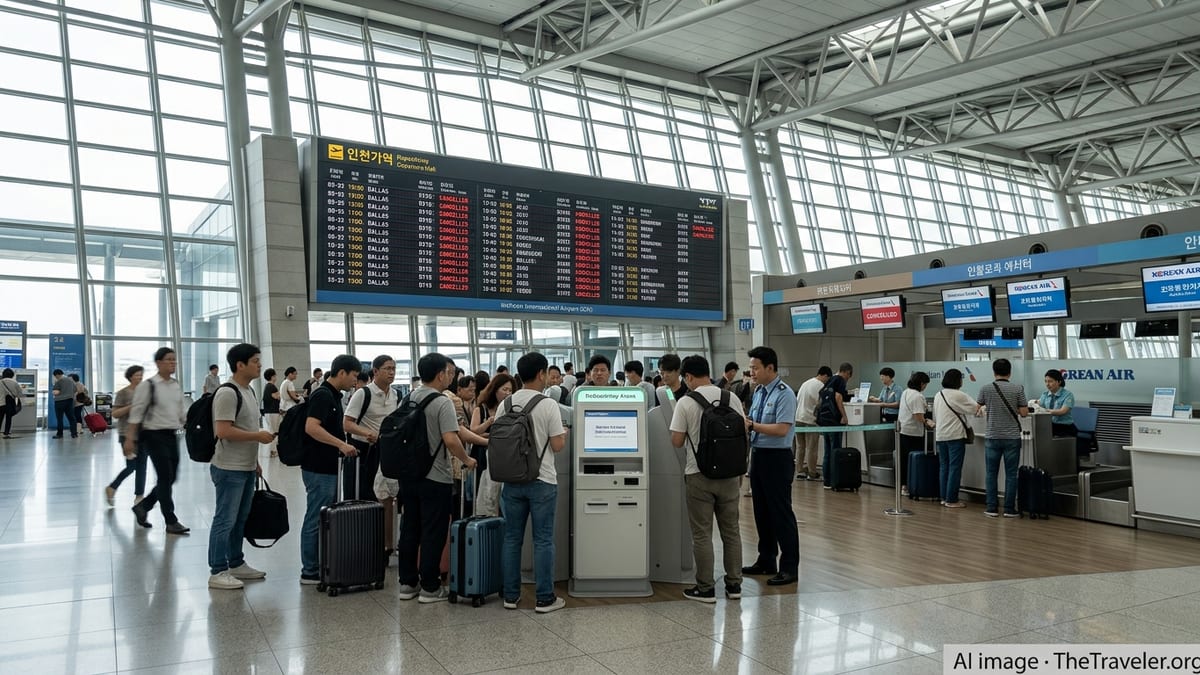
Scope of the Disruptions
Published coverage and airline schedules show the disturbances are not confined to a single carrier or market. Air Seoul removed multiple rotations touching Incheon, Gimpo and Jeju airports in early May 2026, a tally described in industry notices as approaching a dozen cancellations. At the same time, American Airlines experienced a bout of cancellations at its Dallas-Fort Worth hub tied to severe weather and knock-on operational strain, triggering broader connection problems on transpacific itineraries.
The combined impact has reduced seat capacity on a handful of key Pacific routes and complicated transfer options for travelers heading between South Korea and the continental United States. Passenger-facing consequences include longer wait times for rebooking, missed connections for those on through itineraries, and uneven availability on remaining flights as network carriers and low-cost operators reshuffle schedules to cope with short notice changes.
Air Seoul Pulls Multiple Rotations to Guam, Jeju, and Seoul
Publicly available information compiled by travel outlets and airport schedules indicates that Air Seoul canceled roughly ten flights in early May 2026, with affected services including short-haul links within South Korea and select international rotations to Guam. The cancellations predominantly involved narrowbody equipment used on short and medium sectors, prompting airlines and local airport timetables to update arrival and departure statuses over several days.
Guam airport notices and independent schedule trackers show disruptions to inbound and outbound capacity, creating particular strain on travelers using the island as a leisure gateway or a connection point to other Pacific destinations. For routes serving Jeju, the cancellations added pressure on a market that has faced broader turbulence since last year due to safety investigations and shifts in demand.
Industry reporting points to a mix of operational pressure points, including constrained fleet availability at low-cost carriers, tightened crew rosters, and commercial decisions to trim marginal services amid rising operating costs. The same coverage highlights that a small number of focused cancellations can have outsized effects at airports with limited alternate frequencies, especially during holiday periods or peak travel days.
American Airlines Hub Strain at Dallas-Fort Worth Ripples Across Pacific
American Airlines experienced a flush of cancellations through May 10 and 11, 2026 as severe storms and subsequent operational strain at Dallas-Fort Worth reduced the airline's on-time resources. Flight tracking data and travel reporting show the carrier scrapped hundreds of flights across that weekend, with the knock-on effect that some transpacific connections to Seoul and other Asian gateways were delayed or disrupted for travelers originating at or routing through DFW.
Long-haul services linking the United States and South Korea rely on coordinated schedules and partner networks. When hub operations at DFW are significantly disrupted, onward connections on partner airlines or code share arrangements can unravel, leaving passengers with complex rebooking paths and limited alternative routings on short notice. Those flying between Seoul and Dallas-Fort Worth have faced the greatest friction as carriers prioritize aircraft and crew for higher-yield sectors.
Travel advisories and status boards reflected persistent schedule churn during the affected period. Airlines and third-party booking channels showed a mix of refunds, involuntary rebookings and standby options being offered to impacted customers, while remaining seats tightened on nearby hubs and alternative routing points.
Industry Pressures and Passenger Impact
Wider industry factors have amplified the effect of the recent cancellations. Reporting from South Korean business outlets in May 2026 noted that rising jet fuel prices and lingering post-pandemic staffing shortfalls have led several low-cost carriers to trim international frequencies through May and June. The economic pressure means marginal routes are more likely to be cut or consolidated when operational disruptions occur.
Passengers on affected itineraries are being urged to monitor confirmations from their airlines and airport timetables for the most current status. Published coverage also stresses that those with connections should check both origin and onward flight status before travel and consider flexible rebooking options when available.
The unfolding pattern illustrates how localized operational problems can cascade through global networks, especially when a low-cost carrier pares back services at the same time a major full service carrier experiences hub disruption. For travelers, the result has been sudden itinerary changes and compressed alternatives in a high-demand travel window.