


More news on this day
Charlotte Douglas International Airport is experiencing a wave of disruptions, with more than 200 delayed flights and a handful of cancellations affecting major U.S. carriers and key domestic and international routes.
Get the latest news straight to your inbox!
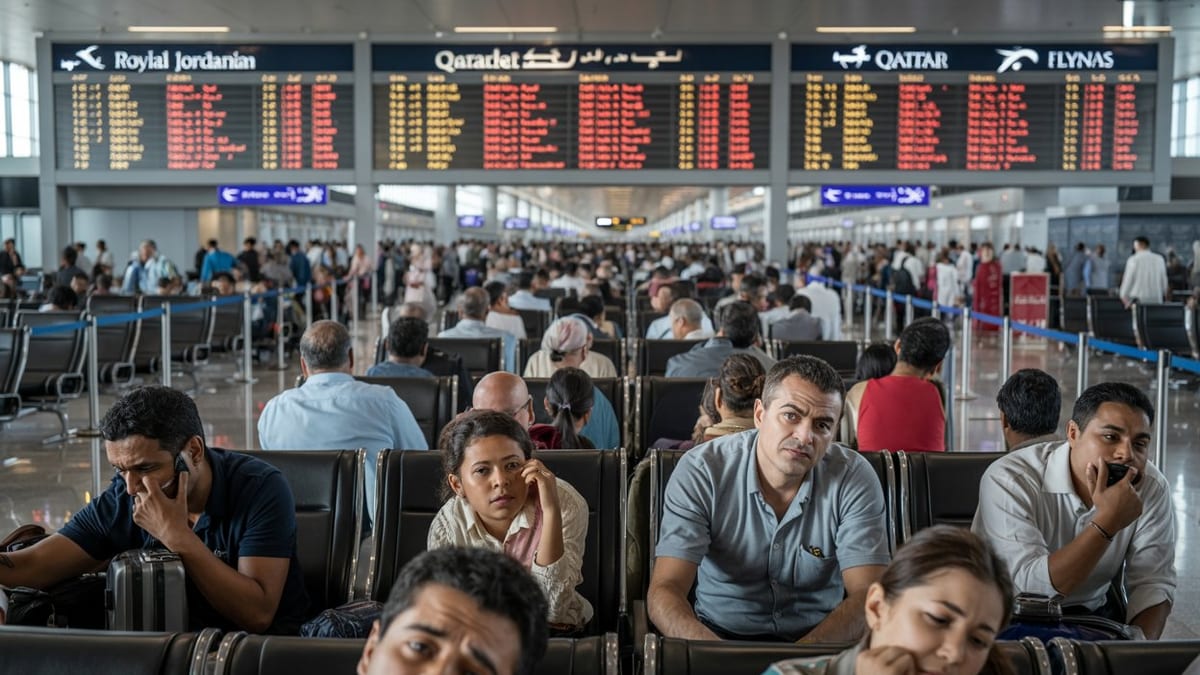
Wide-Ranging Disruptions Across a Major U.S. Hub
Publicly available flight-tracking data for Charlotte Douglas International Airport on Monday indicates around 209 delayed departures and arrivals alongside at least eight cancellations, creating ripple effects across one of the busiest hubs in the United States. The disruption is spread throughout the day, affecting early morning banked departures, mid-day connections and evening waves of flights.
The impact is not isolated to a single carrier. American Airlines, which maintains a dominant hub operation at Charlotte Douglas, appears to be bearing much of the volume, but services operated by Southwest, Delta and other domestic and international airlines are also affected. Regional affiliates operating under major-brand names are contributing to the total as feeder flights in and out of Charlotte experience knock-on delays.
While the precise mix of causes can vary from hour to hour, flight-status boards on Monday show a pattern consistent with a combination of high traffic volumes, aircraft and crew rotations arriving behind schedule, and weather and congestion affecting routes into and out of the Carolinas. As delays compound, later departures are pushed back, amplifying disruption for travelers who rely on Charlotte Douglas as a connection point.
Reports from airline operations dashboards and aviation data providers suggest that the ratio of delays to outright cancellations remains heavily skewed toward late departures. For passengers, however, long rolling delays can be as disruptive as cancellations, particularly for those with tight connections or onward international itineraries.
American, Southwest, Delta and Others Face Operational Strain
American Airlines, as the primary hub carrier at Charlotte Douglas, has the highest number of affected flights, with delays appearing across short-haul regional routes, transcontinental services and selected international operations. Because American uses Charlotte as a connection point for much of its East Coast and transatlantic traffic, even a modest number of delayed inbound aircraft can quickly spread schedule pressure across the network.
Southwest and Delta, which operate smaller but strategically important schedules at Charlotte, are also showing multiple delayed departures. These carriers link Charlotte to their own hubs and focus cities, meaning a disruption in North Carolina can ripple outward to cities such as Atlanta, Chicago, Dallas and beyond. For Southwest, delays on Charlotte services can interfere with the point-to-point nature of its network, while for Delta, late regional feeds can affect tight-bank connections at its primary hub in Atlanta.
Other operators, including low-cost and regional airlines, are also seeing scattered disruptions. Public flight boards list a mix of minor delays of 30 to 45 minutes alongside more serious hold-ups exceeding two hours. In some cases, carriers have opted to consolidate lightly booked flights or cancel single segments to protect the broader schedule.
Because multiple airlines share the same airfield, taxiways and airspace, even a carrier that is performing relatively well on staffing and maintenance can be affected by congestion, gate availability and departure sequencing. This interdependence is particularly sharp at a heavily banked hub such as Charlotte Douglas, where dozens of flights often arrive and depart within short windows.
Key Routes to New York, Dallas, Miami, Atlanta and Chicago Affected
The disruption is most visible on high-demand corridors connecting Charlotte to major business and leisure markets. Flight-status snapshots show delays on routes to New York-area airports, including LaGuardia and sometimes Newark, where airspace congestion and slot-controlled operations often magnify any timing issues originating in Charlotte.
Services to Dallas and Miami, two of American’s most important connecting hubs, are also experiencing knock-on delays. When aircraft leave Charlotte late for Dallas or Miami, those delays can carry over to subsequent segments operating further into the American network, affecting cities across the central and southeastern United States as well as selected international departures.
Flights connecting Charlotte to Atlanta and Chicago, which serve as primary hubs for Delta and United respectively, are similarly exposed. Departure boards list several flights on these routes leaving behind schedule, a pattern that can interfere with onward connections at those hubs for domestic and long-haul travelers.
Internationally, disruptions at Charlotte can particularly affect transatlantic and Caribbean routes that depend on well-timed domestic feeds. Travelers heading from smaller U.S. cities through Charlotte to destinations in Europe, Mexico and the Caribbean may find themselves rebooked onto later services or alternative routings when inbound domestic legs arrive too late to meet long-haul departures.
Knock-On Effects for Passengers and Airline Operations
For passengers, the immediate effects include longer time spent in terminals, missed or tight connections and last-minute gate changes. According to published coverage analyzing recent disruption patterns at Charlotte Douglas and other large hubs, extended delays often translate into increased demand for same-day hotel rooms, rental cars and alternative routings as travelers seek backup plans.
Operationally, the current wave of delays and cancellations forces airlines to make rapid decisions about aircraft and crew deployment. When a flight from Charlotte to a city such as New York or Chicago departs late, the same aircraft and crew may arrive too late to operate their next scheduled segment, triggering further schedule revisions. Crews may also time out if extended delays push them beyond legal duty limits, requiring substitutions that are not always immediately available.
Ground operations at Charlotte, including ramp handling, baggage loading, fueling and catering, come under intensified pressure during disruption events. Reports on recent busy periods at the airport indicate that congestion on taxiways and at gates can lengthen turnaround times, especially in peak hours when multiple delayed arrivals compete for limited space.
Air traffic control management initiatives such as ground delay programs or reroutes around weather systems in the eastern United States can also contribute. When traffic into Charlotte is metered or rerouted, arrival times become less predictable, making it harder for airlines to keep aircraft and crews running on time for their next departures.
What Travelers Through Charlotte Should Expect
Travel-data dashboards and recent media coverage of airline performance trends suggest that days with more than 200 delays and multiple cancellations at a single major hub are no longer rare, particularly during periods of unsettled weather or peak travel demand. For those traveling through Charlotte Douglas during the current disruption, that reality translates into a heightened need for flexibility.
Passengers connecting through Charlotte on their way to New York, Dallas, Miami, Atlanta, Chicago or international destinations are likely to encounter revised departure times, longer connection windows and, in some cases, rebooked itineraries. Same-day adjustments can alter seat assignments, aircraft types and even airports of arrival if travelers are rerouted through other hubs to reach their final destination.
Industry analyses emphasize the value of monitoring flight-status tools provided by airlines and third-party trackers throughout the day of travel, especially when connecting through complex hubs. Early awareness of an initial delay from Charlotte to a key city can provide more time to explore alternative options with carriers, including earlier or later departures and reroutes via different hubs.
For Charlotte Douglas itself, the latest disruptions highlight how sensitive a large hub is to any combination of operational pressures. With American Airlines, Southwest, Delta and other carriers all relying on the airport to feed domestic and international networks, a day with more than 200 delays and several cancellations offers a reminder of how quickly conditions can shift for travelers across the United States and beyond.