

More news on this day
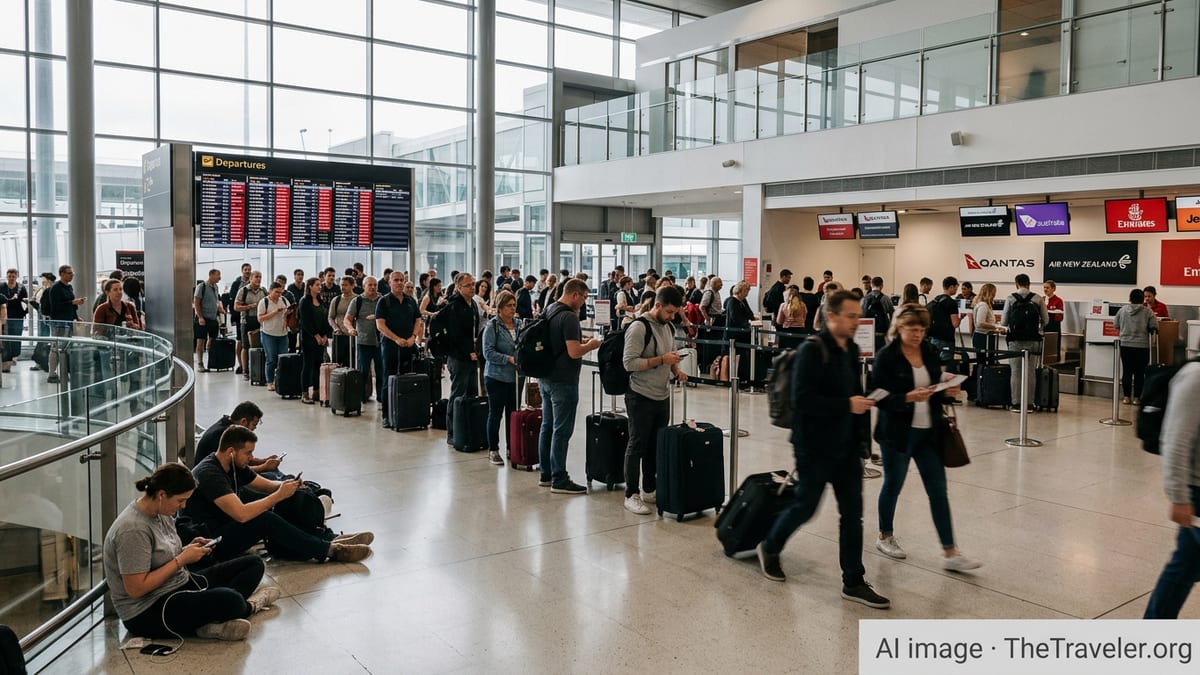
Hundreds of passengers across Australia and New Zealand have been left isolated in terminals and airport hotels as widespread disruptions led to at least 43 flight cancellations and more than 800 delays affecting services operated by Qantas, Air New Zealand, Virgin Australia, Emirates, Jetstar and other carriers on key domestic and trans-Tasman routes.
Get the latest news straight to your inbox!
Major Hubs Struggle With Wave of Cancellations and Delays
Publicly available airport and tracking data indicate that services in and out of Adelaide, Melbourne, Sydney, Auckland and Christchurch have been particularly affected, with peak-hour schedules repeatedly thinned out or pushed back. The disruption has rippled across both domestic and international networks, leaving passengers facing missed connections, unplanned stopovers and overnight stays far from their intended destinations.
The current pattern of disruption appears concentrated on busy trunk and trans-Tasman routes, where even a small number of cancellations can quickly cascade into hundreds of late departures and arrivals. With major airports already running at or near capacity during peak times, any extended ground hold, weather restriction or operational constraint tends to magnify across the network as aircraft and crew struggle to return to planned rotations.
Data from on-time performance reports in both countries show that airlines serving the Australia–New Zealand corridor have been operating with relatively tight margins. When schedules are optimized around high aircraft utilization, there is less slack in the system to absorb unplanned interruptions, making clusters of cancellations and extensive delays more likely when conditions deteriorate.
Trans-Tasman Links Hit as Aircraft and Crews Fall Out of Position
The latest disruptions have been especially visible on the trans-Tasman services connecting Melbourne, Sydney and Adelaide with Auckland and Christchurch. These routes typically rely on precise aircraft and crew positioning to sustain multiple daily rotations. When one leg is cancelled or significantly delayed, it can remove an aircraft and crew pairing from the cycle, forcing airlines to consolidate subsequent departures or substitute smaller aircraft.
Reports from passengers and publicly available schedules show several instances in which morning departures between Australian capitals and New Zealand gateways failed to operate as planned, leaving later flights heavily oversubscribed. Travelers attempting to connect onward to regional centers such as Queenstown, Wellington and Dunedin have reported last-minute rebookings and extended layovers as airlines work through backlogs.
Operational statistics released by transport agencies over recent months already highlight increased pressure on trans-Tasman performance, with on-time departure rates slipping and cancellation rates inching higher on some routes. Against that backdrop, a cluster of disruptions of the scale now being reported can quickly generate bottlenecks that take days rather than hours to unwind.
Multiple Airlines Affected, From Full-Service to Low-Cost Carriers
The impact has not been limited to a single carrier or business model. Network airlines such as Qantas and Air New Zealand, hybrid and low-cost operators including Virgin Australia and Jetstar, and international long-haul players such as Emirates have all had services caught up in the disruption, according to flight-status feeds and airport information boards.
Because many of these airlines share the same runways, airspace and terminal infrastructure, operational constraints quickly become systemwide. When arrival banks fall behind schedule, ground handling and gate availability can tighten, contributing to knock-on delays even for flights that might otherwise be ready to depart. Shared use of key trans-Tasman routes also means that when one airline consolidates or cancels a service, competing carriers can see sudden surges in demand from displaced travelers.
Recent history in both markets illustrates how quickly consumer-facing consequences can mount when reliability deteriorates. In New Zealand, publicly reported enforcement actions and compensation arrangements around past waves of cancellations have underscored the scale of disruption that can accumulate over relatively short periods when weather, maintenance and scheduling issues converge.
Passengers Face Long Waits, Missed Holidays and Extra Costs
For affected travelers, the practical consequences are being felt in hours-long queues at rebooking desks, nights spent in airport hotels and unplanned expenses for meals and local transport. Families connecting to holidays in regional tourism hubs, business travelers with tightly timed meetings and international visitors counting on seamless transfers are among those reporting the most disruption to their plans.
Accounts shared through social media and travel forums describe passengers waiting through rolling delay announcements before flights are ultimately cancelled, as well as instances of re-routing via secondary hubs that significantly extend total journey times. For travelers starting or ending trips in cities such as Adelaide and Christchurch, where alternative frequencies can be limited, a single cancellation may mean an unavoidable overnight stay.
Consumer advocates and commentators in both countries have repeatedly highlighted the stress and financial strain such events create, particularly in jurisdictions where direct cash compensation for delays is limited or absent. While airlines typically provide meal vouchers, hotel rooms or alternative routing when disruptions are within their control, passengers often bear additional costs when events are categorized as outside operational control.
Growing Scrutiny of Reliability Across Australian and New Zealand Skies
The latest wave of schedule disruptions feeds into a broader debate about airline reliability in Australia and New Zealand. Government transport statistics and independent analysis over the past two years have pointed to elevated delay rates on key domestic and regional routes, with calls for clearer passenger protections and greater transparency around on-time performance.
In Australia, a draft charter of passenger rights has already brought renewed attention to the question of what support travelers should receive when flights are cancelled or significantly delayed. In New Zealand, recent reporting on large-scale schedule adjustments and cancellations has prompted discussion about how carriers balance commercial realities with service expectations on essential domestic and trans-Tasman links.
Travel experts note that as aviation demand recovers and grows, particularly on routes connecting Australia and New Zealand, structural challenges such as infrastructure bottlenecks, staffing constraints and tight fleet utilization are likely to remain pressure points. Episodes of concentrated disruption, such as the current cluster of cancellations and delays across Adelaide, Melbourne, Sydney, Auckland and Christchurch, are expected to fuel continuing scrutiny of how resilient the region’s air travel networks really are.