

More news on this day
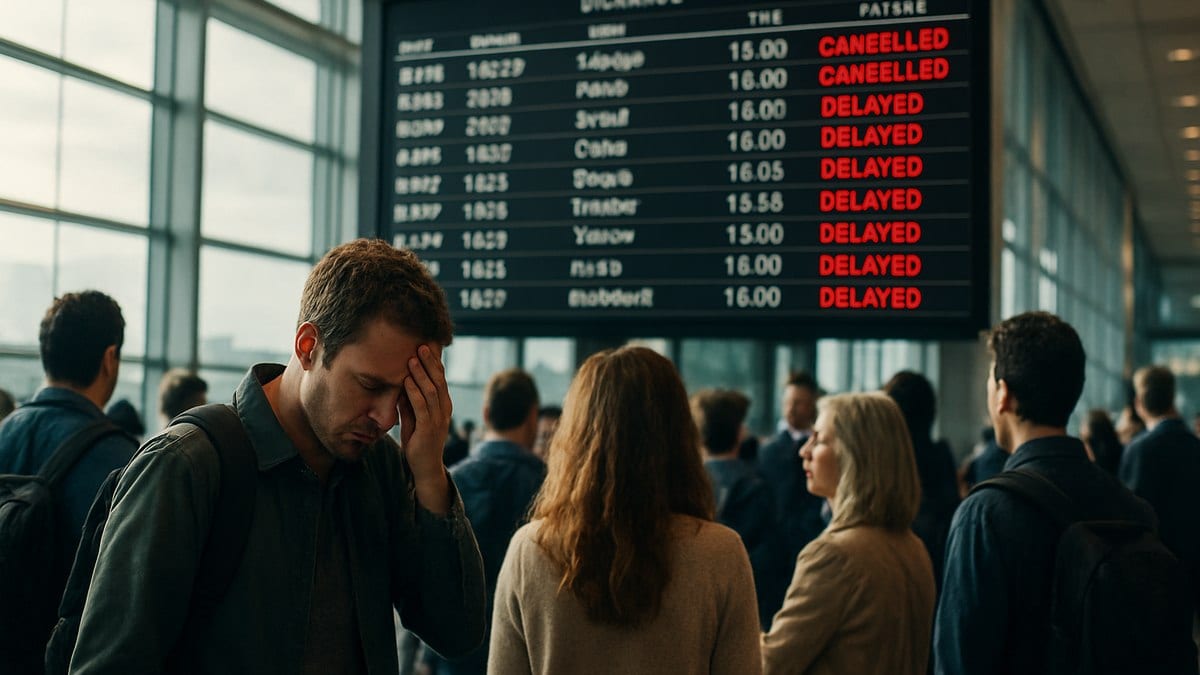
Hundreds of air passengers across Europe have been left stranded or severely delayed after major disruption at London Heathrow rippled through one of the world’s busiest aviation networks in early April, snarling onward connections from Amsterdam to Athens at the start of the spring travel season.
Get the latest news straight to your inbox!
Weather Fronts and Network Strain Converge on Heathrow
Operational data and published disruption tallies for the first days of April 2026 indicate that a band of unsettled Atlantic weather has played a central role in Heathrow’s latest difficulties. A sequence of low-pressure systems and named storms has brought strong crosswinds, heavy rain and intermittent low cloud to Western and Northern Europe, affecting both arrivals and departures at several major hubs on the same days.
Reports from flight-tracking and passenger-rights platforms show that Heathrow has repeatedly appeared among Europe’s most affected airports this month, alongside Frankfurt, Amsterdam Schiphol, Oslo and Athens. On some peak days, Europe-wide figures point to more than 1,000 delays and well over 100 cancellations within a 24-hour period, with Heathrow among the principal chokepoints where relatively small timetable changes can cascade into missed connections for long-haul travelers.
Analysts note that these conditions have arrived at a moment when carriers are running fuller schedules than in early spring a few years ago, leaving less slack in networks to absorb disruption. Heathrow’s status as a tightly scheduled, near-capacity hub increases the risk that any weather-related runway restrictions, go-arounds or holding patterns quickly spill over into knock-on delays for short-haul feeders serving the rest of Europe.
Publicly available aviation overviews for late winter and early spring already highlighted Heathrow among Europe’s busiest airports by daily movements. Early April’s weather has now converted that raw traffic volume into visible strain, with the airport’s performance feeding directly into the reliability of connecting services across the continent.
Passengers Stranded From Iberia to the Balkans
Across the wider European network, the disruption has been felt most acutely by passengers whose journeys depend on smooth transfers through Heathrow. Media coverage and social media posts from travelers describe overnight stays in airport hotels, missed cruises and abandoned weekend breaks after short-haul sectors into London were delayed or cancelled, leaving onward long-haul flights departing without them.
Recent tallies from European travel and consumer outlets point to several days in early April when more than a thousand flights across the continent were delayed and hundreds cancelled. Countries reporting significant impacts include the United Kingdom, Germany, Spain, Norway and Greece, with Heathrow cited alongside Frankfurt, Madrid Barajas, Munich and Oslo Gardermoen in disruption breakdowns.
In practical terms, that has left travelers stuck not only in London but at outstations in cities such as Amsterdam, Athens, Lisbon and Prague. Some have been rebooked via alternative hubs, including Paris Charles de Gaulle and Istanbul, while others have been told to wait for next-day departures after aircraft and crew were left out of position when earlier legs into Heathrow ran late.
Travel-focused publications highlight that many of those stranded are leisure passengers traveling at the start of the European spring holiday period, including families and students with limited flexibility on budget or dates. For these travelers, even a relatively short delay into Heathrow can mean a missed connection and an unplanned extra night in a foreign city, with costs and logistics that are only partly mitigated by airline accommodation policies.
Knock-On Impacts Across European Hubs
The current wave of disruption is not confined to the United Kingdom. Data collated by passenger-rights organizations and aviation analytics firms for early April show that, on some days, over 1,400 flights were delayed and more than 150 cancelled across European airports within a short time frame. Heathrow’s role as a major node in this network means that problems in London have quickly been reflected in departure boards from Scandinavia to the Mediterranean.
Reports from regional media indicate that airports such as Frankfurt, Munich, Madrid and Oslo have all seen clusters of delays linked to late inbound aircraft originating in or routed through Heathrow. In several cases, inbound aircraft have arrived outside their planned slots, forcing ground-handling crews to juggle gates and turnarounds while air traffic controllers manage congested departure sequences.
Air travel commentary notes that Europe’s fragmented airspace structure and continuing staffing pressures in some national air navigation services have compounded the weather-related difficulties. Aircraft leaving Heathrow and other crowded hubs have faced further flow restrictions over key sectors of European airspace, which can add route extensions or en-route holding times that ripple through airline schedules.
This combination of factors has meant that European passengers with no plans to travel to the United Kingdom have nonetheless been caught up in the fallout. For example, travelers on intra-European services such as Frankfurt to Zurich or Oslo to Athens have experienced delays or equipment swaps after aircraft and crews were realigned to cover disrupted Heathrow rotations.
Lessons From Previous Disruptions at Heathrow
The current episode follows several high-profile disruptions linked to Heathrow over the past two years, including a complete shutdown triggered by a substation fire in 2025 and periods of mass cancellations driven by industrial action and air traffic control issues. Industry reports examining those events have emphasized how quickly problems at Heathrow can escalate due to its dense schedule and limited spare capacity.
Previous analyses published by passenger advocacy groups and consultancy firms have highlighted that once Heathrow reaches a certain threshold of cancellations and missed slots, recovery can take multiple days. Aircraft and crew are displaced from their normal rotations, and the need to prioritize long-haul services can leave regional routes short of capacity, particularly to secondary cities across Europe.
Comparisons with historic disruption events, such as weather-related closures or the large-scale airspace shutdowns caused by volcanic ash in 2010, underline that Europe’s aviation system remains vulnerable to geographically concentrated shocks. Even with more sophisticated forecasting and planning tools, the dependency on a small number of very large hubs means that stability at airports like Heathrow remains critical to the wider network.
In response to previous crises, Heathrow and several major airlines using the airport have publicly described efforts to refine their contingency playbooks, including faster crew redeployment and improved passenger communications. Early commentary on this latest disruption suggests that some processes, such as proactive rebooking and digital notifications, have improved, but that capacity constraints and weather volatility continue to limit what can be achieved in real time.
What Travelers Can Expect in the Coming Days
Forecasts for the days ahead indicate that Atlantic weather systems will continue to affect parts of Western and Northern Europe, although several aviation data providers suggest a gradual easing in the intensity of disruption compared with the most challenging days at the start of April. Even so, residual delays and aircraft repositioning are likely to keep timetables fragile at Heathrow and other busy hubs.
Consumer advice from travel bodies and compensation platforms stresses the importance of monitoring flight status closely, especially for itineraries involving Heathrow connections. Travelers holding separate tickets for feeder and long-haul flights are considered particularly exposed, as missed onward departures in London may not be automatically protected by through-ticket rules.
Information published by European passenger-rights organizations reminds travelers departing from or within the European Union and the United Kingdom that statutory compensation or care obligations may apply in cases of long delays or cancellations, depending on the cause. Weather-related disruption can fall into different categories from technical failures or staffing issues, making the details of each case important when assessing eligibility.
For now, schedules indicate that airlines are attempting to restore normal operations while working through backlogs of displaced passengers. With spring and summer travel demand forecast to remain robust, aviation analysts suggest that the lessons learned from this latest Heathrow-centred disruption will be closely watched by both carriers and regulators as Europe heads into its next peak season.