


More news on this day
Málaga is entering a new phase of its urban renaissance as a surge of luxury short-term rentals, serviced tourist apartments and high-end real estate investment reshapes the skyline and visitor experience of the Costa del Sol’s capital.
Get the latest news straight to your inbox!
Record Tourism Underpins Málaga’s New Urban Magnetism
Recent tourism data show Málaga consolidating its position as one of Spain’s fastest-growing urban destinations. Hotel statistics for 2025 point to more than 1.8 million hotel travelers in the city and almost 3.75 million overnight stays, extending a run of record-breaking years for the local industry. Growth has been driven particularly by international markets, which now represent close to two thirds of hotel demand.
The broader Costa del Sol has also logged its best-ever year for visitor arrivals, confirming Málaga’s role as a key gateway to the wider region. Passenger numbers at the city’s airport surpassed 25 million between January and November 2025, illustrating how improved air connectivity is sustaining the shift from seasonal beach tourism toward year-round urban breaks, cultural visits and business travel.
This steady flow of visitors has coincided with strong employment in tourism-related activities within the city. Local monitoring reports indicate that tens of thousands of jobs are now tied directly to hospitality, culture, transport and leisure services. The combination of record arrivals and expanding employment has strengthened Málaga’s appeal to both international travelers and property investors seeking exposure to Spain’s rebounding tourism economy.
Urban regeneration projects, museum openings and waterfront improvements over the past decade have further reinforced this momentum. Publicly available information highlights that cultural attractions such as the city’s Roman theatre and museum cluster are posting rising visitor numbers, positioning Málaga as a cultural city break destination alongside its traditional role as a sun-and-sea gateway.
Luxury Short-Term Rentals and Serviced Apartments Multiply
Against this backdrop, luxury short-term rentals and serviced tourist apartments have expanded rapidly across central Málaga and seafront districts. Online registration data and sector monitoring show thousands of tourist dwellings licensed in the city, with higher concentrations in historic neighborhoods where demand from international visitors and digital nomads is particularly strong.
Many of the newest products target the upper end of the market, with renovated period buildings converted into designer apartments offering concierge services, rooftop pools and co-working spaces. Industry coverage indicates that yields in these segments remain attractive compared with traditional long-term renting, encouraging local owners and institutional investors to reposition residential stock as short-stay, high-spend accommodation.
The trend mirrors a broader national pattern in which urban destinations with strong air links and cultural offerings have attracted growing volumes of city-break travelers. In Málaga, proximity to the port and cruise terminals, the high-speed rail station and the airport has enabled operators to market serviced apartments as flexible bases for short urban stays, extended business trips and medium-term relocations.
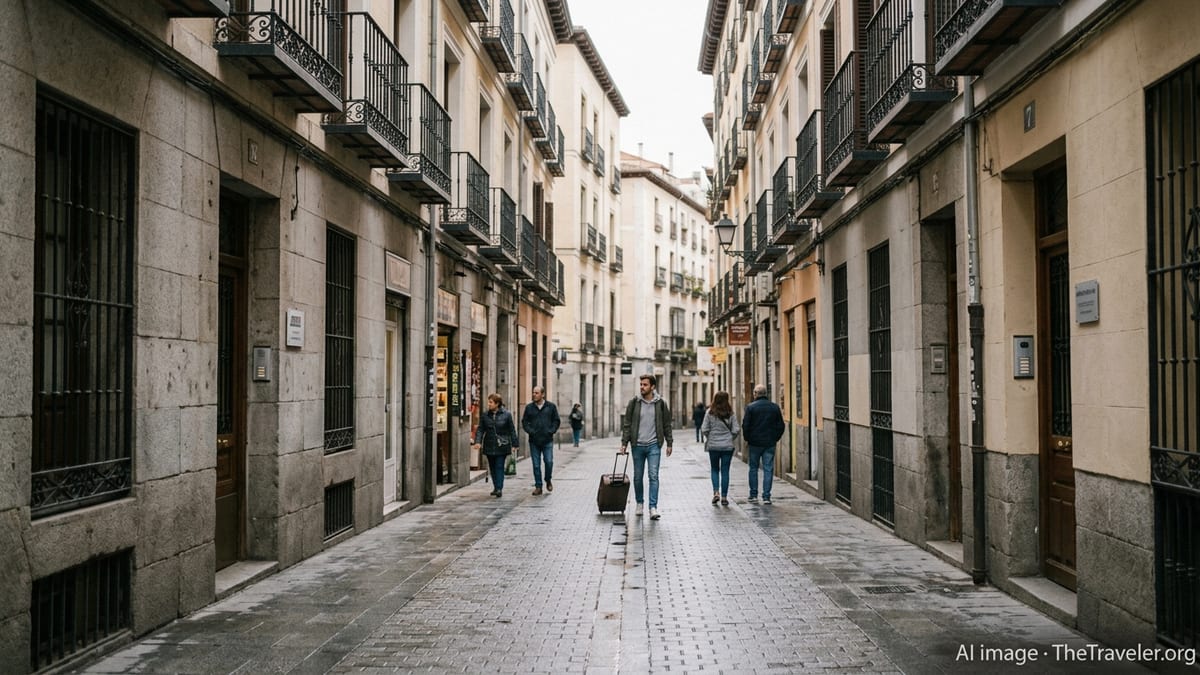
At the same time, the rise of higher-standard tourist housing is changing the visual and social texture of central streets. Renovated façades, new boutique-style lobbies and branded apartment entrances increasingly sit alongside traditional residential blocks, small shops and local bars, underlining the city’s transformation into a mixed-use, tourism-oriented urban core.
Hotel and Real Estate Investors Chase High-End Demand
Large-scale real estate investment has followed these shifts in visitor demand. Consultancy reports on Spain’s hotel sector highlight Málaga among the country’s leading destinations for hotel transactions, with hundreds of millions of euros invested in recent years. A notable portion of this capital has flowed into four and five-star assets, reflecting investors’ focus on higher-margin segments.
National hotel investment studies for 2024 show Málaga accounting for around 5 percent of hotel transaction volume in Spain, with several deals involving upscale urban properties. Separate data on luxury hotel investment reveal that nearly one third of national hotel spending in the first half of 2024 targeted five-star and luxury five-star establishments, with Málaga singled out for multiple high-value operations.
Hotel groups are responding by expanding their local portfolios and raising the city’s profile in the global luxury market. Coverage of one major Spanish chain’s strategy indicates that it plans to grow from a single five-star hotel in the province to five by 2026, emphasizing a shift toward premium, experience-focused tourism in the Málaga area.
This rise in high-end hotel capacity sits alongside steady development of branded serviced apartments and mixed-use schemes that combine hospitality with residential, retail and leisure components. Property consultancies point to Málaga’s business climate, cultural offer and population growth as key drivers of this investment cycle, positioning the city as a testbed for new urban-resort concepts that blend coastal living with big-city amenities.
Regulation Tightens as Locals Push Back on Saturation
The rapid expansion of luxury short-term rentals and tourist apartments has also triggered a regulatory response. In January 2025, a new planning framework came into force that restricts the registration of additional tourist dwellings in 43 areas of Málaga where such properties already represent at least 8 percent of the housing stock. The change, published in the provincial planning bulletin, modifies the city’s general urban development plan to limit new licenses in the most saturated districts.
Regional rules have been updated in parallel. A 2024 decree from the Andalusian regional government introduced stricter requirements for tourist housing and allowed municipalities to cap or limit such accommodation in specific zones for reasons of general interest. Subsequent reports on enforcement in Málaga describe targeted action against units registered after February 2024 that fail to meet building-access and utility separation standards between tourists and permanent residents.
These measures follow a series of demonstrations and neighborhood campaigns across Spanish tourism hotspots where residents have raised concerns about housing affordability, noise and the loss of traditional commerce. Málaga has figured prominently in this national debate as both a beneficiary of tourism-driven regeneration and a focal point for questions over how much visitor accommodation dense city centers can absorb.
While restrictions focus on new licenses in the most saturated areas, existing legal tourist rentals continue to operate, and development interest is shifting toward districts with lower concentrations of tourist housing. Market analysts suggest that this could accelerate the move toward larger, professionally managed serviced apartment buildings and hotels, which are more easily integrated into planning frameworks than dispersed, individually owned units.
Balancing Sunlit Growth With Long-Term Urban Liveability
The surge in luxury short-term rentals, tourist apartments and real estate investment is forcing Málaga to reassess how tourism fits into its long-term urban vision. The city’s Sustainable Tourism Observatory has framed current growth within a wider strategy that seeks to preserve local quality of life while maintaining the economic benefits of a thriving visitor economy.
Publicly available reports emphasize efforts to diversify visitor flows across neighborhoods, extend stays beyond the peak summer months and promote cultural and business tourism that can support a broader range of local services. Investment in public transport, pedestrianization and cultural venues is intended to spread tourism spending and ease pressure on the most visited central streets.
At the same time, citywide housing data and academic commentary underscore mounting tension between the profitability of tourist rentals and the availability of long-term housing for residents and key workers in hospitality and services. Debates over further caps on tourist dwellings, incentives for long-term rentals and tax regimes for short-stay accommodation are expected to intensify as new regulations take full effect.
For now, Málaga remains emblematic of Spain’s broader city tourism transformation, where historic centers, cultural quarters and waterfronts are recast as premium destinations for international travelers and investors. How the city manages the interplay between sunlit growth, luxury accommodation and everyday urban life will help define the next chapter of its much-discussed renaissance.