

More news on this day
Travel between Southeast Asia and the Gulf is set to become even smoother from mid 2026, as Malaysia Airlines confirms it will introduce a third daily non stop service between Kuala Lumpur and Doha from June 30, significantly increasing capacity on one of its fastest growing long haul routes.
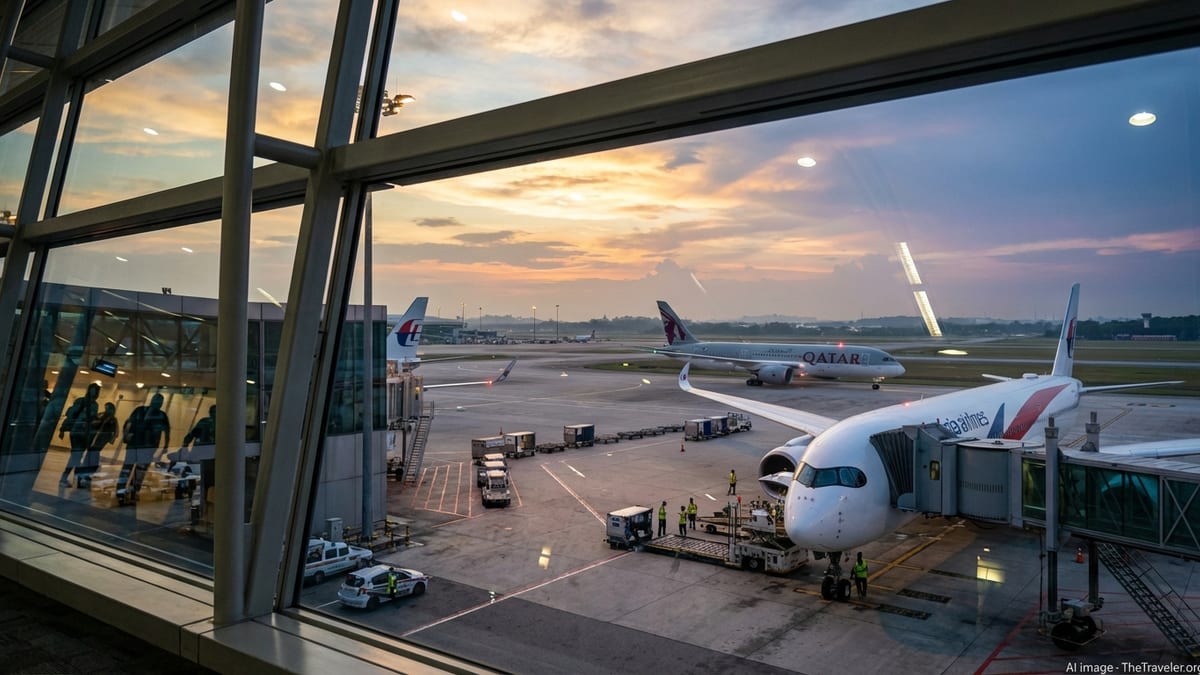
Third Daily Service Cements Kuala Lumpur–Doha as a Key Long Haul Corridor
The new rotation will lift Malaysia Airlines’ Kuala Lumpur–Doha operation from two to three flights per day, taking its total to 21 weekly services on the route. The additional frequency underscores the carrier’s confidence in sustained demand between Malaysia and Qatar, and in the broader traffic flows that link Southeast Asia, the Middle East and onward long haul markets.
According to the airline’s schedule filings and recent statements, the third flight is planned to begin on June 30, 2026, operating non stop from Kuala Lumpur International Airport to Doha’s Hamad International Airport. The service will complement the existing pair of daily departures and is designed to provide more evenly spaced options for both eastbound and westbound travel.
Industry route data show that Kuala Lumpur–Doha has emerged as one of Malaysia Airlines’ most strategically important intercontinental corridors, with passenger volumes steadily recovering and, in some segments, surpassing pre pandemic levels. The decision to deploy a third daily flight reflects not only strong point to point demand but also the growing role of Doha as a superhub for travel across Europe, Africa and the Americas.
The move also sends a clear signal that Malaysia Aviation Group, the parent company of Malaysia Airlines, is firmly in expansion mode after several years of consolidation. By investing in additional capacity on a proven trunk route, the carrier is betting on continued growth in international travel and on Kuala Lumpur’s positioning as a competitive hub within the Asia Pacific region.
Timings Designed for Smoother Connections in Both Directions
While slight refinements to exact timings are still possible as airlines calibrate their summer 2026 schedules, Malaysia Airlines has outlined a structure that keeps all three Kuala Lumpur–Doha flights in the late evening and overnight wave, long regarded as the most attractive slot for long haul transfers through the Gulf. This ensures that passengers can arrive in Doha in time to connect to early morning banks of departures to Europe, Africa and North America.
Under the indicative plan, existing services MH160 and MH164 will continue to depart Kuala Lumpur late at night, arriving into Doha before dawn or late in the evening depending on the season. The new flight, expected to operate as MH168, is also scheduled for an evening departure from Kuala Lumpur, landing in Doha before midnight or in the early hours, dovetailing with Qatar bound and onward connections.
On the return leg, Malaysia Airlines will mirror the pattern with early morning and daytime departures from Hamad International Airport that reach Kuala Lumpur in the afternoon and next morning local time. This arrangement helps capture both business and leisure traffic originating in Europe, the Middle East and Africa and bound for Malaysia, Singapore, Indonesia, Thailand and Australia.
The consistent seven to eight hour flight time between Kuala Lumpur and Doha, coupled with these connection friendly timings, is a key part of the route’s appeal. Passengers travelling from cities such as London, Paris or Frankfurt can connect in Doha with a relatively short layover before continuing to Kuala Lumpur or on to destinations like Sydney and Melbourne via the Malaysia Airlines network.
Qatar Airways Partnership Extends Reach to Over 120 Destinations
The third daily Kuala Lumpur–Doha service is closely intertwined with Malaysia Airlines’ deepening strategic partnership with Qatar Airways. The two carriers, both members of the oneworld alliance, have an extensive codeshare arrangement that allows passengers to book seamless itineraries across more than 120 destinations, using Kuala Lumpur and Doha as twin hubs.
With the additional daily flight, Malaysia Airlines can feed more passengers into Qatar Airways’ vast long haul network from Doha, including secondary cities in Europe, the Middle East and Africa that are not served directly from Kuala Lumpur. At the same time, Qatar Airways customers gain more options for reaching Malaysia Airlines destinations across Southeast Asia and Australasia.
Malaysia Airlines executives have stressed that the expanded Doha operation is as much about connectivity as it is about capacity. By offering three daily flights, the airline can optimise banks of arrivals and departures at both hubs, reducing connection times and broadening the window of same day links for travellers. This is particularly valuable for time sensitive corporate travellers, as well as for those heading to smaller regional cities that may have limited daily frequencies.
The strengthened partnership also allows the two airlines to fine tune their joint schedules, aligning operating times and aircraft deployment so that they complement rather than duplicate each other. Over time, industry observers expect the Kuala Lumpur–Doha route to become an even more integral bridge within the oneworld alliance’s global network.
Boost for Australia, Southeast Asia and Beyond
One of the main beneficiaries of the third daily Kuala Lumpur–Doha flight is expected to be the Australia and New Zealand market, where Malaysia Airlines has been rebuilding and expanding capacity. Additional seats and better coordinated schedules via Kuala Lumpur offer new one stop combinations for travellers from cities such as Sydney, Melbourne, Perth and Auckland heading to Europe, the Middle East and North America via Doha.
For passengers in these markets, an expanded Kuala Lumpur–Doha corridor adds another option to the existing menu of Gulf carriers and Asian hubs. Those loyal to oneworld can build itineraries that combine Malaysia Airlines and Qatar Airways, maintaining alliance benefits such as lounge access, mileage accrual and priority services while enjoying competitive journey times.
The wider Southeast Asia region will also see gains. Travellers from secondary Malaysian cities, as well as from neighbouring countries such as Indonesia, Thailand, Singapore and Vietnam, can route via Kuala Lumpur to Doha and then onward. For many, three daily Kuala Lumpur–Doha departures will translate into shorter waits between regional flights and long haul connections, especially during peak seasons.
In addition, the enhanced corridor strengthens Kuala Lumpur’s position as a preferred hub for pilgrims and religious travellers heading to Saudi Arabia and other Gulf destinations. By pairing domestic and regional spokes with the Doha trunk route, Malaysia Airlines can offer more competitive itineraries for travellers undertaking Umrah and Hajj, alongside business and leisure segments.
Capacity Increase Signals Confidence in Premium and Leisure Demand
Adding a third daily long haul flight represents a significant capacity commitment for Malaysia Airlines, pointing to robust demand across both premium and economy cabins. The Kuala Lumpur–Doha route has seen healthy bookings from corporate travellers, government delegations and high yielding connecting passengers bound for major financial and energy centres such as London, Paris, Frankfurt and New York.
At the same time, leisure travel has rebounded strongly, with Kuala Lumpur gaining popularity among Middle Eastern holidaymakers as a gateway to beach, nature and city experiences across Malaysia and Southeast Asia. Conversely, Doha and other Gulf destinations have attracted more Malaysian and regional tourists drawn by shopping, cultural attractions and onward connections to Europe.
Malaysia Airlines typically deploys widebody aircraft such as the Airbus A330 and A350 on the Doha route, offering lie flat business class seating, premium economy on select configurations and a full service economy cabin. The third daily rotation is therefore expected to bring a meaningful increase in the number of premium seats available per day, a segment that has proven resilient even during periods of economic uncertainty.
Industry analysts note that by building density on a single high performing corridor, the airline can drive better aircraft utilisation, optimise crew scheduling and achieve stronger economies of scale. These benefits are particularly important as carriers navigate rising fuel costs and currency fluctuations in 2026.
What the New Service Means for Travellers
For travellers, the practical impact of the third daily Kuala Lumpur–Doha flight will be felt in greater choice, flexibility and reliability. With three daily departures in each direction, passengers will have more freedom to pick timings that match their preferred sleep patterns, meeting schedules or onward connections, rather than being forced into a narrow band of options.
More frequencies also provide an added buffer when disruptions occur, such as weather delays or missed connections. Airlines can re accommodate affected passengers more easily when there is another flight a few hours later on the same route, reducing the need for long overnight waits or rerouting via alternative hubs.
The expanded schedule can also improve the availability of reward seats for frequent flyers. With more capacity on offer each day, both Malaysia Airlines and Qatar Airways loyalty programme members may find it easier to redeem miles for long haul trips via Kuala Lumpur and Doha, especially outside peak holiday periods.
From a fare perspective, increased capacity typically helps to keep prices competitive, particularly when multiple airlines and hubs vie for similar long haul traffic flows. While pricing always varies by season and demand, the presence of a third daily Malaysia Airlines service, combined with existing Qatar Airways flights, is likely to support a healthy level of choice for value conscious travellers.
Kuala Lumpur and Doha Strengthen Their Roles as Global Hubs
The latest expansion further entrenches both Kuala Lumpur International Airport and Hamad International Airport as critical nodes in global aviation. Kuala Lumpur has long aspired to position itself alongside major Asian hubs by offering extensive regional connectivity, modern infrastructure and a growing roster of long haul links.
Doha, meanwhile, has rapidly developed into one of the world’s most connected airports, with a strong focus on guest experience and efficient transfers. For travellers making multi segment journeys, the pairing of these two hubs through three daily Malaysia Airlines flights and multiple Qatar Airways services offers a compelling blend of convenience, comfort and network breadth.
Tourism authorities in Malaysia and Qatar are expected to welcome the capacity increase, viewing it as a tool to support visitor growth, business travel and investment links. With both countries actively promoting tourism and trade in 2026, greater air connectivity is likely to play a central role in their wider economic strategies.
As airlines and airports prepare for the northern summer season of 2026, the announcement of a third daily Kuala Lumpur–Doha service underscores how quickly long haul networks are evolving to keep pace with shifting travel patterns. For passengers, it represents one more sign that global connectivity between Southeast Asia and the Gulf is not just recovering, but entering a new phase of growth.