

More news on this day
Malaysia Airlines has restarted limited services to Jeddah and Madinah this week, restoring a vital pilgrimage corridor for Malaysian travelers after airspace closures across parts of the Middle East forced a sudden suspension of flights.
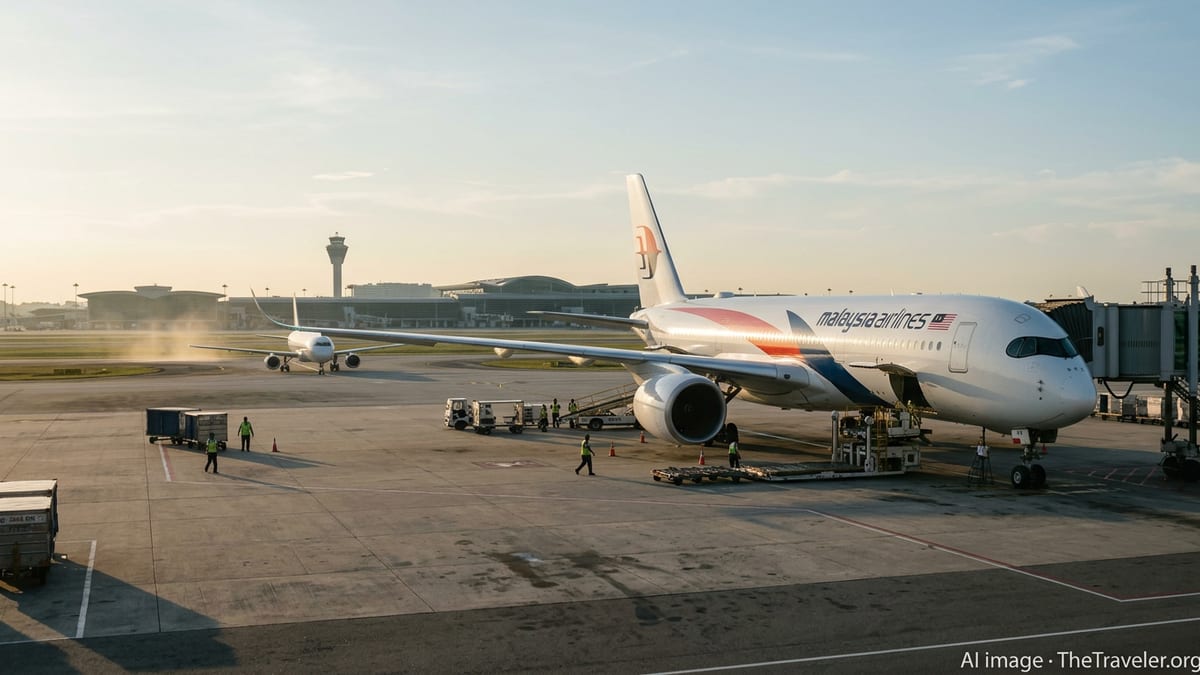
Flights Resume After Sudden Regional Airspace Closures
Malaysia Airlines is temporarily resuming return flights to Jeddah and Madinah from March 4 to March 8, 2026, following a shutdown of key Middle Eastern flight corridors that began on February 28. The airline’s parent company, Malaysia Aviation Group, confirmed that operations to these two Saudi gateways for Umrah and Hajj travel are restarting on adjusted routings that avoid sensitive airspace.
The carrier had halted services to Jeddah and Madinah late last week after escalating regional tensions led several countries to restrict or close portions of their skies to civilian traffic. That move disrupted travel plans for religious pilgrims and transit passengers, and prompted Malaysia’s authorities to issue strong travel advisories for multiple states in the region.
While Jeddah and Madinah are now back on the schedule on a short-term basis, flights will operate under tight operational controls. Longer routings and carefully chosen flight paths are being used to keep aircraft clear of the conflict areas, with Malaysia Airlines indicating that safety will take precedence over flight time and convenience.
The airline said that all other long haul services, including its key European routes, remain in operation on alternative paths that have been vetted with international aviation authorities. These detours can add flying time but are designed to minimize exposure to higher-risk airspace while keeping global connectivity intact.
Doha Still Off the Map as Security Review Continues
In contrast to Jeddah and Madinah, Malaysia Airlines’ services to Doha remain suspended at least until March 7, 2026, as the carrier continues to evaluate the security situation around Qatar and neighboring airspace. The airline has framed the continued pause on Doha flights as a precautionary measure, even as some neighboring states begin reopening selected safe corridors.
The extended suspension affects passengers using Doha as a key transit hub for Europe, Africa and the Middle East. Many travelers have been forced to reroute via other Gulf or Asian hubs, often with longer total journey times and fewer same-day connections. Travel agents report heavier reliance on alternative carriers and routings as passengers adjust plans around the ongoing disruption.
Malaysia Aviation Group said it is working closely with regulators, foreign ministries and airport operators to determine when conditions are suitable for a controlled restart of flights to Doha. Any resumption is expected to come with similar safeguards to those now in place for Jeddah and Madinah, including dynamic route planning, real-time threat monitoring and possible schedule tweaks.
Authorities in Kuala Lumpur are maintaining a strong advisory that Malaysians defer non-essential travel to several countries in the region. That guidance is likely to weigh on demand for Doha and other Middle East services even after airspace technically reopens, keeping load factors and schedules in flux for weeks.
Stranded Umrah Pilgrims Prioritized as Seats Open Up
A key focus of the temporary resumption to Jeddah and Madinah is clearing a backlog of Malaysian Umrah pilgrims who were stranded in Saudi Arabia when flights were abruptly halted. Consular officials in Jeddah have estimated that more than a thousand citizens were affected, many of them elderly travelers nearing the end of their pilgrimage packages.
With operations restored over the five day window, Malaysia Airlines is prioritizing these passengers on return services, coordinating closely with tour operators and Saudi ground teams to ensure orderly boarding and documentation checks. Additional staff have been deployed at airports in Jeddah and Madinah to assist groups, manage luggage and support those with reduced mobility.
Umrah operators in Malaysia and Saudi Arabia have spent the past several days reworking itineraries, shifting some groups to other airlines where necessary and arranging temporary accommodation extensions. Industry representatives say the temporary corridor created by Malaysia Airlines is helping to ease pressure on the system, although it may take several days for all affected pilgrims to get home.
Despite the disruption, Malaysian diplomats and airline staff in Saudi Arabia report that conditions in Jeddah, Madinah and Makkah remain calm, with ground transportation, hotels and religious sites operating normally. For many pilgrims, the main impact has been uncertainty over departure dates and the financial strain of unplanned extra nights abroad.
Operational Safeguards and What Passengers Should Expect
As flights to Jeddah and Madinah resume, Malaysia Airlines has outlined a series of safety and operational measures designed to protect passengers and crew. These include using alternative routings that divert aircraft well away from conflict zones, maintaining constant contact with regional air navigation authorities and updating route plans in response to any new advisories.
The airline is also reinforcing in-flight safety procedures and contingency planning, with cockpit and cabin crews briefed on the latest risk assessments and diversion options. While specific routing details are not being disclosed for security reasons, passengers have been told to anticipate slightly longer flight times and the possibility of last minute schedule adjustments.
From a customer experience standpoint, travelers can expect more frequent operational updates via email, mobile apps and airport displays, especially in the 24 hours before departure. Malaysia Airlines has urged passengers heading to or from Saudi Arabia to reconfirm their flight status, arrive early at the airport and stay in close contact with their tour operators or travel agents.
Flexible rebooking and refund options remain in place for some affected sectors, although these policies vary depending on the original travel date and ticket type. Travel insurers are also reporting increased inquiries from customers seeking to understand coverage for delays, rerouting and partial trip cancellations linked to regional instability.
What This Means for Broader Middle East Travel Plans
The limited restart of flights to Jeddah and Madinah highlights how airlines are trying to balance safety concerns with the need to maintain essential connectivity to the Middle East, particularly for religious travel. For many Malaysian Muslims, these routes are not leisure options but lifelines to perform pilgrimage obligations that are often planned and saved for over many years.
Travel analysts note that Malaysia Airlines’ cautious approach mirrors that of other carriers that temporarily pulled back from affected flight paths, then returned in phases as more information about airspace risks became available. The staggered restoration of services, with some cities returning sooner than others, is likely to remain a defining feature of regional aviation in the short term.
For travelers holding tickets to or through the Middle East in the weeks ahead, the situation remains fluid. While the reopening of Jeddah and Madinah is an encouraging sign for those with imminent Umrah plans, the continued suspension of Doha flights underlines that not all corridors are equally stable or predictable yet.
Industry observers say passengers should build in extra time for connections, keep itineraries flexible and monitor airline communications closely. As Malaysia Airlines and other carriers refine their schedules around the evolving security picture, travelers can expect a gradual, uneven normalization of services rather than an immediate return to pre-disruption patterns.