

More news on this day
Manchester Airport has been plunged into severe disruption as a wave of short-notice flight cancellations and schedule changes triggers an escalating travel nightmare for passengers across multiple airlines and destinations.
Get the latest news straight to your inbox!
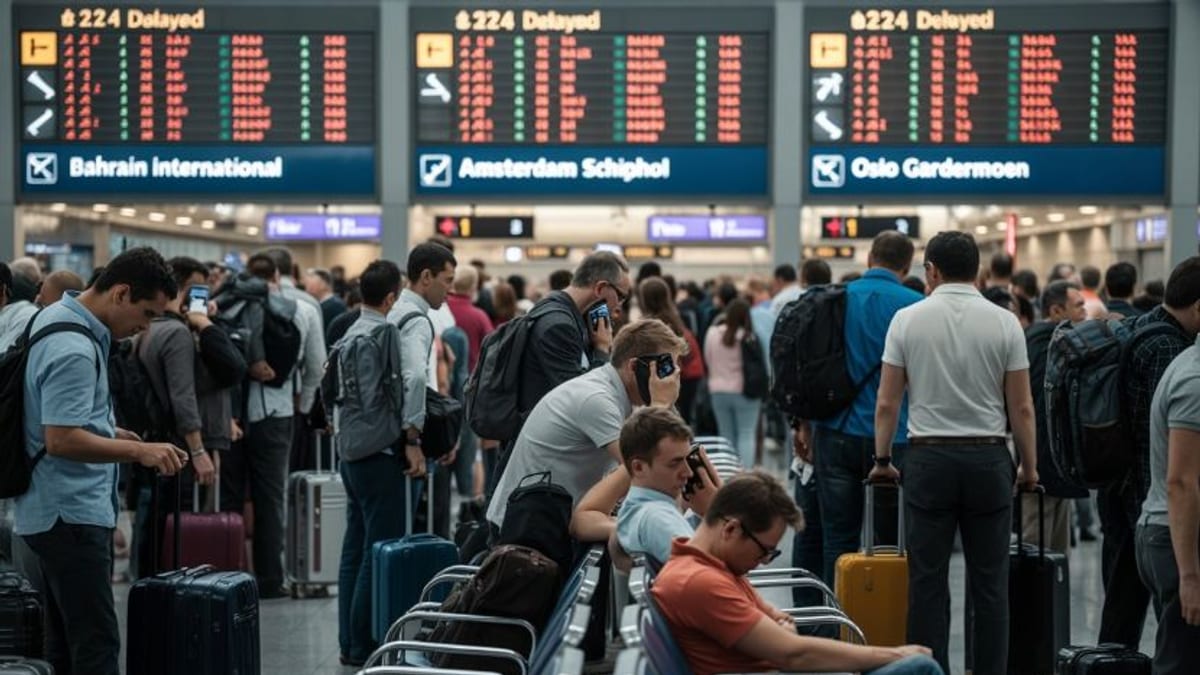
Image by Global Travel Alerts, Advisories, International Travel Alerts
Wave of Cancellations Hits Key Long-Haul and Connection Routes
Recent days have seen a marked spike in flight cancellations and abrupt schedule changes on services to and from Manchester, particularly on long-haul routes that feed major hubs in the Middle East and North America. Travellers report repeated cancellations of key departures between Manchester and Dubai, with some daily services disappearing from schedules at short notice and leaving passengers scrambling to rebook through other UK airports or alternative hubs.
Reports shared by affected passengers indicate that disruption has not been limited to one airline or route. Some itineraries involving connections through Dubai and Doha have been re-timed, extended or cancelled completely, turning previously straightforward one-stop journeys into overnight odysseys. In several cases, passengers connecting onward to destinations such as the Maldives, India and Southeast Asia have faced missed connections, unexpected long layovers and uncertainty over when they will reach their final destination.
Transatlantic links have also been affected. Publicly available information shows that the Manchester to New York route operated by Aer Lingus UK ended in late February 2026, removing a direct option and concentrating demand on remaining carriers. For travellers, that has meant fewer alternatives when other flights out of Manchester are disrupted, compounding the sense of chaos when cancellations occur at short notice and flights from rival airports still operate as planned.
Passenger accounts on aviation and travel forums describe long queues at service desks, difficulty accessing timely information, and a reliance on mobile apps and social media updates to understand whether flights are still operating. Many travellers only discover changes when checking in online or arriving at the airport, leading to crowds in departure halls as cancelled passengers vie for limited seats on the next available services.
Infrastructure Strains and Legacy of Previous Power-Cut Meltdown
The latest problems come against a backdrop of well-documented strain on Manchester Airport’s infrastructure. The hub is in the midst of a multi-year transformation programme that involves reconfiguring terminals, changing access roads and upgrading facilities. Although the airport states that these works are designed to improve resilience and capacity, frequent travellers report that the building works have added complexity to wayfinding, check-in and security at peak times.
There is also lingering concern among passengers about the airport’s ability to cope with major system shocks. In June 2024 a significant power cut at Manchester triggered widespread delays and cancellations, prompting the UK Civil Aviation Authority to issue formal guidance to airlines and airports on handling consumer rights in similar events. The memory of that meltdown continues to shape perceptions of the airport’s reliability whenever new waves of disruption occur.
While there is no single technical failure currently identified as the cause of the latest cancellations, operational pressure points are evident. Airlines using Manchester remain highly sensitive to wider airspace restrictions linked to geopolitical tensions in the Middle East, as well as to European staffing shortages and knock-on effects from severe weather in other regions. When schedules are tightly planned and aircraft are operating near capacity, any external shock can quickly cascade into multiple cancellations.
Airport users say that even when runways and terminals are open, bottlenecks in security, baggage handling and stand availability can lead to significant knock-on delays. Once rotations slip, airlines may be forced to cancel late-evening or early-morning services from Manchester to bring schedules back into balance, affecting passengers without obvious warning signs of disruption inside the terminal.
Global Aviation Turbulence Amplifies Local Chaos
Manchester’s problems are unfolding amid a wider period of instability for global aviation. Flight data collated by industry trackers and reported by outlets such as Northstar Meetings Group and other trade publications show repeated spikes in cancellations across Europe and North America this year, often driven by severe weather, staffing shortages and airspace closures. These system-wide pressures reduce the options available to airlines when disruption hits a regional hub like Manchester.
Geopolitical tensions have added further complexity. Published coverage in recent weeks has highlighted widespread cancellations on flights crossing Middle Eastern airspace, with airlines in Europe and Asia cutting or suspending services to key hubs and rerouting aircraft on longer paths. For UK travellers, Manchester’s role as a departure point for one-stop connections to South and East Asia means that any reduction in capacity through those hubs feeds directly into the experience at the northern airport.
Airlines have also become more conservative in how they schedule and recover from disruption. Recent crises, including major weather events in North America and airline-specific operational breakdowns, have prompted carriers to build in more recovery time and to pre-emptively cancel flights when they anticipate knock-on effects. In practice, this can manifest as entire days’ worth of departures from airports such as Manchester being trimmed back, particularly on routes that rely on complex international connections.
For passengers, these strategic decisions are largely invisible until the cancellation notification appears. The result is a sense that Manchester has become an unreliable starting point for complex trips, even when the root causes lie in distant airspace closures, storms or regulatory changes in other countries that reshape how airlines deploy their fleets.
What Stranded Passengers Need to Know About Their Rights
For those caught up in the current disruption at Manchester, understanding the rules on refunds, rebooking and assistance is critical. Under UK and European passenger rights regulations, which mirror the EU261 framework, travellers whose flights are cancelled are entitled to a choice between a refund of the unused ticket and re-routing to their final destination at the earliest opportunity or at a later date that suits them, subject to seat availability.
Compensation in the form of cash payments is more complex. If a cancellation is caused by extraordinary circumstances such as airspace closures, severe weather or certain types of security incidents, airlines may not be required to pay additional compensation beyond rebooking and care. However, if disruption is within the carrier’s control, such as crew rostering problems or technical issues that are not linked to external events, travellers may be able to claim set amounts based on flight distance and delay length.
Consumer advocates and travel insurers advise passengers to document everything when disruption hits. Screenshots of cancellation messages, photographs of departure boards, receipts for food and accommodation, and written confirmation of rebooking can all help when pursuing claims later. Travel insurance policies vary, but many provide cover for additional hotel nights, alternative transport and missed connections that are not fully reimbursed by airlines or package-tour operators.
Passengers are also urged to manage as much as possible through airline apps and websites, which often provide self-service options to change flights faster than airport desks during peak disruption. At Manchester, where queues can build rapidly when multiple flights are cancelled at once, those digital tools can be the difference between securing a seat on the next available departure and waiting days for an alternative.
How Travellers Can Navigate Manchester’s Ongoing Uncertainty
With operational pressures at Manchester likely to continue while renovation works progress and global aviation remains unsettled, travellers are increasingly building contingency plans into their journeys. Travel planners suggest allowing extra buffer time for connections, particularly when trips involve onward flights from major hubs such as Dubai, Doha, Istanbul or New York that are themselves exposed to regional disruption.
When booking from Manchester, choosing earlier departures in the day can offer more recovery options if flights are cancelled or heavily delayed. Morning flights provide a greater chance of securing same-day re-routing, whereas late-evening services leave passengers vulnerable to overnight delays if things go wrong. Some travellers are also opting for fully flexible or semi-flexible fares where budgets allow, in order to make changes more easily if warnings of disruption emerge before departure.
For time-sensitive journeys such as cruises, weddings or major events, a growing number of passengers are considering travelling to London or other regional airports a day early and overnighting nearby, spreading the risk across multiple departure points. While that adds cost and complexity, it can reduce the chance of a single cancellation at Manchester upending an entire trip.
Although Manchester Airport and its airline partners continue to present their long-term plans as a route to increased capacity and better resilience, current passengers are living through a difficult transition period. Until global airspace stabilises and the local infrastructure upgrades bed in, travellers using the airport are likely to face an elevated risk of cancellations and schedule changes and will need to plan accordingly.