

More news on this day
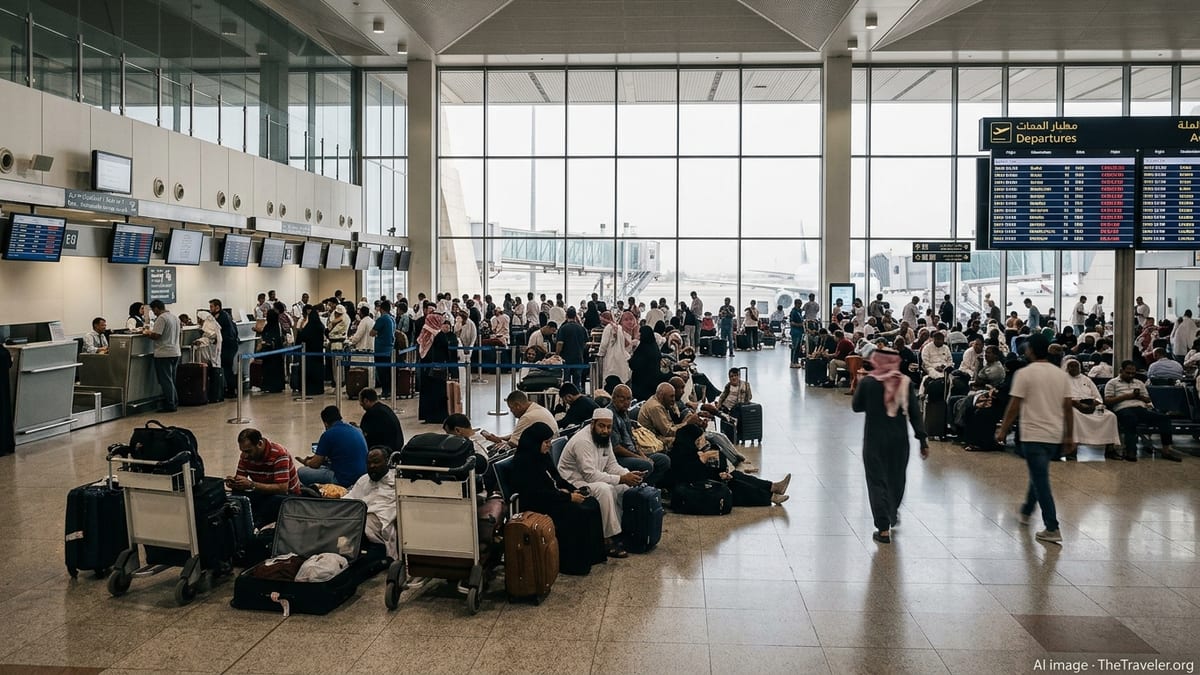
Hundreds of travelers were left stranded at King Fahd International Airport in Dammam as the Saudi hub logged at least 35 flight cancellations and 19 significant delays, disrupting operations for leading Gulf carriers and severing key links to Dubai, Cairo, Riyadh, and other major destinations across the region.
Get the latest news straight to your inbox!
Regional Turmoil Cascades Into King Fahd Flight Chaos
Recent turbulence in Middle East airspace and a tightening web of operational restrictions have converged on King Fahd International Airport, turning Dammam into one of the latest flashpoints in a broader regional aviation crisis. Publicly available aviation data and industry bulletins indicate that the airport has faced a sharp spike in schedule disruptions, culminating in at least 35 cancellations and 19 extended delays within a short window, far above typical daily averages.
The disruptions have rippled through the networks of Saudia, Qatar Airways, Emirates, Gulf Air, and Air Arabia, all of which use Dammam as a critical node for connections between the Gulf, North Africa, South Asia, and Europe. With some airspace corridors constrained or rerouted, carriers have been forced to trim frequencies, consolidate services, or divert aircraft, leaving King Fahd’s departure boards punctuated with red “canceled” and “delayed” markers.
While Saudi airports remain technically open, recent operational notices and travel advisories describe a system under strain. Regional war-related airspace closures over parts of the Gulf and neighboring states have reduced routing options and pushed more traffic through limited safe corridors, increasing congestion and tightening turnaround times. King Fahd, serving the industrial Eastern Province and a large expatriate population, has been particularly exposed to these knock-on effects.
Industry tracking and independent travel coverage suggest that the cancellations at Dammam have not been isolated events but part of a pattern affecting multiple Saudi hubs in recent days, with Dammam, Riyadh, Jeddah, and Medina collectively reporting hundreds of disrupted flights. However, the concentration of long-haul and connecting traffic in Dammam has magnified the impact on passengers using the airport as a gateway to wider networks.
Key Routes to Dubai, Cairo, and Riyadh Hit Hard
The heaviest fallout at King Fahd International has been felt on high-demand regional routes, particularly services linking Dammam with Dubai, Cairo, and Riyadh, along with onward connections “beyond” to Europe, South Asia, and Southeast Asia. Published flight summaries show that a significant share of the 35 cancellations and 19 delays involved routes to these key hubs, where passengers often rely on tight connections to long-haul departures.
Flights to Dubai have been among the most vulnerable. As Dubai’s own airports manage the aftermath of recent missile and drone incidents and subsequent capacity pressures, services from Dammam have faced a mix of outright cancellations and extended ground holds. According to recent disruption tallies for the region, Dubai has already been one of the most heavily affected airports, and any reduction or rescheduling there quickly cascades back to feeder routes from Saudi Arabia.
Links to Cairo and Riyadh have also been strained. Cairo ranks among the busiest airports in the region for delays, and reports on earlier disruption days showed extensive knock-on effects for Egypt-bound traffic. For Riyadh, recent Saudi media coverage has already documented large-scale delays and cancellations at King Khalid International Airport, highlighting how operational bottlenecks and diversions between Saudi airports can quickly create backlogs of aircraft and crews.
For travelers booked “beyond” these hubs to destinations in Europe, the Indian subcontinent, and East Asia, a canceled Dammam feeder flight can mean missing onward connections and facing rebooking across already-stretched networks. This has left many passengers at King Fahd Airport not only stranded in Dammam but effectively disconnected from entire itineraries stitched together via Gulf super-connectors.
Major Gulf Carriers Scramble to Adjust Networks
Saudia, Qatar Airways, Emirates, Gulf Air, and Air Arabia have all been touched by the disruption at King Fahd International, though in differing ways. Publicly accessible travel alerts and operational updates from the region show Gulf carriers cancelling or rescheduling flights, mounting ad hoc recovery services, and in some cases repositioning aircraft to cope with shifting demand and limited airspace.
Saudia, as the national carrier, maintains a dense domestic and regional network through Dammam, and the spike in cancellations has underscored the vulnerability of domestic and short-haul routes to wider regional instability. Recent tallies of disruptions across Saudi airports indicate that Saudia and other local carriers have shouldered much of the burden of schedule changes, particularly on routes interlinking Jeddah, Riyadh, Medina, and Dammam.
Qatar Airways and Emirates, both global network airlines that typically depend on unimpeded Gulf airspace, have faced ongoing challenges balancing safety, regulatory limits, and commercial schedules. Open-source travel advisories from consumer-rights platforms and industry consultancies describe widespread cancellations and temporary suspensions on some Middle East routes, with Doha and Dubai forced to manage substantial passenger backlogs. Any reduction in frequencies or aircraft availability for these carriers can immediately squeeze capacity on feeder routes like Dammam.
Gulf Air and Air Arabia, which serve Dammam from Bahrain and Sharjah among other points, have also had to recalibrate. Bahrain and Kuwait have implemented some of the tightest recent airspace closures, according to operational briefings, while passengers in the United Arab Emirates have reported intermittent changes to services from Sharjah. This mix of constraints has left airlines piecing together workable schedules, often at short notice, and has limited their ability to offer rapid recovery flights into and out of Dammam.
Passengers Face Overnight Waits, Uncertain Rebooking Options
For travelers on the ground at King Fahd International, the numbers on the departure board have translated into long waits, missed connections, and ad hoc sleeping arrangements in terminal seating areas. Regional and international media coverage of the Gulf airspace crisis already shows images of crowded terminals and passengers resting on floors in neighboring airports, and anecdotal reports from Saudi hubs suggest similar scenes in Dammam during peak disruption periods.
As cancellations and rolling delays mount, many passengers have struggled to secure timely rebooking options. With multiple Gulf hubs simultaneously managing high volumes of disrupted travelers, available seats on alternative routes can be scarce. Travel advisories from consumer organizations and compensation platforms indicate that some passengers across the region have been offered later departure dates, rerouting through less affected airports, or refunds, depending on airline policies and fare conditions.
The complexity of multi-leg itineraries has added to the uncertainty. A traveler scheduled from Dammam to Dubai or Doha, then onward to Europe or Asia, may need an entirely new route and carrier if their original hub is operating under capacity restrictions or facing additional security-related limitations. In practice, this has left some passengers weighing whether to wait out disruptions in Dammam, attempt to reach alternative Saudi airports, or defer trips altogether.
Travel experts quoted in recent public analyses of the situation have emphasized that passengers caught in such large-scale disruptions should document their delays carefully, stay in close contact with airlines via official apps and call centers, and review their rights under applicable consumer-protection regimes, including potential entitlements to care, re-routing, or partial refunds depending on the jurisdiction governing their ticket.
Ongoing Uncertainty for Spring Travel Across the Gulf
With the broader regional situation still volatile, the outlook for spring travel through King Fahd International Airport and other Gulf hubs remains uncertain. Economic and geopolitical analyses of the ongoing conflict in and around Iran describe a sharp drop in oil output and thousands of daily flight cancellations across the wider Middle East, underscoring that the current wave of disruptions may not be resolved quickly.
Aviation consultancies and travel-industry outlets note that airlines are adjusting schedules in rolling windows of days and weeks rather than months, making it challenging for passengers to plan with confidence. Some carriers have extended flexible rebooking and refund policies through parts of March, while others are making changes closer to departure as airspace and security assessments evolve.
For King Fahd International, the recent cluster of 35 cancellations and 19 delays highlights how quickly local operations can be upended by regional developments that are largely outside the airport’s direct control. As long as key corridors over the Gulf and neighboring territories remain constrained and major hubs such as Dubai, Doha, Cairo, Jeddah, and Riyadh continue to experience elevated disruption levels, Dammam is likely to face intermittent pressure on its own schedules.
Travelers with upcoming itineraries through Dammam and other Gulf airports are being advised in publicly available guidance to monitor flight status frequently, allow additional time for connections, and consider flexible booking options where possible. While airlines and airports work to stabilize operations, the situation at King Fahd International stands as a reminder of how intertwined the region’s aviation networks have become and how swiftly disruptions in one part of the system can leave passengers stranded hundreds of kilometers away.