

More news on this day
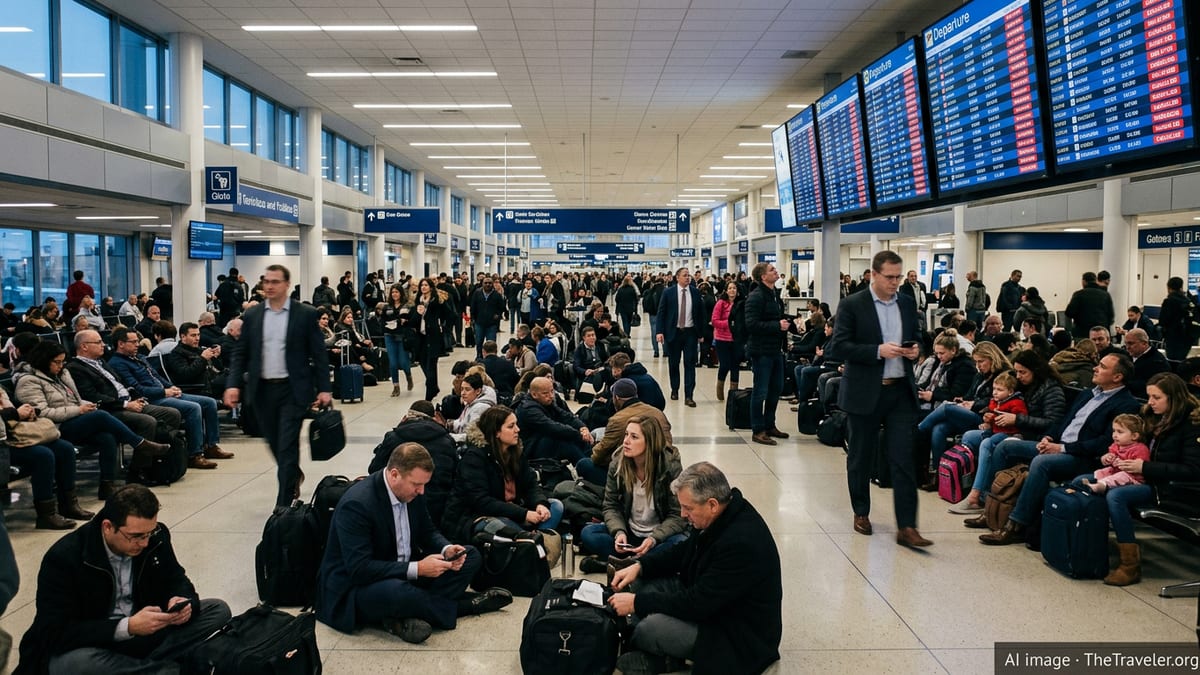
Thousands of travelers were stranded at Chicago O’Hare International Airport as a cascade of disruptions involving SkyWest, United, Delta, Southwest, and other carriers led to hundreds of cancellations and delays across North America.
Get the latest news straight to your inbox!
Severe Disruptions Centered on Chicago O’Hare
Publicly available flight-tracking data and airport status boards show that O’Hare has experienced a sharp spike in operational problems, with around 790 flights canceled and more than 830 delayed in a single turbulent period. The disruptions involve a mix of regional and major U.S. carriers, including SkyWest, United, Delta, Southwest, and several smaller airlines that operate feeder routes through the hub.
The irregular operations left thousands of passengers stuck both on the ground and in the air, as aircraft were held at gates and on taxiways awaiting departure slots, and incoming flights were diverted or returned to origin airports. Terminal concourses at O’Hare became crowded as passengers searched for updated information, alternative routings, and scarce rebooking options.
O’Hare’s role as a central connecting hub for the Midwest and beyond amplified the impact. Many travelers who were not originally bound for Chicago found themselves unexpectedly spending hours in the airport or forced to abandon complex multi-leg itineraries when key connecting flights were removed from the schedule.
Ripple Effects Across Major North American Cities
The disruption at O’Hare quickly spread through the wider North American network. Published coverage and aggregated flight-status data indicate knock-on delays and cancellations affecting routes to and from major cities including New York, Los Angeles, Toronto, and Boston. Because these airports are also major hubs, schedule changes in Chicago reverberated throughout the system.
Flights between O’Hare and New York area airports, including John F. Kennedy, LaGuardia, and Newark, reported extended delays and multiple cancellations as aircraft and crews failed to arrive on time from Chicago. Passengers attempting same-day connections between the Midwest and the East Coast were particularly exposed, with many itineraries unraveling as a single missed leg cascaded into additional missed connections.
On the West Coast, services linking Chicago and Los Angeles experienced similar pressure, with rolling delays and occasional cancellations as carriers attempted to reposition aircraft and crews. In Canada, flights between O’Hare and Toronto Pearson were disrupted, complicating travel for cross-border passengers and affecting transatlantic connections. Boston Logan also saw significant schedule adjustments related to Chicago-originating traffic, straining available seats on alternative flights.
Multiple Airlines, Shared Operational Strain
The scale of the disruption reflects how intertwined airline operations have become at major hubs. Public information shows that SkyWest, one of the largest regional carriers in North America, operates flights under the brands of several major airlines, including United and Delta. When SkyWest’s regional network is affected, the consequences ripple through the mainline schedules of those larger carriers.
United, which uses O’Hare as one of its primary hubs, experienced substantial operational strain, juggling late-arriving aircraft, crew time limitations, and a spike in customer rebooking requests. Delta and Southwest, while not as dominant at O’Hare as United, also saw affected departures and arrivals, complicating travel plans for passengers who might otherwise have used these carriers as backups when another airline’s flight was canceled.
According to industry data and past disruption patterns, even carriers with relatively few scheduled operations at O’Hare can be drawn into the turbulence. Code-share arrangements, shared regional partners, and interconnected crew schedules mean that a bottleneck at one major hub easily becomes a network-wide problem, especially during peak travel periods or in challenging operating conditions.
Passenger Experience: Long Lines and Limited Options
Travelers caught in the disruption reported long lines at customer service desks, crowded seating areas near departure gates, and difficulty accessing timely information through airline apps and airport displays. When cancellations mounted, same-day rebooking options rapidly diminished, with many of the remaining flights already heavily booked due to ongoing high travel demand.
Publicly available guidance from airlines emphasizes digital tools for managing these situations, encouraging passengers to use mobile apps and websites to request rebooking, standby, or refunds rather than waiting in line. However, when hundreds of flights are affected at once, digital channels also become congested, leaving some travelers with limited ability to secure rapid assistance.
In some cases, travelers opted to switch to alternate airports in the region or even alternative modes of transportation, such as intercity rail and long-distance buses, when it became clear that air options would not recover quickly. For those already far from home or traveling internationally, hotel availability near O’Hare and in downtown Chicago became an additional concern as passengers sought overnight accommodations at short notice.
Wider Context of Persistent U.S. Flight Disruptions
The events at O’Hare fit into a broader pattern of recurring air travel disruptions in the United States and Canada. Recent years have seen significant operational challenges triggered by severe weather, infrastructure constraints, staffing shortages, and technology failures, with high-profile meltdowns involving several major airlines. Public reports and government analyses have highlighted the sensitivity of the air travel system to localized problems that quickly grow into multi-day, multi-airport events.
Chicago O’Hare, one of the busiest airports in the world, often sits at the center of these dynamics due to its heavy traffic volume and role as a connecting hub for both domestic and international routes. Studies of delay patterns have repeatedly identified O’Hare, along with airports in New York, Los Angeles, Boston, and Toronto, as critical nodes where disruptions can significantly increase total passenger delay hours nationwide.
While airlines and airports continue to invest in upgraded infrastructure, improved scheduling tools, and expanded customer communication channels, the latest round of cancellations and delays underscores the fragility of peak-period operations. For travelers, the Chicago episode serves as another reminder that even routine itineraries through major hubs can be vulnerable to sudden and widespread breakdowns in the network.