

More news on this day
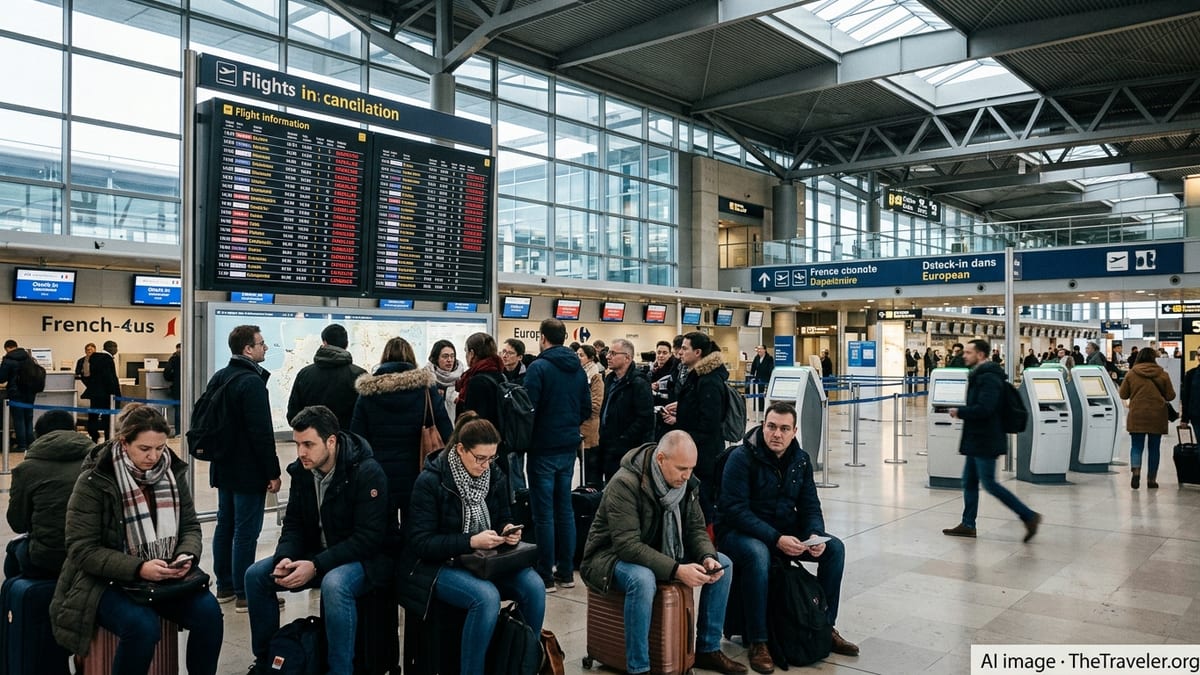
Hundreds of passengers traveling through Paris Charles de Gaulle and Paris Orly have been caught up in extensive flight cancellations as French aviation capacity is sharply reduced, prompting last-minute schedule cuts and leaving many travelers scrambling to confirm whether their flight is still operating.
Get the latest news straight to your inbox!
What Is Happening at Paris Charles de Gaulle and Orly
Recent disruptions across the French air transport network have led to significant capacity reductions at Paris Charles de Gaulle (CDG) and Paris Orly (ORY), resulting in numerous short-notice flight cancellations. Publicly available information indicates that both airports have been operating below normal capacity at various points, with some reports describing reductions of up to around 40 percent during the most affected periods to accommodate operational constraints such as de-icing, staffing imbalances and air traffic management limits.
These cancellations do not stem from a single cause. Industry analyses and recent European traffic reports highlight the combined impact of weather, French air traffic control constraints and industrial action on flights to and from Paris, with knock-on delays and cancellations across airline networks. Paris CDG has ranked among the European airports most exposed to disruption days during recent French strike and capacity-reduction episodes, while Paris Orly has seen an especially high share of departures delayed or cancelled when restrictions are in place.
For travelers, the situation translates into a patchwork of changes: some flights are operating on time, others are retimed or downgraded to smaller aircraft, and a noticeable share are cancelled entirely, often within days or even hours of departure. As airlines rebalance aircraft and crews, there can also be secondary cancellations on routes that are not directly affected by weather or airspace restrictions but are impacted by aircraft positioning problems.
How Many Flights Are Affected and Which Routes Are Most at Risk
The exact number of cancelled flights at CDG and Orly fluctuates day by day, but operational data and airline advisories point to a sustained level of disruption. During previous rounds of French capacity reductions and strike-affected days, Paris Charles de Gaulle has recorded well over one hundred delayed or cancelled departures in a single day, according to European aviation trend reports. Paris Orly has at times seen a notably high proportion of its schedule affected, reflecting its role as a dense short- and medium-haul hub.
Short-haul and intra-European services are often the first to be trimmed when airports are ordered to reduce capacity, because airlines can consolidate frequencies and re-accommodate passengers on alternative departures more easily than on long-haul services. This means flights from Paris to nearby European cities, including popular leisure and business destinations, are particularly exposed when schedules are cut back.
Long-haul operations from CDG may be somewhat more protected but are not immune. When severe weather, airspace restrictions or industrial action significantly disrupt operations, carriers sometimes cancel or reroute long-haul flights, particularly if aircraft or crews are out of position or if the airline is already operating at the limit of revised capacity caps. Passengers booked on connecting itineraries through Paris are especially vulnerable, as a cancellation on one leg can cause missed onward connections and overnight stays.
Is Your Flight on the Cancellation List
There is no single, centralized public “master list” of cancelled flights across Charles de Gaulle and Orly. Instead, each airline publishes its own operational updates and adjusts its schedules in real time. Travel industry guidance emphasizes that the only authoritative source for the status of a specific flight is the airline’s own systems combined with the departure airport’s live boards.
Passengers should start by checking their booking on the airline’s website or mobile app, using the record locator or ticket number. In most cases, any cancellation will trigger a prominent alert and options for rebooking or requesting a refund. Many major carriers also maintain dedicated disruption pages that summarize which routes are broadly affected on a given day, though these overviews may lag behind live operational changes.
For those traveling on codeshare tickets, it is crucial to verify the operating carrier. A flight sold by one airline but operated by another will typically follow the operational decisions of the airline actually flying the aircraft. In disrupted periods, this can lead to situations where one airline still displays the flight as scheduled while the operating partner has already loaded a cancellation into its systems, so cross-checking using the operating carrier’s flight number can provide more reliable information.
What Travelers Can Do If Their Paris Flight Is Cancelled
When a flight to or from Paris is cancelled, passengers are generally offered a choice between rebooking on the next available service or obtaining a refund, though specific options depend on airline policy, ticket type and the cause of the disruption. European passenger-rights rules provide additional protections for flights departing from EU airports, including CDG and Orly, and for flights operated by EU-based airlines, particularly in cases where the cause of cancellation is considered within the airline’s control.
Travel experts advise acting quickly once a cancellation notice appears, as seats on alternative flights can be claimed rapidly during broad disruptions. Using an airline’s app or website to self-rebook is often faster than waiting in airport lines, especially when large numbers of passengers are affected simultaneously. Travelers holding separate tickets for onward journeys should contact the other carriers as soon as possible, since these segments are typically not automatically protected when a preceding, unrelated leg is cancelled.
Passengers already at the airport should monitor terminal display boards in addition to their phones, as gate changes and rolling delays can occur while airlines work around capacity caps and adverse conditions. Keeping boarding passes, booking confirmations and any written notices of disruption is also advisable, as these documents can assist later when submitting reimbursement or compensation claims, or when requesting support from travel insurance providers.
Planning Upcoming Trips Through Paris Amid Ongoing Disruption
Travelers with upcoming itineraries through Paris are being encouraged by travel advisors to build extra flexibility into their plans while capacity constraints and operational challenges persist. Choosing longer connection times at CDG or Orly, avoiding the last flight of the day when possible, and considering earlier departures on critical travel days can all reduce the risk of missed connections if delays mount.
Those with non-essential trips may wish to keep an eye on airline travel waivers. When disruption is expected or ongoing, some carriers introduce flexible change policies for passengers traveling on specified dates or routes, allowing date changes without change fees, and sometimes without fare differences, if rebooked within a defined window. Monitoring airline and airport communications in the days leading up to departure can provide early warning of escalating disruption.
Given the dynamic nature of the current situation, conditions at Charles de Gaulle and Orly can improve or deteriorate quickly depending on weather, air traffic control constraints and labor developments. Until operations stabilize, anyone traveling via Paris is advised to verify flight status repeatedly in the 24 hours before departure and again before leaving for the airport, to ensure their flight is not on the growing list of cancellations.