


More news on this day
Thousands of passengers across China faced extensive disruption as major airports in Beijing, Shanghai, Chengdu, Changchun, Changsha and other cities reported 2,116 delayed and 58 canceled flights in a single operational window, affecting the networks of Air China, China United, China Eastern, Hainan Airlines and several other carriers.
Get the latest news straight to your inbox!
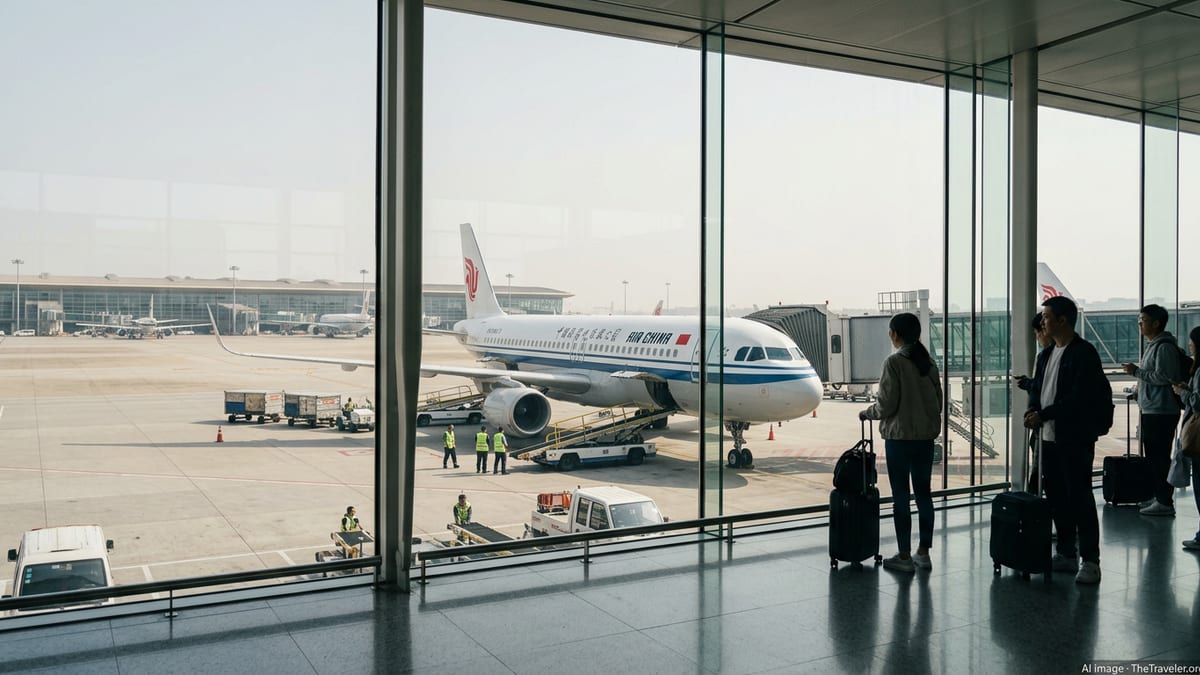
Nationwide Wave of Delays Across Key Chinese Hubs
Publicly available aviation tracking data for the latest operating period indicate that Chinese airports experienced an intense wave of irregular operations, with 2,116 flights delayed and 58 canceled across the domestic network. The disruptions were concentrated in major hubs serving Beijing, Shanghai, Chengdu, Changchun and Changsha, but extended to secondary cities as knock-on effects rippled through the system.
These figures place the current disruption among the more serious operational days for China’s busy summer schedule, although they are below the peaks reported earlier in the season when several thousand delays were recorded nationwide in a single day. Nonetheless, the combination of late departures, missed connections and scattered cancellations has created difficult conditions for both domestic and international travelers moving through Chinese gateways.
Airports in Beijing and Shanghai, which together handle some of the country’s densest traffic, appear to account for a significant share of the delayed services. Major inland hubs such as Chengdu, along with regional centers including Changsha and Changchun, are also showing elevated delay levels, suggesting a systemwide disturbance rather than a purely local issue.
The disruption has come at a time when demand for domestic travel in China remains high, with business itineraries and leisure trips combining to fill routes between coastal economic centers and interior provincial capitals.
Impact on Air China, China Eastern and Other Carriers
The flight-status data show that the current wave of disruption is not limited to a single airline. Air China, China United Airlines, China Eastern Airlines and Hainan Airlines are all listed among the carriers with affected services, alongside additional operators on shared routes and codeshare arrangements.
Air China, with its extensive presence at Beijing Capital and Beijing Daxing as well as major secondary hubs, appears heavily exposed to delays as congestion and schedule changes accumulate through the day. China Eastern, a leading operator at Shanghai Pudong and Shanghai Hongqiao, is similarly affected where tightening departure and arrival slots leave limited margin for recovery when operations fall behind schedule.
Hainan Airlines and China United, which operate a mix of trunk and regional routes, are also reported among the disrupted airlines. Some flights are seeing extended ground times, while others are being canceled outright when rotations can no longer be maintained. This pattern mirrors recent weeks, when published coverage has highlighted repeated operational strains for several Chinese carriers on both domestic and regional international services.
In practical terms, passengers are experiencing long queues at check in, rebooking desks and security checkpoints, along with crowded gate areas as departure times move repeatedly. For travelers with tight onward connections, modest initial delays can cascade into missed flights and forced overnight stays.
Travelers Face Missed Connections and Overnight Disruptions
Reports from passenger forums and recent travel accounts suggest that the current disruptions are compounding a broader pattern of schedule volatility in China’s aviation market during 2026. Travelers have frequently described late-notice cancellations, significant re-timings and route changes that alter connection points or extend layovers by several hours.
Typical scenarios include domestic legs arriving too late to meet long haul departures, partial cancellations on multi segment tickets that force last minute re-routing, and situations in which an outbound flight is canceled while the corresponding return segment remains active in the booking system. In some cases, passengers only discover changes after proactively checking airline apps or online tools rather than through direct notification.
At ground level, large volumes of delayed flights can quickly stretch available resources at major terminals. Seating, food outlets and customer service counters are often unable to absorb surges in stranded passengers, leading to long waits for updated information and assistance. Even when airlines are able to provide rebooking options, alternative flights may not depart until late in the evening or the following day, particularly from already congested airports.
Travel guidance published by consumer sites encourages passengers flying within or through China to monitor their flight status closely in the days and hours before departure, arrive at the airport earlier than usual, and prepare contingency plans, including flexibility in hotel and ground transport reservations.
Possible Drivers: Weather, Congestion and Operational Constraints
While specific causes for individual delays and the 58 recorded cancellations vary by route and airline, the pattern aligns with a mix of operational and environmental pressures. In recent months, public aviation dashboards and industry commentary have pointed to periods of unsettled weather, capacity constraints at major hubs, and adjustments to airline schedules as contributing factors.
Heavy summer rainfall and thunderstorms around Beijing and Shanghai can trigger temporary flow-control measures, forcing airlines to hold or reroute aircraft and compress departure banks into narrower time windows once conditions improve. This, in turn, drives runway congestion and longer taxi times, which then propagate delays throughout the day.
At the same time, Chinese airlines are still fine tuning their post pandemic route networks and fleet deployments. Published analyses have noted spikes in cancellation volumes at certain hubs when carriers recalibrate schedules, temporarily ground aircraft for technical checks, or rebalance capacity between domestic and regional international markets. On busy days, even minor operational hiccups can tip a tightly timed rotation into unworkable territory.
Although comprehensive official explanations for each disruption event are not always available, the convergence of weather, airspace management, airport capacity and airline scheduling decisions appears to be shaping the current disruption landscape reflected in the latest figures.
What the Latest Disruptions Mean for Upcoming Travel
The scale of the 2,116 delays and 58 cancellations across Beijing, Shanghai, Chengdu, Changchun, Changsha and other cities offers a snapshot of the current volatility that travelers may encounter when flying in China in the coming weeks. Even when most flights ultimately depart, elevated delay levels can undermine tight itineraries and reduce the reliability of same day connections.
Travel industry commentary suggests that passengers planning complex journeys involving multiple Chinese cities, or those linking Chinese domestic flights with long haul departures, may wish to build longer buffers into their schedules. Allowing extra hours between segments, or planning an overnight stop before major international legs, can reduce the risk of expensive last minute changes when irregular operations occur.
For airlines, the latest disruption figures highlight the importance of operational resilience at key hubs. Carriers that can deploy spare aircraft, flexible crew rosters and robust customer communication tools are better positioned to recover from sudden spikes in delay and cancellation volumes. Conversely, operators running near the limits of available capacity may find it harder to restore normal schedules quickly after a disruptive event.
As China’s aviation market continues to recover and expand, the interplay between growing demand and structural constraints at major airports is likely to remain a key factor determining how often days like the current one occur, and how deeply they affect passengers using the country’s extensive domestic and international networks.