


More news on this day
Germany’s rail network was thrown into chaos late on June 23 when a nationwide IT maintenance problem knocked out a critical communications system, forcing trains across the country to grind to a sudden halt and stranding tens of thousands of passengers at stations and on platforms.
Get the latest news straight to your inbox!
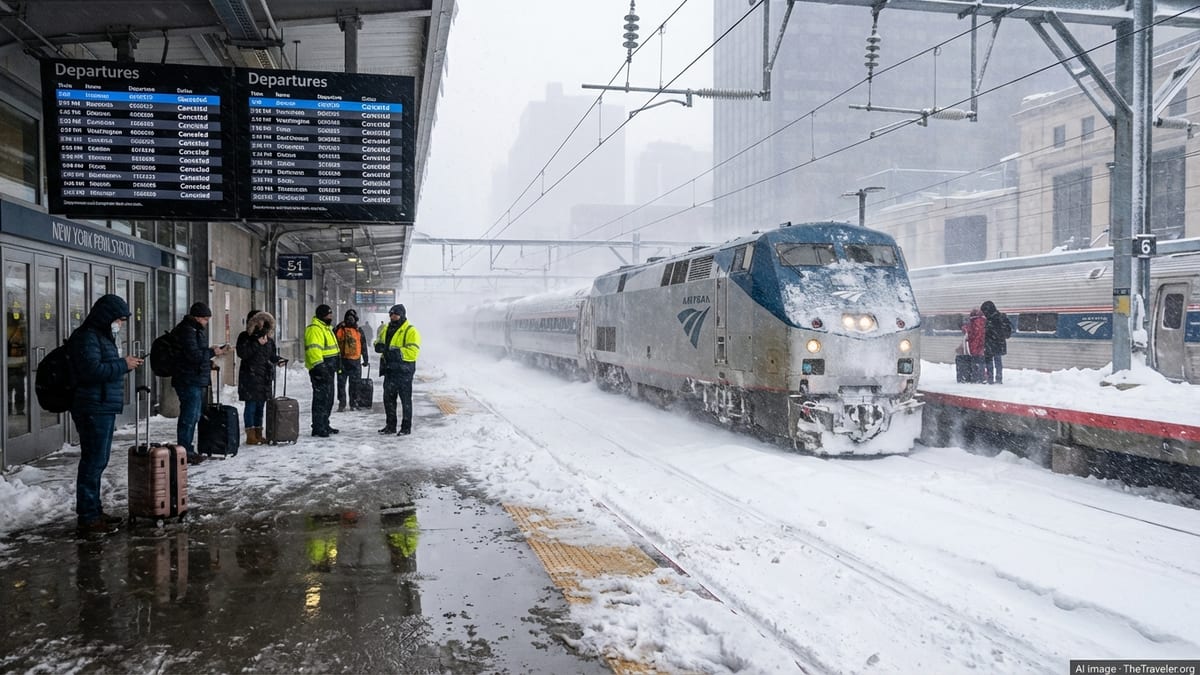
IT maintenance glitch triggers nationwide standstill
Published coverage indicates that the disruption began on the evening of June 23, when the GSM-R digital radio network used for operational communication on Germany’s railways failed during scheduled maintenance work. The outage affected internal communication between drivers, dispatchers and control centers, making it impossible to safely route trains across the network.
Germany’s state-owned operator Deutsche Bahn halted all long-distance and most regional services, instructing trains to remain at stations or other safe locations. Reports describe services freezing almost simultaneously around the country, an unusual step in a system that typically tries to maintain at least limited operations during technical incidents.
According to multiple news reports, the communications failure lasted for roughly two and a half hours before the network could be stabilized using backup systems. Trains began moving again shortly after midnight on June 24, but knock-on delays and cancellations continued into the following morning as operations were restarted and rolling stock was repositioned.
Publicly available information suggests that the root cause lay in maintenance activities on the communications infrastructure, rather than an external cyberattack. The incident nevertheless highlighted how dependent modern rail operations have become on complex IT systems and standardized digital radio technology.
Travelers stranded at hubs and borders
The sudden halt caught passengers across Germany off guard, including those in key hubs such as Berlin, Frankfurt, Munich and Cologne. Photos and eyewitness accounts in local and international media describe crowded concourses, long queues at information counters and confused travelers trying to rebook journeys or find overnight accommodation.
Many long-distance services that connect Germany with neighboring countries were also affected. Passengers heading to or from Belgium, the Netherlands, Switzerland, Austria and the Czech Republic reported missed connections and extended journey times as international trains were held at German stations or turned back at border points.
Rail travelers arriving from abroad late on June 23 found onward German services suspended, with some resorting to overnight buses, car rentals or last-minute hotel stays. Others were advised to rebook journeys for June 24, once the network had sufficiently recovered to handle near-normal traffic.
Reports indicate that Deutsche Bahn introduced a range of customer measures, including accepting tickets on alternative routes and offering hotel or taxi vouchers where possible. However, limited room availability in major cities and incomplete information at stations meant that many travelers faced long waits and improvised solutions.
Lingering disruption for domestic and business travel
Even after services resumed, the disruption had a cascading effect across Germany’s dense rail timetable. Early-morning commuters on June 24 encountered delayed and overcrowded trains as operators attempted to reset schedules, circulate empty trains to where they were needed and clear stranded rolling stock from depots and sidings.
Business travelers in particular experienced missed meetings, disrupted conferences and interrupted trade-show schedules in cities such as Frankfurt, Düsseldorf and Berlin, where high-speed rail is a central part of domestic mobility. Rail’s role as a lower-carbon alternative to short-haul flights also meant that many corporate travelers had deliberately opted for trains, only to be caught in the outage.
Tourism flows were similarly affected. Visitors heading to popular regions such as Bavaria, the Rhine Valley and the Baltic coast reported extended travel times and last-minute itinerary changes. Travel industry observers noted that the incident came at the height of the early-summer season, when capacity is already stretched by leisure demand and school holidays in parts of Europe.
While full network shutdowns remain rare, recent summers have already brought high-profile episodes of delay and crowding on Germany’s railways due to infrastructure work, extreme weather and staff shortages. The latest IT-related stoppage adds another layer of uncertainty for domestic and international travelers planning rail-based itineraries through Europe’s largest economy.
Spotlight on Deutsche Bahn’s digital resilience
The outage has intensified scrutiny of Deutsche Bahn’s digital infrastructure and wider modernization plans. Previous debates about punctuality and network capacity have largely focused on aging tracks, bottlenecked junctions and construction sites. This week’s failure shifted attention to the vulnerability of the systems that coordinate an increasingly complex timetable.
GSM-R, the standard affected in this incident, is widely used across European railways as the backbone for voice and data communication between trains and control centers. Technical reports and European rail agency documents describe it as a mature but gradually aging technology that will eventually be replaced by newer, 5G-based communication standards. The German outage is likely to fuel questions about how redundancy is managed and how maintenance is scheduled on such mission-critical systems.
Commentary in German and international media has highlighted concerns about whether sufficient backup capacity and failover procedures were in place, given that a maintenance task could temporarily disable nationwide operations. Industry analysts suggest that operators will face pressure to review risk assessments, simulation exercises and the sequencing of IT work that touches core operational platforms.
For policymakers, the incident may feed into existing discussions about long-term investment in rail infrastructure and the balance between capacity expansion, routine maintenance and digital upgrades. With rail positioned as a cornerstone of national climate and mobility strategies, episodes that undermine confidence in reliability can quickly become political issues.
What rail passengers should expect next
By June 24, published coverage indicated that most services were running again across Germany, although residual delays persisted on some long-distance and regional routes. Timetables were expected to normalize progressively over the following days as rolling stock rotations and crew rosters returned to standard patterns.
Travel experts advise passengers scheduled to transit Germany in the coming days to build extra buffer time into itineraries, particularly when connecting to flights or cruise departures. Checking live departure boards shortly before leaving for the station and favoring earlier services in the day can provide greater room for maneuver if disruptions reoccur.
For international visitors, the incident serves as a reminder that rail journeys, while generally efficient and environmentally favorable, are increasingly dependent on digital infrastructure. When planning multi-leg trips across Europe, many tour operators now recommend flexible tickets where possible, overnight stays at key hubs rather than tight same-day connections, and travel insurance that explicitly covers missed rail segments.
Industry observers expect Deutsche Bahn and its partners to publish further technical details and internal reviews in the coming weeks. Travelers and the broader tourism sector will be watching closely to see how lessons from the outage are integrated into updated maintenance regimes and contingency planning across Germany’s strategic rail network.