

More news on this day
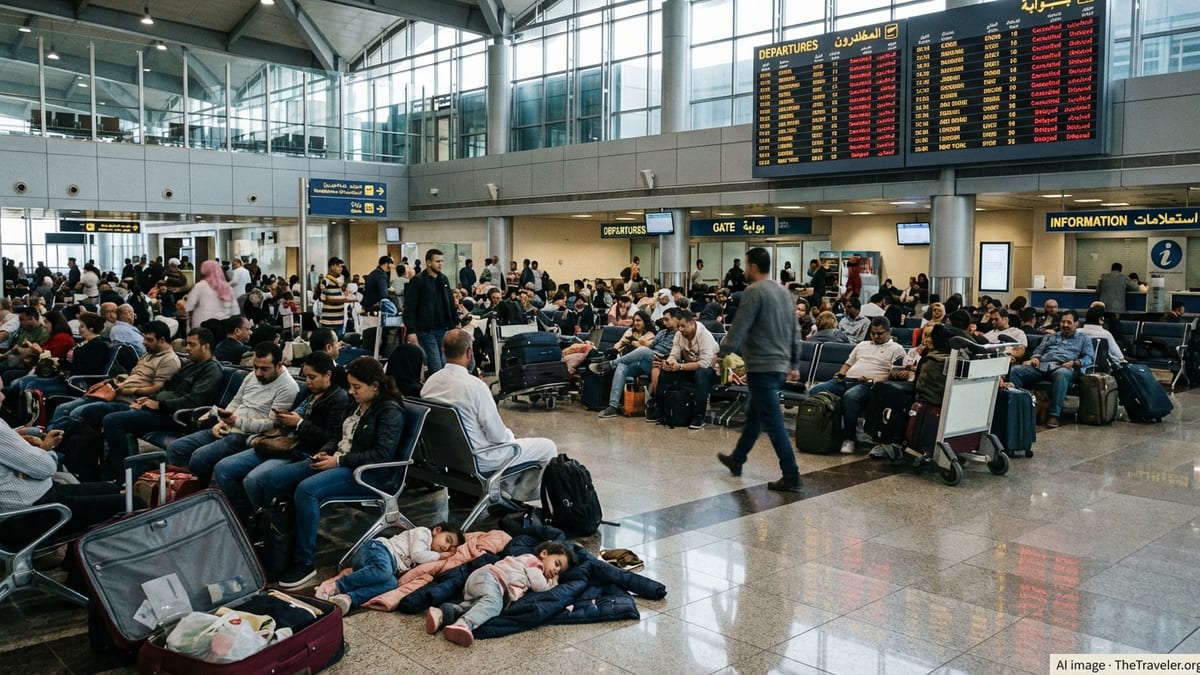
Hundreds of passengers were left stranded at Kuwait International Airport today after at least 80 flights were cancelled and 17 delayed, as airlines including Emirates, Saudia, IndiGo, Flydubai, Kuwait Airways and Gulf Air curtailed operations amid rapidly escalating regional airspace closures linked to US and Israeli strikes on Iran.
Regional Airspace Closures Ripple Into Kuwait
The disruption in Kuwait is part of a fast‑moving aviation crisis sweeping across the Middle East after coordinated strikes on Iran triggered cascading airspace shutdowns and flight suspensions in several Gulf states. Kuwait, along with Bahrain, Qatar, Iran and Iraq, has closed its airspace or imposed heavy restrictions, forcing airlines to cancel services or divert aircraft away from traditional transit corridors between Europe, the Gulf and Asia.
Flight tracking data and airport movement figures indicate that services connecting Kuwait to major regional hubs such as Cairo, Bahrain, Jeddah and Abu Dhabi have been among the hardest hit, with many departures scrubbed at short notice. Long haul routes to and from global cities including London and New York have also faced cancellations or extended delays as carriers attempt to reroute around conflict-affected skies.
Aviation analysts say the Gulf, which normally operates as a high‑capacity bridge between continents, has effectively become a bottleneck overnight. Airlines that rely on Kuwait and neighboring hubs for connections are facing longer flight times, higher fuel burn and mounting operational complexity as they thread aircraft through the shrinking pockets of open airspace.
Major Carriers Grounded or Rerouted
At Kuwait International Airport, regional and international airlines significantly pared back schedules through the day. Kuwait Airways, the national carrier, cancelled multiple departures to Gulf and Levant destinations and warned that further suspensions were likely as authorities review airspace safety assessments hour by hour.
Emirates and Flydubai, which normally operate busy shuttle services between Kuwait and Dubai, cut flights amid a wider shutdown of operations at UAE hubs and the closure of key transit corridors. Saudia reduced services linking Kuwait with Jeddah and other Saudi gateways, while Gulf Air scaled back Bahrain flights as its own base contends with a wave of cancellations.
Indian low cost carrier IndiGo, an increasingly important player in Kuwait’s labour and leisure markets, also cancelled and delayed services connecting the emirate with major Indian cities. Airline statements have emphasized passenger safety and compliance with government directives, but they offer few specifics on when full schedules might resume, reflecting the fluid nature of the security situation.
Passengers Face Long Waits and Limited Information
Inside Kuwait International Airport, the sudden reduction in movements translated into crowded terminals, snaking queues and growing frustration. Passengers reported spending hours at check in counters and boarding gates before learning that their flights had been cancelled or postponed indefinitely, often with little advance notice or clear rebooking guidance.
Families heading for holidays in Cairo and Bahrain, overseas workers returning to jobs in Jeddah and Abu Dhabi, and students bound for London and New York were among those stranded. Many travellers scrambled to secure scarce hotel rooms or alternative seats on the few flights still operating, while others opted to return home and wait for updates from airlines.
Ground staff and call centers struggled to keep pace with the volume of disruption as schedules shifted repeatedly throughout the day. Travel agents in Kuwait City reported a surge in calls from clients seeking clarification on visa validity, ticket refunds and the feasibility of rerouting through alternate hubs such as Istanbul or Riyadh, themselves under heavy operational strain.
Knock On Effects for Global Connectivity
Although the worst of today’s disruption was concentrated in the Gulf, the impact quickly spread along international routes that depend on Middle Eastern hubs. Flights linking Europe and North America with South and Southeast Asia commonly transit through Kuwait, Dubai, Abu Dhabi, Doha and Bahrain, meaning cancellations in one hub can leave passengers stranded thousands of kilometers away.
Airlines in Europe and Asia began proactively suspending or rerouting services that would normally pass through closed airspace, extending flight times and compressing already tight aircraft rotations. Airport operators warned that irregular operations could persist for several days, even if airspace restrictions are eased, while displaced aircraft and crews are repositioned and backlogs of stranded passengers are cleared.
Industry experts noted that today’s events underscore how dependent global travel has become on a handful of Gulf super‑connectors and regional gateways such as Kuwait. Any prolonged closure or partial shutdown in this corridor could pressure airline finances, disrupt cargo flows and challenge the resilience of international networks built around fast turnarounds and finely tuned schedules.
Uncertain Outlook for Travelers and Airlines
Aviation authorities in the region have not provided a firm timeline for reopening restricted airspace, stressing that safety assessments will guide any decision to lift or modify current constraints. Airlines are advising passengers booked to or through Kuwait in the coming days to check flight status frequently and consider deferring non essential trips until operations stabilize.
Travel insurers and consumer advocates are meanwhile fielding questions about coverage for cancellations and delays linked to conflict and airspace closures, which are often treated differently from routine operational disruptions. Travelers are being urged to keep all receipts for additional expenses and to document communications with airlines as they seek refunds or alternative arrangements.
For now, Kuwait International Airport remains a symbol of the broader aviation turmoil gripping the Middle East, with rows of grounded aircraft on the tarmac and departure boards filled with cancellations. Whether the crisis proves a short, sharp shock or the beginning of a more sustained disruption will depend on fast changing geopolitical developments far beyond the airport perimeter.