

More news on this day
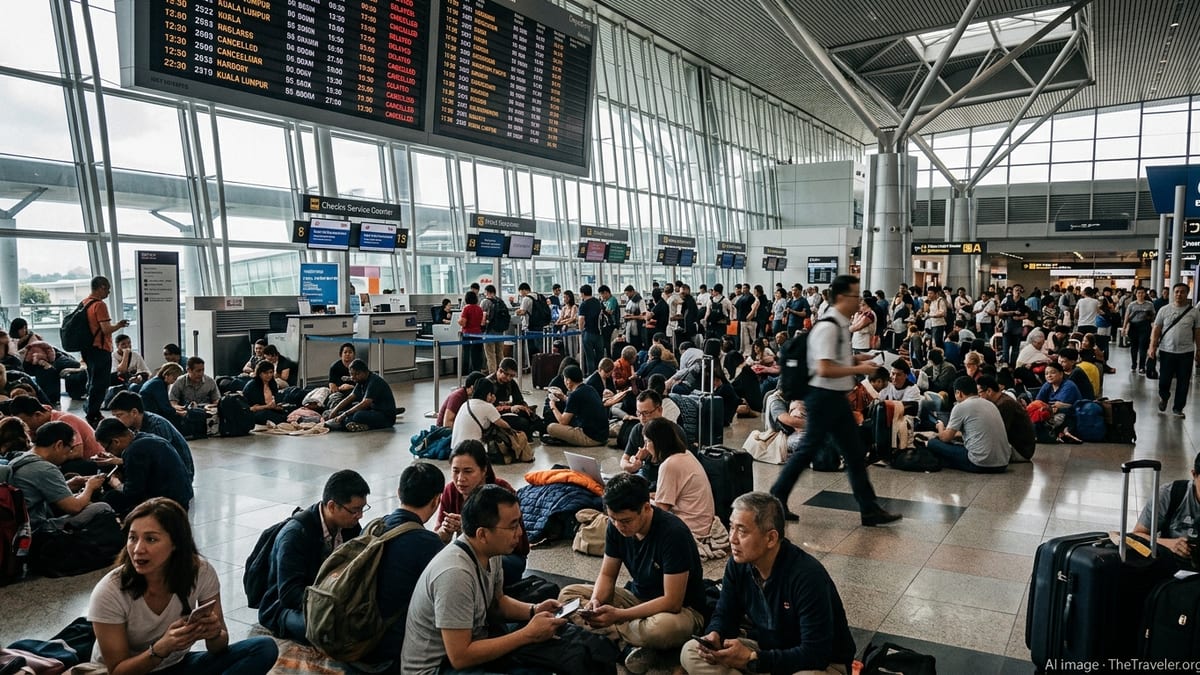
Hundreds of passengers were left stranded at Kuala Lumpur and Penang airports after a wave of operational disruptions led to 298 delayed and 12 cancelled flights, snarling major routes operated by Malaysia Airlines, AirAsia, Emirates, Singapore Airlines and other carriers to New York, Paris, Dubai, Singapore and several international destinations.
Get the latest news straight to your inbox!
Major Malaysian Hubs Hit by Widespread Disruptions
The latest disruption unfolded across three key Malaysian gateways: Kuala Lumpur International Airport, Penang International Airport and Sultan Abdul Aziz Shah Airport in Subang. Publicly available flight-tracking data and local media reports indicate that the combined impact reached 298 delayed departures and arrivals, alongside 12 outright cancellations, over a compressed operating window.
The scale of the disruption at Kuala Lumpur International, Malaysia’s primary long-haul hub, had the most visible impact. Long queues formed at check in, security and airline service counters as passengers sought rebooking options, meal vouchers and updated information on revised departure times. At Penang International, which handles a significant mix of domestic and regional traffic, knock-on delays built through the day as inbound aircraft arrived behind schedule.
Sultan Abdul Aziz Shah Airport, better known as Subang Airport, experienced a smaller share of the schedule disruption in absolute numbers but still saw a cascade of late-running domestic and short-haul regional services. With limited capacity and fewer alternative flight options than Kuala Lumpur International, even a modest number of delays quickly translated into extended waiting times for affected travelers.
Operational data suggests that departure banks during peak travel periods were particularly affected, with some flights pushed back by several hours. As aircraft and crew rotated out of sequence, delays multiplied across the network, especially on routes that rely on tight turnarounds and onward international connections.
Impact on Major Airlines and Long-Haul Routes
The disruption hit a broad range of airlines that rely on Malaysian airports as origin, destination or connecting points. Malaysia Airlines and AirAsia, which together account for a large share of domestic and regional lift, saw numerous services rescheduled or held on the ground while crews and aircraft were repositioned.
Long-haul and regional giants were also affected. Emirates flights linking Kuala Lumpur with Dubai, and onward to Europe and North America, experienced delays that disrupted connecting itineraries to cities such as Paris and New York. Singapore Airlines services between Malaysia and Singapore, a key shuttle corridor feeding the carrier’s global network, were also subject to schedule changes, creating challenges for passengers with tightly timed onward legs.
Other international carriers serving Kuala Lumpur and Penang faced similar complications as arrival delays forced adjustments to departure slots. For travelers on multi-segment itineraries, particularly those routed via the Middle East, Europe or Southeast Asia’s biggest hubs, missed connections led to enforced overnight stays and rerouting on alternative services with limited remaining seat availability.
While the number of fully cancelled flights remained comparatively small relative to total traffic, each cancellation represented hundreds of displaced passengers. Reaccommodation became more complex as seats quickly filled on remaining departures, especially on high-demand routes to major global cities.
Stranded Passengers Confront Long Queues and Uncertain Plans
Scenes inside affected terminals reflected a familiar pattern from other recent global aviation disruptions. Passengers clustered around departure boards as delay notifications updated throughout the day, while lines at airline customer-service counters lengthened whenever new schedule changes were posted.
Families, business travelers and transit passengers reported spending hours in terminals as they waited for revised boarding times or sought alternative connections. With some long-haul services pushed to late-night or next-day departures, hotel availability near the airports tightened, leaving certain travelers to rest in gate areas and public seating zones.
Retail and food outlets within the terminals experienced surges in demand as stranded passengers extended their stays airside. At Kuala Lumpur International and Penang International, some travelers turned to airport rail links and taxis to explore options at other nearby airports, though capacity constraints and synchronized delays limited the effectiveness of such workarounds.
Travel forums and social media platforms showed numerous reports of travelers attempting to rebook online or via airline apps, with mixed success depending on carrier capacity and fare rules. In many cases, passengers resorted to in-person assistance to resolve complex multi-leg tickets involving multiple airline partners or codeshare arrangements.
Ripple Effects Across Regional and Global Networks
The effect of the delays extended well beyond Malaysia’s borders. Because Kuala Lumpur and Penang serve as important waypoints on routes connecting Southeast Asia to the Middle East, Europe and North America, disruptions in departure banks cascaded into missed and delayed connections across several continents.
Flights from Kuala Lumpur to Dubai and onward to European cities such as Paris, as well as transatlantic services routing through Middle Eastern hubs to New York, were particularly vulnerable. Even short initial delays out of Malaysia sometimes resulted in passengers arriving after the departure of their onward long-haul sectors, forcing airlines to rebook them on later services with constrained seat availability.
Short-haul regional networks were also affected. Delays on Malaysia Airlines and AirAsia domestic routes feeding Kuala Lumpur International and Penang International created knock-on effects for travelers connecting to international flights operated by partners such as Emirates and Singapore Airlines. This interconnectedness meant that a disruption originating in Malaysia could impact flight schedules and passenger itineraries as far away as Europe and North America.
Industry analysts note that aviation networks remain susceptible to such cascading issues whenever several busy airports experience concurrent disruption. Once rotations fall out of alignment, airlines often need multiple operational cycles to restore full schedule stability, especially during peak travel periods or when aircraft utilization is already high.
What Travelers Can Do if Their Flight Is Affected
Travel specialists recommend that passengers with upcoming flights to or from Kuala Lumpur, Penang or Subang closely monitor their itineraries through airline apps, email notifications and airport departure boards. Same-day schedule changes are common during periods of disruption, and early awareness can improve the chances of securing favorable rebooking options.
For those already at the airport, queuing at customer-service counters remains one route to assistance, but travelers may find faster solutions by simultaneously using digital channels. Many airlines now allow self-service rebooking onto alternative departures within a defined time window, subject to seat availability and fare conditions.
Passengers on complex itineraries involving multiple airlines or long-haul connections may benefit from contacting the ticketing agent or travel company that originally issued the booking, as these providers often have additional tools to modify interline and codeshare tickets. Keeping all documentation, boarding passes and receipts organized can help when requesting any applicable reimbursements for meals, accommodation or ground transportation offered under airline policies.
With operations gradually re-stabilizing, observers expect schedules to normalize over the next series of rotations, although some residual delays may persist. Travelers planning near-term journeys through Malaysian airports are being advised to build in extra time for check in and connections and to prepare for possible last-minute adjustments to their travel plans.