


More news on this day
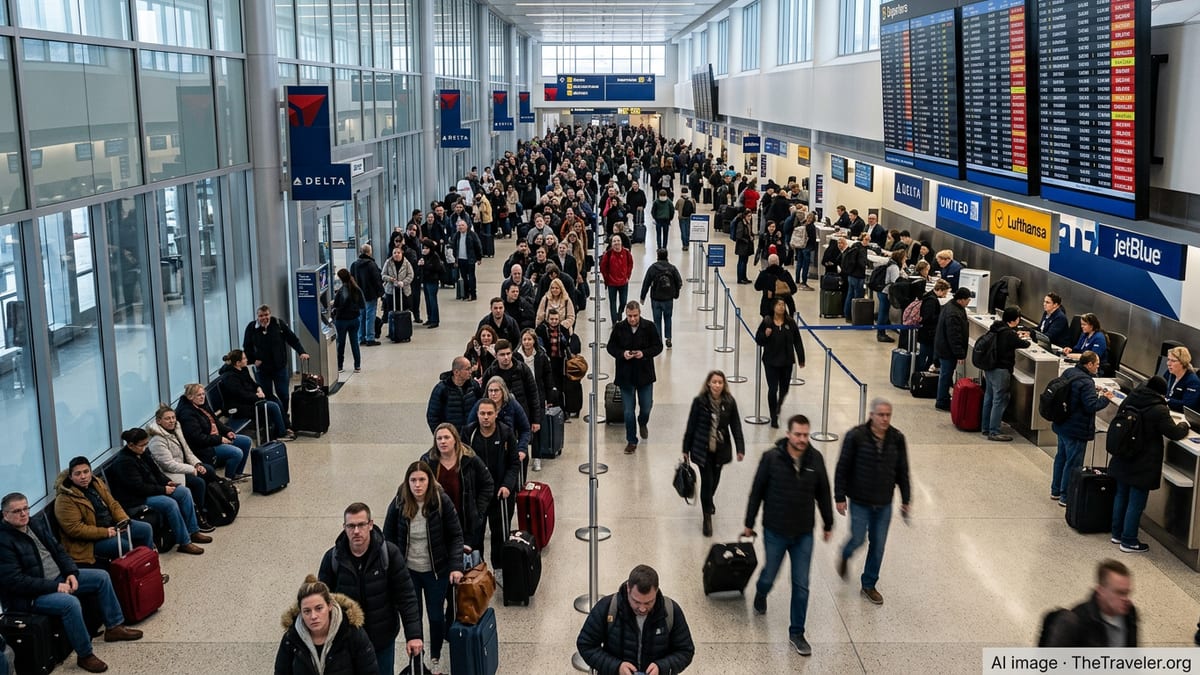
American Airlines passengers connecting through Charlotte Douglas International Airport are facing extensive disruptions as a fresh wave of delays and cancellations ripples across one of the carrier’s busiest hubs at the height of the summer travel season.
Get the latest news straight to your inbox!
Weather, Congestion and Construction Converge
Recent operational data and passenger reports indicate that Charlotte Douglas International has endured repeated days of heavy disruption in June and early July 2026, with American Airlines at the center of the turbulence. Thunderstorms moving through the Carolinas, coupled with air traffic flow controls and already tight schedules, have produced rolling delays that cascade throughout the network.
Independent disruption trackers describe several spikes in late June when well over one hundred departures and arrivals at Charlotte were delayed or canceled in a single day, disproportionately affecting American flights that rely on the airport as a primary connecting hub. These patterns follow earlier episodes in June during which Charlotte experienced similar meltdowns, with triple-digit delay counts reported across American and its regional partners.
Long-planned infrastructure work is adding another layer of complexity. Federal aviation construction impact reports show that runway and airfield projects around Charlotte, including work connected to the long-debated decommissioning and rehabilitation of runway 5/23 and associated taxiway changes, are scheduled through mid-2026. Those projects are identified as having the potential to reduce capacity and increase delays during certain phases, amplifying the effect of bad weather or operational hiccups.
As a result, even routine afternoon thunderstorms can tip the airport into widespread disruption, with gate holds, ground stops, and airborne holding patterns quickly multiplying across the American Airlines network centered on Charlotte.
Hub Structure Leaves American Flyers Exposed
Charlotte Douglas functions as a fortress hub for American Airlines, meaning the carrier and its affiliates operate the vast majority of flights in and out of the airport. That status brings efficient connections and broad route choices when operations are smooth, but it also means that any concentrated disruption at Charlotte reverberates across dozens of spokes in the United States, the Caribbean, and Latin America.
Publicly available schedule data shows dense banks of American departures from Charlotte clustered in short windows throughout the day, designed to maximize connections. When storms, air traffic restrictions, or staffing issues undercut even one of those banks, missed connections mount quickly. Passengers on leisure routes, such as limited-frequency Caribbean services, are particularly vulnerable, as a single delay can erase a large share of a short vacation.
Minimum connection time guidance for American at Charlotte is typically set at around three quarters of an hour for domestic-to-domestic connections, but congestion and construction mean many travelers now experience far tighter margins in practice. Reports from frequent flyers describe sprinting between distant concourses as boarding times shift and gate changes stack up, with some noting that even “legal” connections feel increasingly precarious on peak days.
Because so many regional flights feeding Charlotte are operated by American’s affiliates, delays on those smaller jets can also strand travelers far from major alternatives, extending the impact of the hub’s operational stumbles across smaller communities throughout the Southeast and beyond.
Passengers Describe Rolling Delays and Missed Connections
Across social media and travel forums, passengers connecting through Charlotte in June 2026 report a pattern of rolling delays at American Airlines that often stretch into overnight disruptions. Accounts from recent days describe flights that were initially pushed back in 30 to 60 minute increments before eventually departing many hours late, or being canceled outright after travelers had already spent much of the day at the airport.
Several itineraries involving Charlotte have been described as turning into 12- to 24-hour ordeals, with travelers sleeping in terminals or nearby hotels while waiting for available seats on rebooked flights. In some cases, passengers say they missed international connections after moderate delays into Charlotte left too little time to clear the concourse and reach their onward gates.
These experiences reflect a broader tension between airline scheduling and airport capacity. When a hub is operating at or near its limits, there is little slack for recovery once the operation encounters thunderstorms, crew timing constraints, or air traffic restrictions. As the number of disruptions escalates, options for same-day rebooking narrow, especially during peak summer travel periods when flights are already heavily booked.
In Charlotte’s case, travelers have also highlighted the impact of long walks between concourses, crowded gate areas, and ongoing construction in certain terminal zones, all of which can make tight connections feel even more fragile when departure times are in flux.
Strategic Shifts and Rising Costs Pressure the Network
The recent wave of delays is unfolding against a backdrop of strategic adjustments by American Airlines at Charlotte linked to cost pressures and fleet deployment decisions. Local news coverage in early June detailed how the airline has been suspending or trimming certain routes from the airport as it contends with rising jet fuel expenses and rebalances its network.
While those route changes are relatively limited compared with the size of American’s Charlotte operation, they signal an environment in which the carrier is closely watching profitability on marginal services. At the same time, high passenger demand and constrained aircraft availability leave little room to add capacity on short notice when disruptions occur, making it harder to absorb surges in misconnected travelers.
Regional affiliates that operate under the American brand are also navigating tight staffing markets for pilots, flight attendants, and ground crews. Industry observers note that any shortfall in those areas, combined with weather or infrastructure challenges, can trigger a domino effect in a hub-and-spoke system, as a single late inbound aircraft cascades into missed departures later in the day.
For Charlotte, which remains one of the busiest airports in the United States by aircraft movements, the combination of elevated demand, cost-driven scheduling decisions, and infrastructure constraints has created conditions where prolonged disruption can emerge with little warning.
What Travelers Can Do If Their Flight Is Affected
Consumer advocates recommend that passengers transiting Charlotte in the coming weeks prepare for the possibility of extended delays and missed connections on American Airlines. Travel rights organizations advise travelers to track their flights in real time using airline apps, sign up for text alerts, and monitor alternative routings that might allow a rebooking away from the most congested time banks.
When disruptions occur within the control of the airline, such as crew or maintenance-driven delays that are not directly weather-related, travelers on affected itineraries may in some jurisdictions be eligible for compensation, meal vouchers, or hotel accommodations, depending on the exact circumstances and local regulations. Specialized compensation services have already begun highlighting Charlotte as a hotspot for recent disruption, citing multiple days in late June with unusually high numbers of delayed departures.
Experienced flyers also suggest building in longer connection times through Charlotte for the remainder of the summer season, especially when onward flights operate only once daily or less. Choosing earlier departures in the day can increase the odds of same-day recovery options if a flight is significantly delayed, while travel insurance that covers missed connections may help offset some of the financial fallout.
For now, publicly available data and passenger accounts point to a hub grappling with overlapping pressures, leaving American Airlines customers at Charlotte Douglas facing an elevated risk of travel chaos just as peak vacation season reaches full speed.