


More news on this day
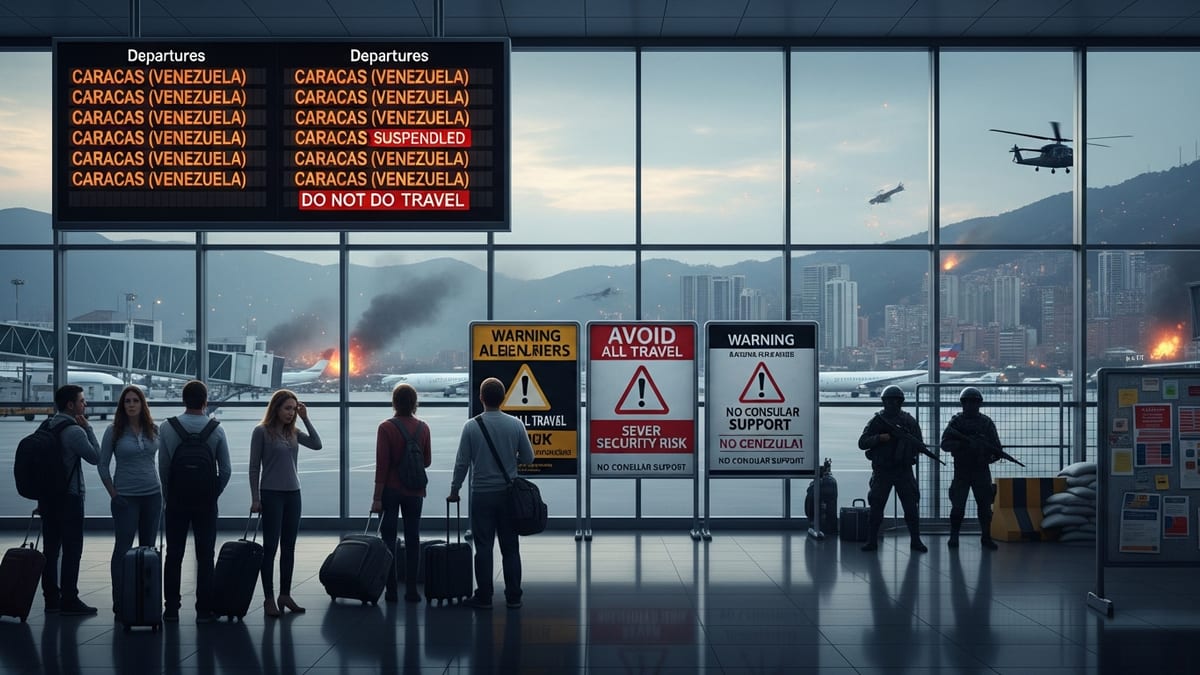
International travel advisories for Venezuela have tightened again in mid-2026 as governments react to ongoing political volatility, security operations in mining regions and recent earthquake damage that has disrupted aviation and basic services.
Get the latest news straight to your inbox!
Advisory Levels Remain High Despite Policy Shifts
Publicly available information from multiple foreign ministries shows that Venezuela remains one of the most restricted destinations worldwide, with high levels of caution urged for any non-essential trip. After several years at the most severe warning tier, recent updates indicate some divergence between countries over how to classify the risk, but all continue to highlight serious concerns about violent crime, arbitrary detention and fragile infrastructure.
Specialist travel-advisory aggregators tracking government notices report that the United States adjusted its overall guidance in March 2026, moving from an absolute prohibition to a broad “reconsider travel” posture while still warning of kidnapping, wrongful detention and limited consular assistance. Canadian advisories, updated in April, continue to urge avoiding all travel, citing the persistent risk of armed groups, weak rule of law and sudden border or airspace closures.
Travel advice published by European governments outlines similar caution. The United Kingdom’s guidance, revised through June and July 2026, advises against all travel to many areas and against all but essential travel to the rest of the country, highlighting regional hotspots near borders and in resource-rich interior states. These assessments reflect both legacy security problems and newer uncertainties following the upheaval of early 2026.
Security Environment Shaped by Conflict and Crackdowns
The security picture in Venezuela remains complex following the dramatic events of January 2026, when international coverage described United States military strikes on targets in and around Caracas and subsequent changes in the country’s leadership. Human rights reporting for 2025 and early 2026 documents patterns of arbitrary detention, ill-treatment in custody and the continuing presence of armed colectivos and criminal groups in several regions.
Recent reports highlight renewed military operations in the mineral-rich south, where Venezuelan forces have deployed to dislodge illegal miners and armed factions from key gold-producing areas. International news agencies and regional human rights groups describe clashes, displacement risks and restricted access around these zones, adding to long-standing warnings about travel to remote interior states where state control is limited.
Urban centers such as Caracas and Maracaibo continue to be flagged for high levels of violent and opportunistic crime, including robberies, carjackings and kidnappings for ransom. Publicly available analyses emphasize that basic policing and judicial systems remain under strain, and that foreign travelers may be perceived as attractive targets. Night-time movement, overland travel between cities and visits to informal border crossings are consistently identified as especially risky.
Earthquake Damage and Disruptions to Air Travel
In late June 2026, a significant earthquake shook central Venezuela, leading to visible damage at the country’s main international gateway, Simón Bolívar International Airport near Caracas. Media coverage from the region described falling ceiling panels, damaged walkways and temporary power outages inside the terminal, with passengers evacuating into surrounding areas as authorities assessed structural safety.
Subsequent legal and industry briefings note that the government declared a national state of emergency following the earthquakes, prompting temporary closures of some public buildings and a review of critical infrastructure. Flight operations at Caracas experienced cancellations and delays while inspections took place, adding a new layer of uncertainty for itineraries already complicated by sanctions, reduced airline presence and political tension.
Earlier in 2026, regulatory documents from the United States indicated that restrictions on direct commercial air links, in place for several years, were being reassessed in light of shifting conditions and contacts with the interim authorities in Caracas. At the same time, Venezuela has begun rolling out new electronic visa procedures for some nationalities, changes that have generated mixed feedback from travelers who report processing delays and evolving entry rules.
Political Volatility and Civil Unrest Risks
Venezuela’s internal political scene remains fluid, and this volatility feeds directly into travel risk evaluations. International reporting on the aftermath of the January strikes has focused on the transition to an acting administration, the gradual release of some political prisoners and continuing debates over legitimacy, accountability and future elections.
Opposition figures continue to feature in regional headlines, with some leaders attempting to return from abroad or organize new political movements inside the country. Analysts note that these developments carry the potential for renewed demonstrations, counter-protests and localised clashes, especially in major cities. Travel advisories frequently warn that protests can erupt with little warning, may result in roadblocks or closures of public transport and have occasionally turned violent.
Beyond the capital, border regions and resource frontiers remain sensitive to shifts in national politics and in relations with neighboring states. Territorial disputes, the presence of non-state armed groups and cross-border smuggling all contribute to a risk profile that can change quickly, particularly in remote areas where communications are patchy and independent information is scarce.
Practical Considerations for Prospective Travelers
For travelers who choose to visit Venezuela despite the current advisories, publicly available guidance emphasizes careful planning and a conservative approach to risk. Governments and independent security analysts alike recommend keeping itineraries flexible, monitoring local media and official announcements, and preparing for the possibility of sudden flight cancellations or airport closures linked to security incidents or natural disasters.
Basic services can be unreliable, and recent economic assessments point to continued challenges with electricity, water supply, healthcare and access to cash. Visitors are advised in many advisories and travel-risk bulletins to carry contingency funds, maintain a low profile, avoid displaying valuables and limit movements after dark. Using vetted local contacts, pre-arranged transport and registered accommodation providers is widely recommended where travel proceeds.
Insurance providers have also adjusted to the elevated risk, with some policies excluding cover for travel to Venezuela or imposing special conditions. Travelers are urged to confirm that medical evacuation and crisis-response services are in place before departure. Overall, current travel advisories present Venezuela as a destination where security, political and infrastructure risks remain significant, and where conditions may shift rapidly as the country navigates the next phase of its transition.